Best Career Options After High School: 16 Paths to Build a Successful Future
Published: 6 Nov 2026
Finishing high school is an exciting milestone, but it also brings an important question: What should you do next? For many students, choosing a career path after high school can feel overwhelming. Countless opportunities exist, from attending college and learning technical skills to starting a business or exploring remote work.
The good news is that you don’t have to follow just one traditional route to build a successful future. The best career option depends on your interests, strengths, financial situation, educational goals, and desired lifestyle.
Some students prefer earning a university degree, while others choose vocational training, apprenticeships, or professional certifications. Technology has also created opportunities in fields such as digital marketing, software development, graphic design, and freelancing.
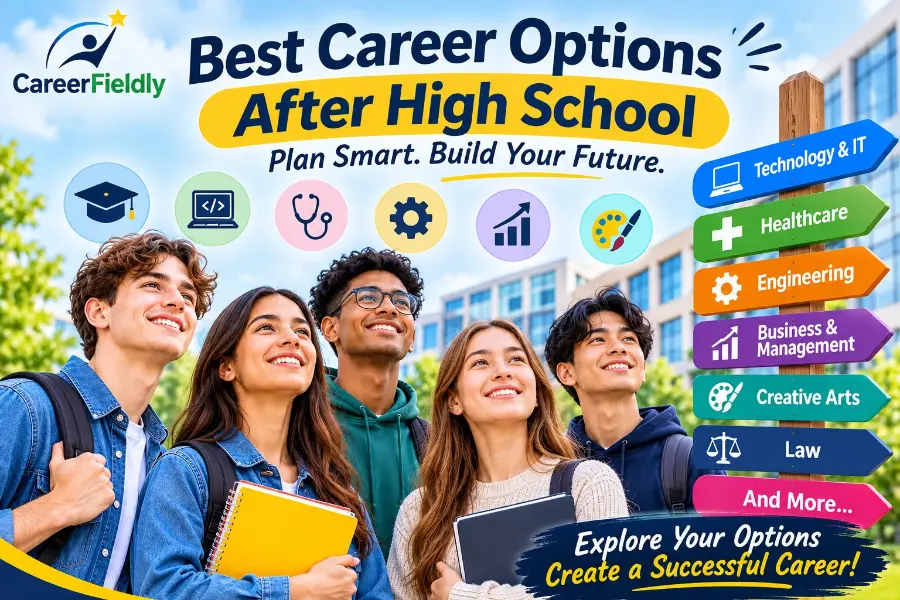
In this guide, we’ll explore the best career options after high school, explain different educational and professional pathways, and help you identify an option that matches your goals.
Why Does Your Career Choice Matter?
The decisions you make after high school can influence your education, professional development, and future opportunities. Choosing a suitable career direction helps you focus your time, money, and energy on developing relevant knowledge and skills.
However, choosing a career doesn’t mean deciding what you’ll do for the rest of your life. Many professionals change industries, learn new skills, and explore different opportunities throughout their careers.
Here are some reasons why career planning matters:
- Clear direction: Understanding your interests helps you choose suitable courses, training programs, and professional opportunities.
- Better skill development: You can focus on developing skills that employers and industries value.
- Financial planning: Comparing educational costs and potential career opportunities helps you make informed financial decisions.
- Professional confidence: Having a general direction can make your transition from school to working life easier.
- More opportunities: Exploring different career pathways helps you discover options you might not have considered.
The goal isn’t to find a perfect career immediately. It’s to choose a practical first step that supports your long-term development.
16 Best Career Options After High School
No single career suits every student. Some professions require university degrees, while others can be entered through specialized training, certifications, or practical experience.
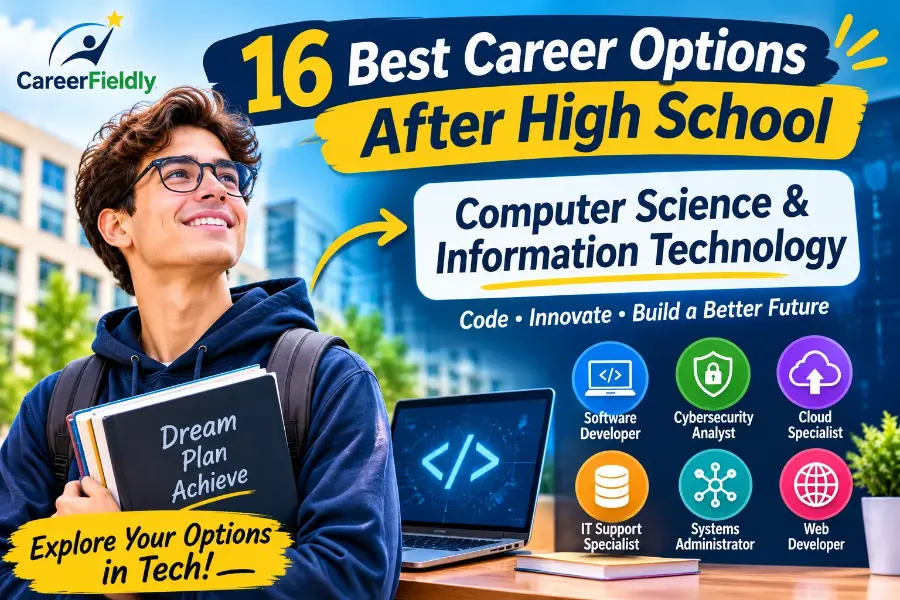
Let’s explore some promising career options:
1. Computer Science and Information Technology
Computer science and information technology are popular choices for students interested in computers, technology, and problem-solving.
Technology professionals help businesses develop software, manage digital systems, protect information, and build online products.
Some career opportunities include:
- Software developer
- Web developer
- IT support specialist
- Cybersecurity analyst
- Database administrator
- Systems administrator
- Cloud computing specialist
How to get started: Consider studying computer science, information technology, software engineering, or a related subject at college or university. You can also begin with programming courses and industry-recognized certifications.
Best for: Students who enjoy logical thinking, mathematics, technology, and solving problems.
2. Healthcare and Medical Careers
Healthcare is another important career sector with opportunities in hospitals, clinics, laboratories, research facilities, and community health organizations.
If you enjoy helping people and are interested in science, healthcare could be a rewarding professional direction.
Popular career options include:
- Doctor
- Registered nurse
- Pharmacist
- Dentist
- Medical laboratory technologist
- Physiotherapist
- Radiologic technologist
- Healthcare administrator
How to get started: Research the healthcare qualifications and licensing requirements in your country. Medical professions often require accredited degrees, supervised clinical training, and professional registration.
Best for: Students interested in biology, science, patient care, and improving people’s health.
3. Engineering
Engineering involves using scientific and mathematical knowledge to design, develop, and improve products, structures, machines, and systems.
It offers opportunities in traditional industries and emerging technology sectors.
Some popular engineering fields include:
- Civil engineering
- Mechanical engineering
- Electrical engineering
- Chemical engineering
- Computer engineering
- Environmental engineering
- Aerospace engineering
How to get started: Most professional engineering careers require an accredited engineering degree. Focus on mathematics, physics, and relevant science subjects during your education.
Best for: Students who enjoy mathematics, science, designing solutions, and understanding how things work.
4. Business and Management
Business and management offer a wide range of professional opportunities across different industries.
Almost every organization needs people who understand finance, marketing, operations, management, and business development.
Potential career paths include:
- Business analyst
- Marketing manager
- Human resources specialist
- Financial analyst
- Operations manager
- Project coordinator
- Business consultant
- Entrepreneur
How to get started: Consider a degree or diploma in business administration, management, finance, economics, or marketing. Internships and practical business experience can also help.
Best for: Students interested in leadership, communication, organization, finance, and business development.
5. Digital Marketing
Digital marketing is an excellent option for students who enjoy creativity, communication, technology, and online business.
Businesses use digital marketing to reach customers, increase brand awareness, and promote their products and services.
Popular specializations include:
- Search engine optimization (SEO)
- Social media marketing
- Content marketing
- Email marketing
- Pay-per-click advertising
- Marketing analytics
- Affiliate marketing
How to get started: Learn digital marketing fundamentals through reputable online courses. Practice by creating a website, managing social media accounts, or developing small marketing projects.
Best for: Creative students who enjoy writing, research, communication, and understanding online audiences.
6. Graphic Design and Creative Careers
If you enjoy drawing, designing, photography, or creating visual content, graphic design could be a suitable career choice.
Graphic designers help organizations communicate ideas through visual materials.
Career opportunities include:
- Graphic designer
- UI designer
- UX designer
- Brand identity designer
- Motion graphics designer
- Illustrator
- Video editor
How to get started: Learn design principles and tools such as Adobe Photoshop, Illustrator, Figma, or other relevant software. Build a portfolio that demonstrates your creativity and technical abilities.
Best for: Students with visual creativity, attention to detail, and an interest in digital design.
7. Finance and Accounting
Finance and accounting are essential to businesses, financial institutions, government organizations, and nonprofit institutions.
These careers involve managing money, analyzing financial information, preparing reports, and helping organizations make informed financial decisions.
Potential careers include:
- Accountant
- Financial analyst
- Auditor
- Investment analyst
- Tax consultant
- Banking professional
- Financial planner
How to get started: Consider studying accounting, finance, economics, or business. Professional qualifications may also be valuable, depending on your chosen specialization and country.
Best for: Students who enjoy mathematics, analytical thinking, organization, and working with financial information.
8. Education and Teaching
Teaching is a meaningful career for students who enjoy sharing knowledge and helping others develop their abilities.
Teachers work in schools, colleges, universities, training centers, and online learning platforms.
Career opportunities include:
- Primary school teacher
- Secondary school teacher
- Early childhood educator
- Special education teacher
- College instructor
- Online tutor
- Educational consultant
How to get started: Research the teaching qualifications and certification requirements in your country. Many teaching positions require a relevant degree and professional training.
Best for: Students who are patient, communicative, organized, and passionate about education.
9. Data Science and Artificial Intelligence
Data science and artificial intelligence are developing technology fields that involve collecting, analyzing, and using information to solve problems.
Organizations use data and AI tools in healthcare, finance, education, transportation, manufacturing, and many other industries.
Potential career paths include:
- Data analyst
- Data scientist
- Machine learning engineer
- AI developer
- Business intelligence analyst
- Data engineer
How to get started: Develop a foundation in mathematics, statistics, and programming. Learn tools such as Python, SQL, and data visualization software. A relevant university degree can help you qualify for advanced positions.
Best for: Students who enjoy mathematics, technology, research, and analytical problem-solving.
10. Law and Legal Studies
Law is a professional field for students interested in justice, regulations, legal systems, and protecting people’s rights.
Legal professionals work in law firms, corporations, government departments, courts, and nonprofit organizations.
Career opportunities include:
- Lawyer
- Legal researcher
- Paralegal
- Legal assistant
- Corporate legal adviser
- Compliance specialist
How to get started: Legal education and licensing requirements differ significantly between countries. Research the recognized law degrees, practical training, and professional examinations required in the country where you intend to work.
Best for: Students who enjoy reading, research, communication, critical thinking, and argumentation.
11. Hospitality and Tourism Management
Hospitality and tourism suit students who enjoy working with people, organizing experiences, and exploring different cultures.
The industry includes hotels, restaurants, travel companies, resorts, airlines, and event management organizations.
Career options include:
- Hotel manager
- Travel consultant
- Event planner
- Restaurant manager
- Tourism officer
- Guest relations specialist
- Hospitality coordinator
How to get started: Consider courses in hospitality management, tourism, culinary arts, or event management. Practical experience through internships can be especially valuable.
Best for: Students with communication, customer service, organizational, and interpersonal skills.
12. Skilled Trades and Technical Careers
Not every successful career requires a traditional university degree. Skilled trades provide practical career opportunities for students who prefer hands-on learning.
These professions support construction, manufacturing, transportation, maintenance, and infrastructure.
Popular skilled trades include:
- Electrician
- Plumber
- Automotive technician
- Welder
- HVAC technician
- Carpenter
- Industrial maintenance technician
How to get started: Explore vocational schools, technical colleges, apprenticeships, and recognized training programs. Some professions require additional licensing or safety certifications.
Best for: Students who enjoy practical work, repairing equipment, building things, and learning through experience.
13. Freelancing and Remote Work
Freelancing allows individuals to provide services to clients without necessarily working as permanent employees.
With internet access and relevant skills, students can explore remote opportunities and work with clients in different countries.
Popular freelance services include:
- Content writing
- Web development
- Graphic design
- Video editing
- Virtual assistance
- Social media management
- Translation
- SEO services
How to get started: Choose one marketable skill, develop a portfolio, and practice by completing sample projects. Explore freelance marketplaces and professional networking platforms to find potential clients.
Remember that freelancing income is not guaranteed. Building a reliable client base takes time, communication skills, and consistent work.
Best for: Independent learners who enjoy flexible work, digital skills, and managing their own projects.
14. Entrepreneurship and Starting a Business
Entrepreneurship is an option for students who want to create their own products, services, or businesses.
You don’t necessarily need to establish a large company immediately. You can begin with a small business idea, identify a customer need, and gradually develop your offering.
Possible business ideas include:
- Online stores
- Digital service agencies
- Educational businesses
- Content creation
- Local service businesses
- Handmade products
- Software or technology startups
How to get started: Learn basic business management, marketing, budgeting, customer service, and financial planning. Start small, research your market, and test your idea before making a major investment.
Best for: Self-motivated, creative students who are comfortable with uncertainty and want to solve business problems.
15. Cybersecurity
Cybersecurity professionals protect computer networks, applications, and sensitive information from digital threats.
As organizations increasingly depend on technology, protecting digital systems has become an important business priority.
Career opportunities include:
- Security analyst
- Security operations center (SOC) analyst
- Penetration tester
- Information security specialist
- Security engineer
- Digital forensics analyst
How to get started: Learn networking, operating systems, programming fundamentals, and security principles. Practical labs and recognized certifications can help you develop relevant skills.
Best for: Students interested in computers, investigation, problem-solving, and digital security.
16. Content Creation and Media
Content creation has become a professional option for people who enjoy communicating ideas through videos, writing, photography, audio, and social media.
Creators can work independently, collaborate with brands, or join media and marketing organizations.
Possible career options include:
- YouTube creator
- Social media creator
- Blogger
- Copywriter
- Video producer
- Podcast producer
- Digital journalist
How to get started: Choose a content format, identify an audience, and consistently publish useful or entertaining material. Learn storytelling, editing, audience research, and digital communication.
Best for: Creative students who enjoy communication, storytelling, and building online communities.
Best Career Options Without a College Degree
Not every student can afford university, and not every profession requires a traditional four-year degree.
Several career pathways let students build professional skills through practical training, apprenticeships, certifications, and work experience.
Here are some options worth exploring:
| Career | Possible starting pathway |
|---|---|
| Web developer | Coding courses and portfolio |
| Graphic designer | Design training and portfolio |
| Digital marketer | Professional courses and projects |
| Electrician | Technical training and apprenticeship |
| Video editor | Editing software and practical projects |
| Virtual assistant | Administrative and digital skills |
| Automotive technician | Vocational training |
| Sales representative | Product knowledge and communication |
| Freelance writer | Writing practice and portfolio |
| IT support specialist | IT training and certifications |
Keep in mind that some occupations require specific education, licensing, or professional registration. Always check these before enrolling in a course or applying for a position.
High-Paying Career Options After High School
Many students consider earning potential when choosing a career. Although salaries vary by country, experience, qualifications, and industry, some professional fields offer strong long-term earning potential.
Some fields worth researching include:
- Software engineering
- Medicine and specialist healthcare
- Data science
- Cybersecurity
- Engineering
- Finance and investment
- Artificial intelligence
- Cloud computing
- Business management
- Law
However, a high-paying profession is not automatically the best career for everyone.
Before deciding, consider education costs, the time required to qualify, working conditions, career progression, and your personal interests.
How to Choose the Right Career Path
With so many options, how can you find the right direction?
The following steps can help you make a more informed decision.
1. Identify Your Interests
Start by considering the subjects and activities you genuinely enjoy.
Ask yourself:
- Do I enjoy science and mathematics?
- Am I interested in technology and computers?
- Do I prefer creative activities?
- Do I enjoy helping and communicating with people?
- Do I like practical, hands-on work?
Your interests can help narrow down the professional fields worth exploring.
2. Understand Your Strengths
Think about the skills you already have.
For example, strong communication skills may be useful in marketing, teaching, and business. Analytical thinking may be valuable in finance, engineering, and technology.
You don’t need to be an expert before choosing a career. Many professional abilities can be developed through education and experience.
3. Research Education Requirements
Different careers have different qualification requirements.
Before choosing a degree, diploma, or certification, research:
- Required academic qualifications
- Course duration
- Tuition and additional expenses
- Accreditation and recognition
- Professional licensing requirements
- Employment opportunities after graduation
Avoid enrolling in a program simply because it is popular. Make sure it supports your intended career direction.
4. Compare Career Opportunities
Research the industries you’re interested in and understand their employment opportunities.
Look at job advertisements, professional requirements, salary information, and career progression.
You can also speak with people already working in those fields to understand their experiences.
5. Consider Your Financial Situation
Education can involve tuition fees, accommodation, transportation, learning materials, and other expenses.
Compare the total cost of different pathways. Scholarships, financial aid, affordable colleges, vocational programs, and paid apprenticeships may provide alternative opportunities.
6. Develop Practical Skills
Don’t rely entirely on classroom learning.
Look for opportunities to gain practical experience through:
- Internships
- Volunteer work
- Personal projects
- Online courses
- Apprenticeships
- Part-time employment
- Professional networking
Practical experience can help you understand an industry and show potential employers what you can do.
7. Keep Your Options Open
You don’t have to make every career decision immediately.
Start with a realistic direction, gain experience, and review your goals as you learn more about the professional world.
Being willing to adapt is an important part of long-term career development.
College vs. Work After High School
This is one of the most common questions students face after graduation.
Both options can be valuable, but the best choice depends on the career you want to pursue.
College or university may be suitable if:
- Your desired profession requires a degree.
- You enjoy academic learning.
- You want access to advanced professional qualifications.
- You can manage the financial and time commitments.
- You want to explore subjects in greater depth.
Starting work or pursuing vocational training may be suitable if:
- You want to gain practical experience.
- You need to earn money sooner.
- Your chosen profession offers apprenticeship opportunities.
- You prefer hands-on learning.
- You want to develop a specific professional skill.
You can also combine education and employment through part-time study, internships, or work-based training.
There is no universal answer. Focus on the pathway that gives you the qualifications and experience needed for your chosen profession.
Common Career Planning Mistakes to Avoid
Choosing a career is a major decision, and some mistakes can make the process more difficult.
Here are a few things to avoid:
1. Following friends without researching: Your friends may have different interests and strengths. Choose a pathway based on your own goals.
2. Choosing a career only for money: Income matters, but you should also consider working conditions, personal interests, and long-term satisfaction.
3. Ignoring educational requirements: Some professions require specific degrees, licenses, or certifications. Research these before committing.
4. Believing that university is the only route to success: Vocational education, apprenticeships, and professional training can also lead to valuable careers.
5. Underestimating practical experience: Employers often value relevant experience, communication, and problem-solving alongside formal qualifications.
6. Expecting immediate success: Most careers require continuous learning, patience, and consistent effort.
FAQs
Choosing a career after high school can bring many questions and uncertainties. Here are some frequently asked questions to help you understand your options, explore different career paths, and make informed decisions about your future.
The best career depends on your interests, abilities, educational background, and long-term goals. Popular options include:
- Computer science and information technology
- Healthcare and medical professions
- Engineering and technology
- Business and management
- Digital marketing and finance
- Skilled trades and technical careers
The right choice ultimately depends on your personal interests, skills, and the kind of future you want to build. Take time to explore these fields before deciding.
Yes. Many careers offer opportunities without a traditional university degree. You can develop professional skills through:
- Vocational training programs
- Apprenticeships and practical experience
- Industry-recognized certifications
- Online courses and specialized training
- Freelancing and personal projects
Examples include graphic design, web development, IT support, electrical work, and digital marketing.
Choose a subject that matches your interests and supports your intended career. Some popular study options include:
- Computer science and information technology
- Business administration and management
- Healthcare and medical sciences
- Engineering and mathematics
- Finance and accounting
- Education and teaching
Research course requirements and career opportunities before selecting a program.
Students interested in computers can explore several technology-related careers, including:
- Software development
- Cybersecurity
- Data science and artificial intelligence
- Web development
- IT support and systems administration
- Cloud computing
Learning programming, networking, and computer fundamentals can help you get started.
Yes. Freelancing can be a good career option for students with marketable skills who enjoy independent work.
Popular freelance services include:
- Content writing
- Graphic design
- Web development
- Video editing
- Social media management
- Search engine optimization (SEO)
- Virtual assistance
However, freelance income can be unpredictable, particularly when building your first client base.
If you’re unsure about your future career, start by exploring your interests, abilities, and professional preferences.
Here are some practical steps:
- Identify subjects and activities you enjoy.
- Understand your strengths and weaknesses.
- Research different industries and professions.
- Take career assessment tests.
- Try short courses to explore new skills.
- Speak with experienced professionals.
- Gain experience through volunteering or internships.
You don’t need to make a permanent decision immediately. Give yourself time to explore different opportunities.
Online certifications can help you develop professional knowledge and demonstrate specific skills. However, requirements depend on the profession.
Consider the following:
- Some technology and digital careers value practical skills and relevant certifications.
- Healthcare and legal professions generally require formal qualifications and professional licensing.
- Skilled trades may require recognized technical training and apprenticeships.
- Many employers also consider portfolios, work experience, and practical projects.
Choose certifications that are relevant to your intended career and recognized by employers in your industry.
Absolutely! Changing careers is possible at different stages of professional life.
You can make a career transition by:
- Learning new skills through courses and training.
- Gaining experience through practical projects.
- Building professional connections.
- Exploring related industries.
- Updating your resume and portfolio.
- Identifying transferable skills from previous work.
Your first career choice doesn’t have to determine your entire future. Continuous learning and adaptability can help you discover new opportunities.
Remember, there is no single path to success. Take time to explore your interests, develop valuable skills, and choose a career direction that aligns with your goals and aspirations.
Final Thoughts
Choosing the best career option after high school is an important step toward building your future, but you don’t need to have everything figured out immediately.
Whether you choose university, vocational education, technology, healthcare, business, freelancing, or entrepreneurship, focus on finding a pathway that matches your interests and long-term goals.
Take time to research your options, compare educational requirements, develop practical skills, and gain real-world experience. Most importantly, remember that career success is a journey built through continuous learning, hard work, and informed decisions.
Your future doesn’t depend on choosing the most popular career. It depends on choosing a direction that allows you to grow, contribute, and build a life you find meaningful.



- Be Respectful
- Stay Relevant
- Stay Positive
- True Feedback
- Encourage Discussion
- Avoid Spamming
- No Fake News
- Don't Copy-Paste
- No Personal Attacks
- Be Respectful
- Stay Relevant
- Stay Positive
- True Feedback
- Encourage Discussion
- Avoid Spamming
- No Fake News
- Don't Copy-Paste
- No Personal Attacks
