How to Become a Doctor: Education, Training, and Career Guide
Published: 6 Nov 2026
Becoming a doctor is a rewarding career path for people passionate about healthcare, helping others, and making a difference. However, pursuing a career in medicine requires years of education, practical training, dedication, and a strong commitment to patient care. If you are wondering how to become a doctor, understanding the educational requirements and career pathway is an important first step.
The journey typically begins with completing high school, meeting medical school admission requirements, and earning a recognized medical degree. After graduation, aspiring doctors must complete clinical training, pass relevant medical licensing examinations, and often undertake residency training before practicing independently. Although the exact process varies by country, the main goal is to develop the knowledge and clinical skills needed to provide safe and effective medical care.
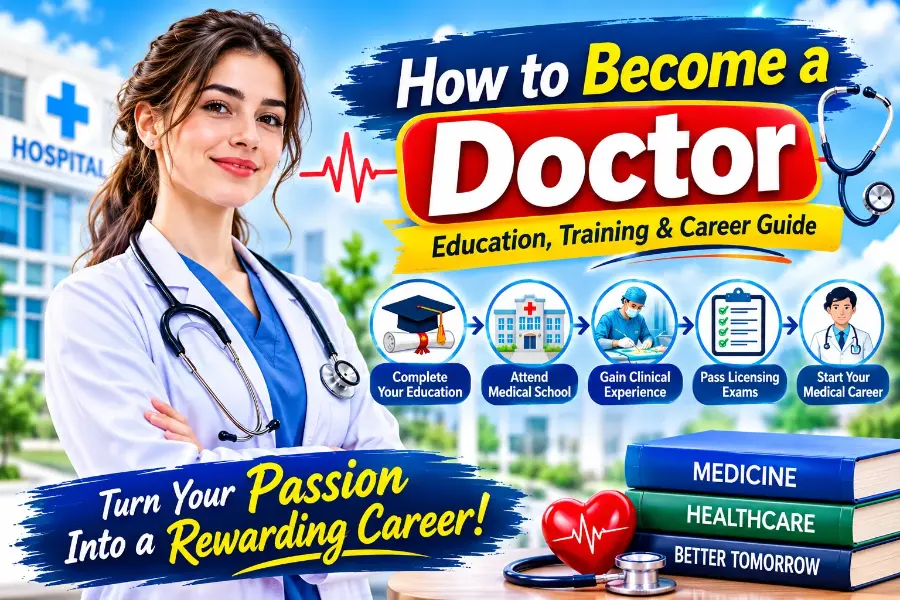
In this guide, you will learn the steps to become a doctor, how many years it takes, the education and training required, and the different medical specialties you can pursue. Whether you are a high school student exploring healthcare careers or someone considering a future in medicine, this article will help you understand what it takes to become a qualified medical professional.
What Does a Doctor Do?
A doctor is a trained medical professional who diagnoses, treats, and helps prevent illnesses, injuries, and other health conditions. Doctors play an essential role in healthcare by examining patients, recommending treatments, prescribing medications, and advising on how to maintain good health.
A doctor’s daily responsibilities depend on their specialty, workplace, and experience. Some doctors provide general medical care, while others specialize in specific areas, such as cardiology, pediatrics, surgery, or dermatology.
Common responsibilities of doctors include:
- Diagnosing medical conditions: Examining patients, reviewing medical histories, and identifying possible illnesses.
- Treating patients: Recommending appropriate treatments, prescribing medications, and performing medical procedures when necessary.
- Preventing diseases: Providing vaccinations, health screenings, and advice on healthy lifestyle choices.
- Monitoring patient health: Tracking recovery, evaluating treatment effectiveness, and adjusting care plans.
- Educating patients: Explaining medical conditions, treatment options, and preventive healthcare practices.
- Working with healthcare teams: Collaborating with nurses, specialists, and other medical professionals to provide effective patient care.
Doctors can work in hospitals, private clinics, community health centers, research institutions, and other healthcare settings. Regardless of their specialty, their primary responsibility is to protect and improve patients’ health through professional medical care.
How to Become a Doctor: Step-by-Step Guide
Becoming a doctor requires a combination of academic education, clinical experience, and professional training. Although the exact process varies by country, aspiring medical professionals generally follow several key steps to qualify to practice medicine. Understanding these steps can help you plan your education and prepare for a successful career in medicine.
1. Complete Your High School Education
The first step toward becoming a doctor is completing your high school education with a strong academic foundation. Students interested in medicine should focus on science subjects, especially biology, chemistry, and physics, because they provide essential knowledge for future medical studies.
In many countries, medical schools require applicants to complete specific science courses and achieve competitive grades. Building strong study habits and understanding human biology can also help you prepare for the challenges of medical education.
2. Meet Medical School Admission Requirements
After completing high school, the next step is meeting the medical school admission requirements in your chosen country. These requirements vary by educational system and institution.
Depending on the country, students may need to:
- Complete pre-medical or equivalent science education.
- Achieve the required academic grades.
- Pass a medical entrance examination.
- Meet language proficiency requirements.
- Complete interviews or other admission assessments.
For example, students in the United States typically complete a bachelor’s degree and take the MCAT before applying to medical school. In countries such as Pakistan and the United Kingdom, students can generally enter medical programs through different undergraduate admission pathways after completing the required secondary education.
Researching admission requirements early can help you choose the right subjects and prepare for the application process.
3. Earn a Medical Degree
After meeting the admission requirements, the next major step is to enroll in an accredited medical school and earn a recognized medical degree. This stage provides the scientific knowledge and clinical foundation needed to diagnose illnesses, understand human health, and treat patients.
Depending on the country, medical education may take different forms. For example:
- United States: Students typically complete a four-year bachelor’s degree followed by four years of medical school to earn an MD (Doctor of Medicine) or DO (Doctor of Osteopathic Medicine).
- United Kingdom: Students generally complete a five- or six-year undergraduate medical degree, such as an MBBS or MBChB.
- Pakistan: Students typically complete a five-year MBBS (Bachelor of Medicine and Bachelor of Surgery) program at a recognized medical college.
During medical school, students study subjects such as anatomy, physiology, biochemistry, pathology, pharmacology, and microbiology. These subjects help them understand how the human body works and how different diseases affect it.
Earning a recognized medical degree is essential to progress to the next stages of medical training and professional qualification.
4. Complete Clinical Rotations
After completing the classroom-based portion of medical education, students begin clinical rotations, which provide practical experience in real healthcare settings. During this stage, medical students work under the supervision of experienced doctors and healthcare professionals in hospitals and clinics.
Clinical rotations let students apply their medical knowledge, interact with patients, and build essential clinical skills. They typically cover several medical specialties, including:
- Internal medicine: Understanding and treating diseases affecting internal organs.
- General surgery: Learning about surgical procedures and patient care before and after operations.
- Pediatrics: Providing medical care to infants, children, and adolescents.
- Obstetrics and gynecology: Understanding women’s reproductive health, pregnancy, and childbirth.
- Psychiatry: Learning to diagnose and manage mental health conditions.
- Emergency medicine: Developing skills to assess and treat urgent medical conditions.
These practical experiences help aspiring doctors explore different specialties, improve their communication skills, and gain confidence in patient care.
5. Pass Medical Licensing Examinations
After completing the required medical education and training, aspiring doctors must meet the relevant medical licensing examination requirements in their chosen country. These examinations assess medical knowledge, clinical reasoning, and the ability to provide safe patient care.
The specific examinations vary by country. Some common examples include:
- United States: The United States Medical Licensing Examination (USMLE) is a major licensing examination pathway for physicians seeking to practice medicine.
- United Kingdom: Doctors must meet the General Medical Council (GMC) registration requirements. International medical graduates may need to pass the Professional and Linguistic Assessments Board (PLAB) examination or meet an alternative accepted pathway.
- Pakistan: Medical graduates must meet the Pakistan Medical and Dental Council (PMDC) requirements for registration and licensing. Relevant examination requirements depend on their educational pathway.
Passing the required examinations is an important part of becoming a licensed medical professional. Students should always check the latest requirements of the medical regulatory authority in their intended country of practice.
6. Complete Residency Training
After medical school, many aspiring doctors must complete residency training, which provides supervised, hands-on experience in a specific area of medicine. During residency, doctors work in hospitals and other healthcare facilities while treating patients under the guidance of experienced physicians.
The duration of medical residency depends on the chosen specialty and country. For example, training in family medicine or internal medicine may take around three years in the United States, while surgical specialties generally require longer training.
Some popular medical specialties include:
- Cardiology: Diagnosing and treating heart-related conditions.
- Dermatology: Managing diseases and conditions affecting the skin.
- Pediatrics: Providing healthcare to children.
- Neurology: Treating disorders of the brain, spinal cord, and nervous system.
- Orthopedic surgery: Treating conditions affecting bones, joints, and muscles.
- General surgery: Performing surgical procedures to treat different medical conditions.
Residency helps doctors develop specialized clinical knowledge, improve decision-making abilities, and gain the experience needed to manage patients independently.
7. Obtain a Medical License
The final step toward practicing independently is obtaining the appropriate medical license or professional registration from the relevant regulatory authority. A medical license confirms that a doctor has met the required educational, examination, and training standards to provide medical services legally.
Licensing requirements differ between countries. For example:
- United States: Physicians must meet state medical board licensing requirements, which generally include completing approved medical education, passing the required USMLE or COMLEX-USA examinations, and completing the necessary postgraduate training.
- United Kingdom: Doctors must obtain the appropriate registration with a license to practise from the General Medical Council (GMC).
- Pakistan: Medical graduates must obtain registration with the Pakistan Medical and Dental Council (PMDC) according to its applicable requirements.
Once registered or licensed, doctors can pursue employment in hospitals, private clinics, healthcare organizations, or other medical settings, depending on their qualifications and training.
It is also important to maintain professional registration and complete any required continuing medical education (CME) or professional development activities to stay updated with medical knowledge, clinical practices, and healthcare standards.
How Many Years Does It Take to Become a Doctor?
The time required to become a doctor depends on the country, educational pathway, and medical specialty you choose. In most countries, becoming a doctor requires several years of formal education, clinical experience, and postgraduate training. Generally, the entire process takes 7 to 15 years or more, depending on the training requirements.
Here is an overview of the typical time required in different countries:
| Country | Medical Education | Additional Training |
|---|---|---|
| United States | 4-year bachelor’s degree + 4-year medical school | 3–7+ years of residency |
| United Kingdom | Usually 5–6 years of medical school | Foundation training and specialty training |
| Pakistan | 5-year MBBS degree | 1-year house job and further specialization if desired |
| Canada | Usually 3–4 years of undergraduate study + 3–4 years of medical school | 2–7+ years of residency |
Factors That Affect the Time Required to Become a Doctor
Several factors can influence how long it takes to complete medical education and training:
- Country of study: Medical education systems and postgraduate training requirements vary between countries.
- Medical specialty: Some specialties require longer residency or additional fellowship training.
- Educational pathway: Some countries require a bachelor’s degree before medical school, while others offer direct-entry medical programs.
- Licensing requirements: Examinations, registration, and supervised practice requirements can affect the overall timeline.
- Further specialization: Doctors pursuing advanced specialties may need additional years of education and clinical training.
Although becoming a doctor takes considerable time, each stage builds the medical knowledge, practical experience, and professional skills needed to care for patients.
Different Types of Doctors and Medical Specialties
Medicine offers a wide range of career opportunities for individuals interested in different areas of healthcare. After completing medical school and the required postgraduate training, doctors can choose a medical specialty based on their interests, abilities, and career goals.
Some doctors provide general healthcare, while others focus on specific organs, diseases, age groups, or medical procedures.
Here are some common types of doctors and medical specialties:
1. General Practitioner (GP)
A general practitioner provides primary healthcare to patients of different ages. GPs diagnose common illnesses, manage long-term health conditions, prescribe treatments, and refer patients to specialists when necessary.
2. Cardiologist
A cardiologist specializes in diagnosing and treating conditions affecting the heart and blood vessels. These professionals manage problems such as high blood pressure, heart disease, and irregular heart rhythms.
3. Pediatrician
A pediatrician provides medical care to infants, children, and adolescents. Their responsibilities include monitoring child development, treating childhood illnesses, and providing preventive healthcare.
4. Dermatologist
A dermatologist specializes in conditions affecting the skin, hair, and nails. They diagnose and treat problems such as acne, eczema, psoriasis, and skin infections.
5. Neurologist
A neurologist diagnoses and treats disorders affecting the brain, spinal cord, and nervous system. Common conditions they manage include epilepsy, migraines, Parkinson’s disease, and multiple sclerosis.
6. Surgeon
A surgeon performs medical operations to treat injuries, diseases, and other health conditions. Surgeons may specialize in general, orthopedic, neuro, or cardiovascular surgery.
7. Psychiatrist
A psychiatrist specializes in diagnosing and treating mental health conditions. They may provide medication management, psychotherapy, and other forms of psychiatric care.
8. Obstetrician and Gynecologist (OB-GYN)
An obstetrician and gynecologist specializes in women’s reproductive health. These doctors provide pregnancy care, assist with childbirth, and diagnose and treat reproductive health conditions.
9. Oncologist
An oncologist specializes in diagnosing and treating cancer. Depending on their training, oncologists may focus on medical treatments, radiation therapy, or surgical cancer care.
10. Emergency Medicine Physician
An emergency medicine physician treats patients who need immediate medical attention because of injuries, accidents, or sudden illnesses. They work primarily in emergency departments and hospitals.
Choosing the right medical specialty is an important career decision. Students should consider their interests, preferred working environment, abilities, and long-term professional goals before selecting a specialization.
Essential Skills Needed to Become a Doctor
Becoming a successful doctor requires more than academic qualifications and medical knowledge. Healthcare professionals must develop a mix of technical skills, communication abilities, critical thinking, and personal qualities to provide safe, effective patient care.
Here are some essential skills needed to become a doctor:
1. Communication Skills
Doctors must communicate clearly with patients, families, nurses, and other healthcare professionals. Good communication helps them understand symptoms, explain diagnoses, discuss treatment options, and build trust.
2. Critical Thinking and Problem-Solving
Medical professionals regularly evaluate symptoms, examine medical histories, and interpret test results to identify health conditions. Strong critical thinking skills help doctors make informed decisions and choose appropriate treatments.
3. Attention to Detail
Accuracy is extremely important in healthcare. Doctors must carefully review medical records, identify symptoms, interpret diagnostic results, and prescribe appropriate medications to reduce the risk of medical errors.
4. Empathy and Compassion
Patients may experience physical pain, emotional stress, or uncertainty about their health. Empathy and compassion help doctors understand patients’ concerns and provide respectful, supportive care.
5. Time Management
Doctors often manage multiple patients, appointments, medical records, and emergency situations. Effective time management skills help them organize their responsibilities and provide timely medical care.
6. Emotional Resilience
Medical professionals may face stressful situations, difficult diagnoses, and emotionally challenging patient outcomes. Emotional resilience helps doctors manage workplace pressure while maintaining professional judgment and providing appropriate care.
7. Teamwork and Collaboration
Healthcare depends on cooperation between doctors, nurses, pharmacists, laboratory technicians, and other professionals. Strong teamwork skills help medical staff coordinate treatment and improve patient outcomes.
8. Scientific Knowledge and Continuous Learning
Medicine constantly evolves through research, new technologies, and improved treatment methods. Doctors must maintain their medical knowledge and participate in continuing medical education (CME) to stay up to date on healthcare developments.
Developing these skills during medical school, clinical rotations, and professional training can help aspiring doctors prepare for the responsibilities of a medical career.
How Much Does It Cost to Become a Doctor?
The cost of becoming a doctor depends on several factors, including the country, medical school, type of institution, and duration of education. Medical education costs can include tuition, admission fees, textbooks, accommodation, transportation, exam fees, and other academic expenses.
In general, studying medicine at a public medical university is often more affordable than attending a private medical school. However, the total cost can vary significantly between institutions.
Factors That Affect the Cost of Medical Education
Several expenses contribute to the overall cost of becoming a doctor:
- Tuition fees: The amount medical schools charge for academic programs.
- Admission and examination fees: Expenses associated with entrance tests, applications, and registration.
- Books and study materials: Costs of textbooks, medical equipment, laboratory materials, and other learning resources.
- Accommodation and living expenses: Housing, food, transportation, and personal costs during medical school.
- Licensing examinations: Fees for professional examinations and registration.
- Clinical training expenses: Costs associated with practical training, depending on the educational system.
Medical Education Costs in Different Countries
The financial requirements for studying medicine vary considerably across countries.
United States: Medical school can be expensive, particularly at private institutions. Students generally pay for undergraduate education before entering medical school, which increases the overall financial commitment. Scholarships, grants, and student loans may help cover expenses.
United Kingdom: Medical students pay tuition fees according to their fee status and university. International students may face higher tuition costs and additional living expenses.
Pakistan: Public medical colleges generally have lower tuition fees than private medical colleges. Students should check the latest fee structures published by the relevant institutions and the Pakistan Medical and Dental Council (PMDC).
How to Reduce the Cost of Becoming a Doctor
Students can explore several ways to make medical education more affordable, including:
- Applying to public medical universities with comparatively lower tuition fees.
- Researching scholarships and financial assistance programs.
- Comparing tuition fees before selecting a medical school.
- Considering affordable accommodation and transportation options.
- Exploring government-sponsored medical education programs where available.
- Planning educational expenses before applying to medical school.
Before choosing a medical program, students should calculate the estimated total cost of education and consider their financial resources. They should also verify that the institution is properly recognized by the relevant medical regulatory authority.
Is Becoming a Doctor a Good Career Choice?
Becoming a doctor can be a rewarding career for individuals who enjoy science, helping others, and solving medical problems. It offers opportunities to improve people’s health, contribute to society, and develop expertise in different areas of medicine.
However, a career in medicine also involves challenges, including lengthy education, demanding work schedules, emotional pressure, and significant professional responsibilities.
Advantages of Becoming a Doctor
There are several reasons why students choose medicine as a career:
- Helping people: Doctors make a meaningful difference by diagnosing illnesses, treating patients, and improving quality of life.
- Career stability: Healthcare services remain essential, creating ongoing demand for qualified medical professionals.
- Specialization opportunities: Doctors can pursue different medical specialties according to their interests and abilities.
- Professional respect: Medical professionals often receive recognition for their knowledge, expertise, and contribution to society.
- Career growth: Doctors can advance into specialized clinical roles, medical research, teaching, healthcare administration, and leadership positions.
- Continuous learning: Medicine provides opportunities to develop new skills and stay updated with scientific and technological advancements.
Challenges of Becoming a Doctor
Despite its benefits, a medical career also comes with certain difficulties:
- Long education period: Becoming a qualified doctor requires years of academic study and practical training.
- High education costs: Medical school and postgraduate training can involve significant financial expenses.
- Workplace pressure: Doctors may deal with emergencies, complex diagnoses, and life-threatening situations.
- Irregular working hours: Some medical specialties require night shifts, weekend duties, and extended working hours.
- Emotional challenges: Treating seriously ill patients and dealing with difficult outcomes can be emotionally demanding.
- Professional responsibility: Doctors must make careful decisions because their work directly affects patients’ health and safety.
Who Should Consider a Career in Medicine?
A medical career may be suitable for students who:
- Have a strong interest in biology, chemistry, and human health.
- Enjoy helping people and supporting their well-being.
- Are willing to complete several years of education and training.
- Can handle responsibility and stressful situations.
- Have good communication and problem-solving abilities.
- Are committed to continuous learning and professional development.
Ultimately, becoming a doctor is a good career choice for people who are genuinely interested in healthcare and willing to meet the profession’s academic and professional demands. Students should consider both the benefits and challenges before making this important career decision.
How to Become a Doctor in Different Countries
The process of becoming a doctor varies between countries because each healthcare system has its own educational structure, admission requirements, licensing examinations, and professional registration procedures.
Some countries let students enter medical school directly after secondary education, while others require an undergraduate degree before medical school.
Here is an overview of the medical education pathways in some popular countries.
1. How to Become a Doctor in the United States
In the United States, students generally follow a graduate-entry pathway to become physicians. The process involves completing undergraduate education, attending medical school, and completing postgraduate residency training.
The main steps include:
- Complete a four-year bachelor’s degree, usually with the required premedical coursework.
- Take the Medical College Admission Test (MCAT).
- Apply to an accredited medical school.
- Complete four years of medical education to earn an MD or DO degree.
- Pass the required United States Medical Licensing Examination (USMLE) or COMLEX-USA examinations, depending on the degree pathway.
- Complete an accredited residency program.
- Meet state medical board requirements and obtain a medical license.
Residency usually takes three to seven years or longer, depending on the specialty.
2. How to Become a Doctor in the United Kingdom
In the United Kingdom, students can generally enter medical school after completing the required secondary education and meeting university admission standards.
The main steps include:
- Complete A-levels or equivalent qualifications, usually including chemistry and another science subject.
- Meet the university’s medical school admission requirements.
- Take an accepted entrance examination, such as the UCAT, where required.
- Complete an undergraduate medical degree, usually lasting five or six years.
- Complete the two-year Foundation Programme.
- Enter specialty training or another approved postgraduate pathway.
- Obtain the appropriate registration and licence to practise from the General Medical Council (GMC).
The overall training period depends on the specialty and the chosen career pathway.
3. How to Become a Doctor in Pakistan
In Pakistan, students generally pursue medicine through the MBBS (Bachelor of Medicine and Bachelor of Surgery) program after completing their intermediate pre-medical education or an accepted equivalent qualification.
The main steps include:
- Complete intermediate education with pre-medical subjects, including biology, chemistry, and physics.
- Meet the required eligibility criteria for medical college admission.
- Pass the Medical and Dental College Admission Test (MDCAT), as required by applicable admission regulations.
- Secure admission to a PMDC-recognized medical college.
- Complete the five-year MBBS program.
- Complete the required one-year house job or internship.
- Meet the applicable Pakistan Medical and Dental Council (PMDC) registration requirements.
After completing these requirements, doctors can pursue further postgraduate education and specialization through recognized training pathways.
4. How to Become a Doctor in Canada
Canada generally follows a graduate-entry medical education pathway, although admission requirements vary between universities.
The main steps include:
- Complete the required undergraduate education, usually three or four years.
- Meet the admission requirements of the chosen medical school.
- Take the MCAT if the university requires it.
- Complete a Doctor of Medicine (MD) program, generally lasting three or four years.
- Complete the required residency training through an accredited postgraduate medical education program.
- Meet the applicable examination and registration requirements through the relevant Canadian medical authorities and provincial or territorial regulators.
Residency duration depends on the chosen specialty and can take several additional years.
5. How to Become a Doctor in Australia
Australia offers undergraduate and graduate-entry medical programs. The admission pathway depends on the university and the applicant’s educational background.
The main steps include:
- Complete secondary education or an undergraduate degree, depending on the pathway you choose.
- Meet the university’s academic and admission requirements.
- Take an accepted entrance examination, such as the UCAT ANZ or GAMSAT, where required.
- Complete an accredited medical degree, which typically lasts four to six years.
- Complete the required internship and supervised clinical training.
- Register with the Medical Board of Australia and meet the relevant professional requirements.
Doctors who wish to specialize must complete additional postgraduate training through an appropriate specialist college.
FAQs
Choosing medicine as a career involves many important decisions about education, training, costs, and future opportunities. Here are answers to some common questions about how to become a doctor.
Becoming a doctor typically takes 7 to 15 years or more, depending on the country and medical specialty.
The timeline generally includes:
- Undergraduate education, if required.
- Medical school, usually lasting 4–6 years.
- Clinical training and licensing requirements.
- Residency training, which may take 2–7 years or longer.
The exact duration depends on your chosen medical pathway, specialty, and the licensing requirements of the country where you plan to practise.
Students interested in becoming doctors should focus on science subjects that provide a foundation for medical education.
Important subjects include:
- Biology: Understanding the human body and living organisms.
- Chemistry: Learning about substances, chemical reactions, and medications.
- Physics: Understanding physical principles used in medical science.
- Mathematics: Developing analytical and problem-solving skills.
Specific subject requirements depend on the country and medical school.
No. You generally need a recognized medical degree and must meet the licensing and registration requirements of the country where you intend to practise.
The usual requirements include:
- Completing an approved medical education program.
- Meeting clinical training requirements.
- Passing required licensing examinations, where applicable.
- Obtaining professional registration or a medical license.
A recognized medical degree, along with the required training and professional registration, is essential for legally practising as a doctor in most countries.
Yes, becoming a doctor can be challenging because medical education requires dedication, academic performance, and practical experience.
Some common challenges include:
- Studying complex medical subjects.
- Passing competitive admission and licensing examinations.
- Completing years of clinical training.
- Managing demanding schedules and professional responsibilities.
However, good study habits, consistent preparation, and genuine interest in healthcare can make the journey more manageable.
There is no universally easiest medical specialty because the difficulty depends on individual interests, abilities, and training requirements.
Some specialties students may explore include:
- Family medicine: Providing general healthcare to patients.
- Preventive medicine: Focusing on disease prevention and public health.
- Psychiatry: Diagnosing and treating mental health conditions.
- Pathology: Studying diseases through laboratory analysis.
Each specialty requires appropriate education, training, and professional qualifications.
Yes. In several countries, students can enter medical school directly after completing high school or equivalent secondary education.
The typical requirements include:
- Completing the required science subjects.
- Achieving the necessary academic grades.
- Passing an entrance examination, if required.
- Meeting the medical school’s admission criteria.
In countries such as the United Kingdom and Pakistan, students can generally follow direct-entry medical degree pathways. In the United States and Canada, students typically need undergraduate education before entering medical school.
You need a recognized medical degree to qualify as a physician. The degree title varies by country and educational system.
Common medical degrees include:
- MBBS: Bachelor of Medicine and Bachelor of Surgery.
- MD: Doctor of Medicine.
- DO: Doctor of Osteopathic Medicine, primarily in the United States.
- MBChB: Bachelor of Medicine and Bachelor of Surgery, awarded by many universities.
Graduates must also complete the applicable licensing and training requirements before practising medicine.
The cost of becoming a doctor varies by country, university, and type of medical institution.
Major expenses include:
- Medical school tuition fees.
- Admission and examination charges.
- Books and study materials.
- Accommodation and living expenses.
- Licensing and registration fees.
Public medical universities are generally more affordable than private institutions, though costs vary by country.
Yes. Many countries accept international students into their medical education programs, provided they meet the admission and visa requirements.
Students should consider:
- Academic qualifications and required science subjects.
- English language proficiency, where applicable.
- Medical entrance examinations.
- Tuition fees and living expenses.
- Recognition of the medical degree in their intended country of practice.
Check whether the medical school and its degree meet the relevant regulatory requirements before applying.
Successful doctors need a combination of medical knowledge, practical abilities, and interpersonal skills.
Some of the most important skills include:
- Communication: Explaining medical information clearly.
- Critical thinking: Evaluating symptoms and making informed decisions.
- Empathy: Understanding patients’ concerns and experiences.
- Problem-solving: Identifying appropriate approaches to medical conditions.
- Teamwork: Collaborating with other healthcare professionals.
- Time management: Managing patient care and professional responsibilities.
Developing these skills helps medical professionals provide effective, compassionate healthcare.
Understanding the educational requirements, training process, and career opportunities can help you make informed decisions about pursuing medicine. If you are planning to become a doctor, research the requirements in your chosen country and prepare for each stage of your medical education.
Conclusion
Becoming a doctor is a challenging but rewarding journey that requires dedication, patience, academic preparation, and a genuine interest in helping others. From completing high school and earning a medical degree to gaining clinical experience and obtaining a medical license, each step plays an important role in preparing you for a healthcare career.
Before choosing this profession, consider the time, financial investment, and responsibilities involved in becoming a doctor. Explore different medical specialties, research admission requirements, and develop essential skills such as communication, critical thinking, and empathy.
With proper planning, consistent effort, and a commitment to lifelong learning, you can work toward becoming a qualified medical professional and making a meaningful contribution to people’s health and well-being.




- Be Respectful
- Stay Relevant
- Stay Positive
- True Feedback
- Encourage Discussion
- Avoid Spamming
- No Fake News
- Don't Copy-Paste
- No Personal Attacks
- Be Respectful
- Stay Relevant
- Stay Positive
- True Feedback
- Encourage Discussion
- Avoid Spamming
- No Fake News
- Don't Copy-Paste
- No Personal Attacks
