How to Become a Nurse: Education, Qualifications, Skills and Career Opportunities
Published: 7 Nov 2026
Choosing a career in nursing is an excellent option for people who want to make a positive difference in others’ lives. Nurses play an essential role in healthcare by caring for patients, supporting doctors, monitoring medical conditions, and helping people recover from illnesses and injuries. It also offers opportunities for professional development, specialization, and employment in different countries.
If you are interested in healthcare and want to build a meaningful career, you may be wondering how to become a nurse. The good news is that several educational pathways lead to this profession, depending on your country, academic background, and career goals.
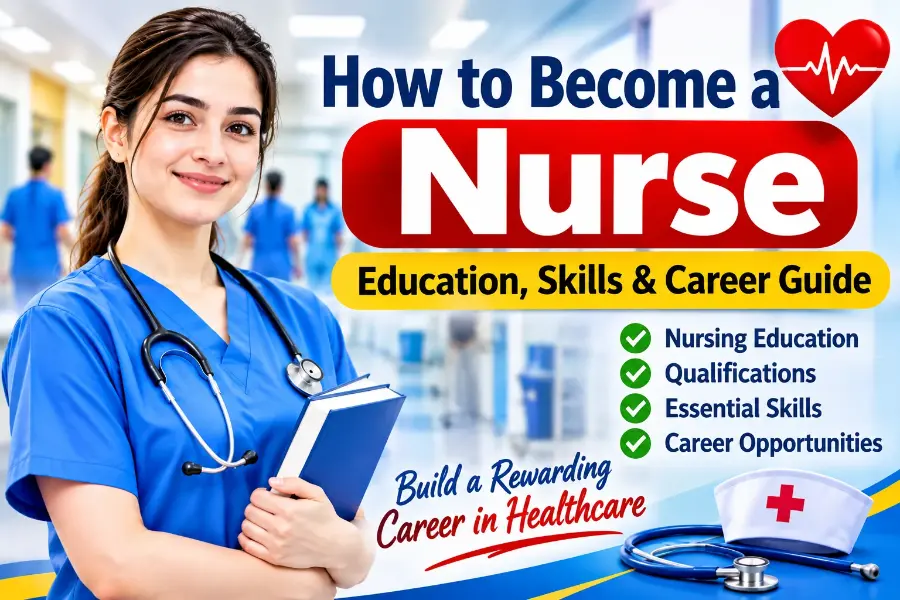
This guide explains the education requirements, qualifications, essential skills, nursing specialties, licensing process, and career opportunities you should understand before starting your nursing journey.
1. Understand What a Nurse Does
Before choosing nursing as a career, understand a professional nurse’s responsibilities.
Nurses work directly with patients and healthcare teams to provide safe and effective medical care. Their responsibilities vary by workplace, qualifications, and area of specialization.
Common nursing responsibilities include:
- Monitoring patients’ health conditions and vital signs.
- Administering prescribed medications and treatments.
- Assisting doctors during medical examinations and procedures.
- Providing emotional support to patients and their families.
- Maintaining accurate patient medical records.
- Educating patients about medications, treatments, and healthy lifestyles.
- Helping patients recover after surgery, illness, or injury.
- Responding to medical emergencies when necessary.
Nurses work in hospitals, clinics, rehabilitation centers, nursing homes, community healthcare facilities, and other medical settings.
How to Become a Nurse: Step-by-Step Guide
Becoming a nurse is a rewarding career choice for people who want to help others and contribute to healthcare. Nursing requires proper education, practical training, professional skills, and a commitment to patient care. Whether you want to work in Pakistan or explore international opportunities, following the right steps can help you build a successful nursing career.
Complete Your School Education
The first step toward becoming a nurse is completing the required school education.
Most nursing programs require students to have completed secondary education or an equivalent qualification. Subjects such as biology, chemistry, and other sciences can provide a useful foundation for nursing studies.
However, admission requirements vary by country and institution.
For example:
- In Pakistan, students generally need an FSc Pre-Medical qualification or equivalent to apply for a Generic Bachelor of Science in Nursing (BSN).
- In the United States, students can pursue approved nursing education programs through different academic pathways.
- In the United Kingdom, applicants must meet the entry requirements for an approved nursing degree program.
Students should always check the admission criteria of their chosen nursing college or university before applying.
Choose the Right Nursing Education Program
Education is one of the most important steps in becoming a professional nurse. You should select a nursing program that is recognized by the relevant regulatory authority in your country.
There are different educational pathways available.
Bachelor of Science in Nursing (BSN)
A Bachelor of Science in Nursing is a university-level qualification that prepares students for professional nursing practice.
A BSN program typically covers subjects such as:
- Anatomy and physiology
- Human biology
- Microbiology
- Pharmacology
- Medical and surgical nursing
- Community health nursing
- Mental health nursing
- Patient care and clinical practice
In Pakistan, the Generic BSN is generally a four-year degree program. Students are required to meet the relevant admission criteria established by the Pakistan Nursing and Midwifery Council (PNMC).
Associate Degree in Nursing
In the United States, an Associate Degree in Nursing (ADN) is another educational route to becoming a registered nurse.
It is generally offered by colleges and combines classroom education with clinical training. Graduates must meet their state’s licensing requirements before practicing as registered nurses.
Nursing Diploma Programs
Some countries also offer approved diploma-level nursing pathways. However, availability and recognition vary by location.
Before enrolling, confirm that the qualification meets the registration and licensing requirements for the nursing role you want to pursue.
Gain Practical Clinical Experience
Nursing is not only about studying textbooks and passing examinations. It also requires practical experience and the ability to care for patients in real healthcare environments.
Most recognized nursing programs include supervised clinical training in hospitals, clinics, and community healthcare settings.
During clinical placements, nursing students learn how to:
- Measure blood pressure and monitor vital signs.
- Communicate professionally with patients.
- Follow infection prevention and safety procedures.
- Assist patients with everyday healthcare needs.
- Understand medical equipment and basic procedures.
- Work alongside experienced nurses and healthcare professionals.
Practical training helps students develop confidence and understand the responsibilities of working in a medical environment.
Develop Essential Nursing Skills
A successful nursing career requires more than academic qualifications. Nurses need a combination of technical knowledge, communication skills, and personal qualities.
Here are some of the most important skills to develop.
Communication Skills
Nurses communicate with patients, doctors, families, and other healthcare professionals. Clear communication helps prevent misunderstandings and improves patient care.
Compassion and Empathy
Patients may experience pain, anxiety, and emotional stress. A compassionate nurse understands their concerns and treats them with kindness and respect.
Attention to Detail
Small mistakes in medication, patient records, or medical procedures can have serious consequences. Nurses must follow instructions and safety standards carefully.
Problem-Solving Skills
Healthcare situations can change quickly. Nurses need to assess problems, recognize warning signs, and take appropriate action within their professional responsibilities.
Time Management
Nurses often care for multiple patients during busy shifts. Good organization and time management help them complete their responsibilities effectively.
Emotional Strength
Nursing can be physically and emotionally demanding. Nurses should learn how to manage stress, maintain professional boundaries, and seek support when needed.
Obtain Your Nursing License or Professional Registration
Completing a nursing degree is an important achievement, but it does not automatically give you permission to practice as a registered nurse.
Most countries require nursing graduates to obtain professional registration or a license from an authorized regulatory organization.
The requirements depend on where you plan to work.
In Pakistan: Nursing graduates must follow the Pakistan Nursing and Midwifery Council (PNMC) registration requirements. Applicants may need to provide educational certificates, identity documents, photographs, and other required paperwork.
In the United States: Graduates generally must meet state board of nursing requirements and pass the NCLEX-RN examination to become licensed as registered nurses.
In the United Kingdom: Nurses must complete an approved nursing education program and register with the Nursing and Midwifery Council (NMC). Internationally trained nurses must follow the relevant overseas registration process.
Always verify the latest requirements directly with the official nursing regulator before applying.
Choose a Nursing Specialization
After completing your education and obtaining the required registration, you can explore different nursing specialties.
Choosing a specialization allows you to focus on a particular patient group or area of healthcare.
Some popular nursing specialties include:
Registered Nurse (RN)
Registered nurses provide general patient care, monitor medical conditions, administer treatments, and coordinate with healthcare teams.
Pediatric Nurse
Pediatric nurses care for infants, children, and teenagers. They help monitor children’s health, support families, and assist with treatment.
Emergency Room Nurse
Emergency nurses work in emergency departments and help care for patients experiencing serious injuries, sudden illnesses, and urgent medical conditions.
Intensive Care Unit (ICU) Nurse
ICU nurses care for critically ill patients who require continuous monitoring and specialized medical attention.
Mental Health Nurse
Mental health nurses support people experiencing mental health challenges and work with healthcare teams to provide appropriate care.
Surgical Nurse
Surgical nurses assist with patient care before, during, and after surgical procedures.
Each specialty may require additional education, training, experience, or certification.
Dermatology Nursing Careers
Dermatology nursing is a specialized nursing field focused on skin health, skin diseases, and treatments. Dermatology nurses work alongside dermatologists to care for patients with different skin conditions.
What Is a Dermatology Nurse?
A dermatology nurse is a qualified healthcare professional who helps treat and manage skin conditions under a dermatologist’s supervision.
What Does a Dermatology Nurse Do?
Dermatology nurses assess patients’ skin concerns, assist with treatments, provide wound care, educate patients, and support dermatological procedures.
Dermatology nurses also help patients understand common skin conditions and their treatments. To learn more, read our detailed guide on Hand Skin Diseases and Their Treatment.
Education and Qualifications Required
To become a dermatology nurse, you generally need an approved nursing qualification, professional registration, clinical experience, and additional dermatology training.
Essential Skills for Dermatology Nurses
Important skills include communication, attention to detail, patient care, knowledge of skin conditions, clinical assessment, and the ability to assist with dermatological treatments.
Career Opportunities in Dermatology Nursing
Dermatology nurses can work in hospitals, skin clinics, private dermatology practices, cosmetic clinics, and specialized healthcare centers.
How to Become a Dermatology Nurse in Pakistan
In Pakistan, complete a recognized nursing qualification, obtain registration with the Pakistan Nursing and Midwifery Council (PNMC), gain clinical experience, and pursue relevant dermatology training.
Apply for Nursing Jobs
Once you complete the required education and registration, you can start applying for nursing positions.
Hospitals and healthcare organizations regularly recruit qualified nursing professionals for different departments.
To improve your chances of finding employment, consider these steps:
- Prepare a professional nursing resume.
- Include your nursing degree and professional registration details.
- Highlight your clinical placements and relevant experience.
- Obtain additional certifications when appropriate.
- Search for vacancies on hospital websites and reputable job portals.
- Prepare for nursing interviews and practical assessments.
New graduates may begin in entry-level nursing positions and gain experience under the supervision of experienced healthcare professionals.
Explore International Opportunities
Nursing qualifications can create opportunities to work in different countries. However, a qualification obtained in one country does not automatically authorize you to practice in another.
Countries have their own nursing registration, language, qualification assessment, and immigration requirements.
For example:
- United States: International nurses generally need to meet state board requirements, complete the applicable credential evaluation process, and satisfy NCLEX-RN requirements.
- United Kingdom: Internationally educated nurses must follow the Nursing and Midwifery Council’s overseas registration process, which may include a Test of Competence and English-language requirements.
- Canada: Internationally educated applicants must follow the registration process established by the nursing regulator in their intended province or territory.
- Australia: Overseas-qualified nurses must meet the Nursing and Midwifery Board of Australia’s registration requirements.
If you plan to work internationally, research the official requirements early. This can help you avoid unnecessary expenses and delays.
Continue Learning and Developing Your Career
Healthcare is constantly changing because of medical research, technology, and new treatment methods. Nurses must continue developing their knowledge and professional skills throughout their careers.
You can improve your professional development by:
- Attending nursing workshops and training sessions.
- Completing relevant professional certifications.
- Learning about new medical technologies.
- Developing leadership and management skills.
- Pursuing postgraduate nursing education.
- Gaining experience in specialized healthcare departments.
With additional education and experience, nurses may progress into senior clinical, teaching, research, management, or leadership positions.
Is Nursing a Good Career Choice?
Nursing can be a rewarding career for people who enjoy helping others and are interested in healthcare.
Some important benefits include:
- Opportunities to work in different healthcare environments.
- Potential employment opportunities in many countries.
- Opportunities for professional specialization.
- Career development through further education.
- The satisfaction of supporting patients during difficult times.
- Opportunities to move into leadership and education roles.
However, nursing also comes with challenges. Long shifts, emotional pressure, physical demands, and responsibility for patient safety can make the profession challenging.
Before choosing nursing, consider whether you have the interest, dedication, and commitment this important profession requires.
FAQs
Choosing nursing as a career often raises questions about education, admission requirements, professional qualifications, and future opportunities. Here are answers to some common questions to help you understand the nursing career path.
The time required to become a nurse depends on the country, educational pathway, and type of nursing qualification. Different programs have different durations and professional requirements.
For example:
- Pakistan: A Generic BSN program generally takes four years.
- United Kingdom: An approved nursing degree usually takes at least three years.
- United States: An ADN program generally takes two years, while a BSN program usually takes four years.
The exact duration may vary by program and by licensing requirements in your country.
It depends on the nursing program and the admission requirements of your chosen institution. Many professional nursing degree programs require a science background, particularly in biology.
Common admission requirements may include:
- Biology or other relevant science subjects.
- Chemistry or physics, depending on the institution.
- A recognized secondary school qualification.
- Minimum academic marks or grades.
- An admission test or interview, if required.
Before applying, check the eligibility criteria of the nursing colleges or universities you are interested in.
Nursing students study several subjects that help them understand the human body, recognize medical conditions, and provide safe patient care. These subjects combine theoretical knowledge with practical clinical training.
Important nursing subjects include:
- Biology: Helps students understand living organisms and basic body functions.
- Anatomy and Physiology: Explain the structure and functions of the human body.
- Chemistry: Provides knowledge of chemical processes and medications.
- Microbiology: Covers microorganisms and infection prevention.
- Pharmacology: Introduces medicines, their uses, and possible effects.
- Fundamentals of Nursing: Teaches essential patient-care skills and nursing practices.
These subjects build the foundation needed for professional nursing practice.
Not everywhere. The educational requirements for becoming a registered nurse (RN) vary by country and nursing regulatory authority. Some countries recognize multiple educational pathways, while others emphasize a particular degree.
For example:
- United States: Eligible candidates may qualify for RN licensure through an approved ADN or BSN pathway.
- Pakistan: The Generic BSN is a major professional nursing education pathway.
- Other countries: Nursing qualifications and registration requirements depend on local regulations.
Always confirm the approved qualifications and licensing requirements with the relevant nursing authority before choosing a program.
Yes. Qualified nurses can pursue international career opportunities in hospitals, healthcare facilities, and other medical organizations. However, having a nursing degree does not automatically allow someone to practice in another country.
International nursing applicants may need to meet requirements such as:
- A recognized nursing qualification.
- Professional registration or licensing.
- Verification of education and work experience.
- English-language proficiency, where required.
- Licensing examinations or competency assessments.
- A valid work visa and immigration approval.
Research the destination country’s nursing regulations before applying for overseas positions.
Nurses need clinical knowledge, practical abilities, and interpersonal skills to provide effective patient care. These skills help them communicate with patients, work with healthcare teams, and respond to different medical situations.
Some essential nursing skills include:
- Communication: Explaining medical information and listening to patients.
- Compassion: Understanding patients’ feelings and providing emotional support.
- Attention to Detail: Following care instructions and monitoring patient conditions.
- Teamwork: Working effectively with doctors and other healthcare professionals.
- Problem-Solving: Responding appropriately to unexpected situations.
- Time Management: Managing multiple patient-care responsibilities.
- Clinical Knowledge: Applying medical knowledge and nursing procedures safely.
Developing these skills can help nursing students become confident and responsible healthcare professionals.
Nursing can be a rewarding career because nurses play an essential role in healthcare systems worldwide. As healthcare needs continue to evolve, qualified nurses can pursue opportunities in different medical settings and areas of specialization.
Potential career opportunities include:
- Hospitals and private clinics.
- Community and public health services.
- Emergency and critical care units.
- Nursing education and training.
- Medical research and healthcare administration.
- Specialized nursing departments.
Your career opportunities will depend on your qualifications, professional registration, experience, and the healthcare requirements of your chosen country.
Overall, nursing offers opportunities to develop professional skills, support patients, and build a meaningful career. Understanding the educational and licensing requirements is an important first step toward entering this profession.
Final Thoughts
Becoming a nurse requires dedication, proper education, practical training, and a genuine commitment to helping people. Although the journey may involve years of study and professional preparation, it can lead to a meaningful career with opportunities for growth and specialization.
Start by completing the required academic qualifications, choosing a recognized nursing program, building essential skills, and understanding your country’s registration requirements.
Remember, nursing is more than a profession. It is a responsibility to protect patients, provide compassionate care, and make a positive difference in people’s lives.
If you are passionate about healthcare and helping others, nursing may be the right career path for you.
Explore more career guides, professional development advice, and educational resources at CareerFieldly.com.



- Be Respectful
- Stay Relevant
- Stay Positive
- True Feedback
- Encourage Discussion
- Avoid Spamming
- No Fake News
- Don't Copy-Paste
- No Personal Attacks
- Be Respectful
- Stay Relevant
- Stay Positive
- True Feedback
- Encourage Discussion
- Avoid Spamming
- No Fake News
- Don't Copy-Paste
- No Personal Attacks
