How to Start a Career in Graphic Design: A 9 Simple Steps Beginner’s Guide
Published: 10 Nov 2026
Graphic design is a creative career that allows people to turn ideas into attractive visual designs. From business logos and social media posts to website layouts and advertisements, graphic designers create visual content that helps businesses communicate with their audiences.
If you enjoy creativity, colors, images, and technology, graphic design may be an excellent career choice. You do not always need a university degree to enter this field. With the right skills, practice, and knowledge of design software, you can start building a career as a graphic designer.
But how do you become a graphic designer? What skills do you need, which software should you learn, and how can you find your first job?
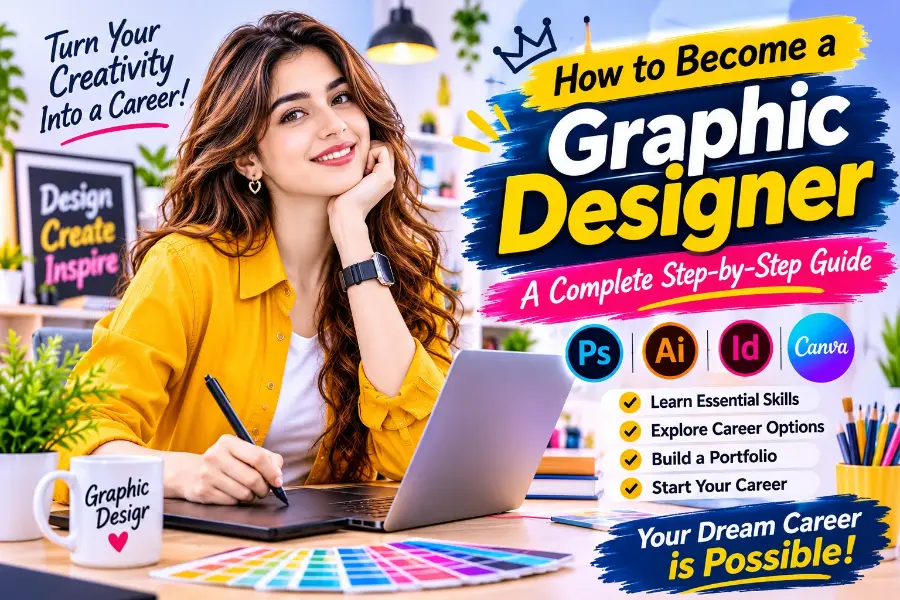
In this guide, we will explain how to become a graphic designer step by step. You will also learn about education, essential skills, design tools, career opportunities, salaries, and freelance work.
What Is a Graphic Designer?
A graphic designer is a creative professional who uses images, colors, fonts, shapes, and layouts to communicate messages visually. Graphic designers create designs for businesses, organizations, brands, websites, and individuals.
Their main goal is to make information attractive, clear, and easy to understand.
For example, a graphic designer may create a company logo, design a product advertisement, prepare a social media post, or develop a business brochure.
Graphic designers work in different industries, including advertising, marketing, publishing, education, technology, and entertainment.
What Does a Graphic Designer Do?
A graphic designer performs different creative tasks depending on their job, industry, and clients. Some designers focus on digital designs, while others work on printed materials and brand identities.
Common Responsibilities of a Graphic Designer
Some common responsibilities include:
- Creating logos: Designing unique logos that represent businesses and brands.
- Designing advertisements: Creating attractive advertisements for products and services.
- Making social media graphics: Preparing images and posts for platforms such as Facebook, Instagram, and LinkedIn.
- Developing website designs: Creating visual layouts and graphics for websites.
- Designing brochures and posters: Preparing printed materials for marketing and communication.
- Selecting colors and fonts: Choosing suitable colors, typography, and layouts for each project.
- Working with clients: Understanding client requirements and turning their ideas into visual designs.
- Editing images: Improving photographs and other visual materials using design software.
A graphic designer also reviews designs, makes changes based on feedback, and ensures that the final work meets the project requirements.
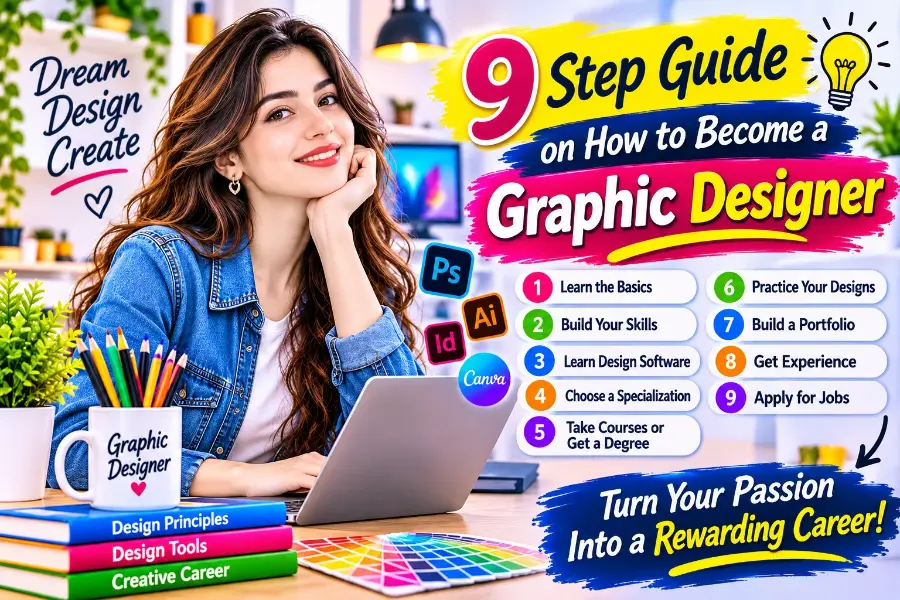
9 Step Guide on How to Become a Graphic Designer
Becoming a graphic designer requires creativity, technical knowledge, and regular practice. Follow these steps to develop the skills needed to enter this profession.
1. Learn the Basics of Graphic Design
First, understand the basic principles of graphic design. Before using professional software, learn how visual elements work together to create attractive and meaningful designs.
Start by learning these important design principles:
- Color theory: Understand how different colors work together and affect visual appearance.
- Typography: Learn how to select and arrange fonts to make text readable.
- Layout: Understand how to organize text, images, and other elements.
- Contrast: Learn how to make important design elements stand out.
- Balance: Understand how to distribute visual elements properly.
- Alignment: Learn how to arrange design elements in an organized way.
- Visual hierarchy: Understand how to guide viewers toward the most important information.
These basic principles will help you create professional-looking designs and make better creative decisions.
2. Develop Your Creative and Design Skills
Creativity is one of the most important qualities of a graphic designer. However, you don’t need to be naturally talented in art to succeed in this field.
You can improve your creativity through regular practice and observation.
Start by looking at professional logos, advertisements, websites, posters, and social media graphics. Notice how designers use colors, fonts, images, and layouts to communicate different messages.
Also practice creating simple designs. For example, you can make a birthday invitation, a business logo, a promotional poster, or a social media advertisement.
Over time, these activities will help you develop your visual communication skills, creativity, and confidence.
3. Learn Graphic Design Software
Professional graphic designers use different software programs to create and edit visual content. Learning these tools is an important part of building a graphic design career.
You do not need to master every program at once. Start with beginner-friendly tools and gradually learn more advanced software.
Adobe Photoshop
Adobe Photoshop is a popular image-editing and graphic-design program. Designers use it to edit photographs, create digital artwork, remove backgrounds, and prepare advertisements.
It is especially useful for photo editing, social media graphics, and digital image creation.
Adobe Illustrator
Adobe Illustrator is widely used for creating vector graphics. Designers use it to create logos, icons, illustrations, and other graphics that can be resized without losing quality.
It is particularly useful for logo design and brand identity projects.
Adobe InDesign
Adobe InDesign is a professional design program used for page layouts and printed materials.
Graphic designers use it to create magazines, brochures, books, catalogs, and other publications.
Canva and Other Beginner-Friendly Tools
Canva is a beginner-friendly design platform that allows users to create graphics using ready-made templates and design elements.
It is useful for making social media posts, presentations, posters, invitations, and simple marketing materials.
Other useful tools include Figma and Affinity Designer. Choose software based on the type of graphic design work you want to pursue.
4. Choose Your Graphic Design Specialization
Graphic design is a broad field with several specializations. Choosing a specific area can help you focus your learning and build relevant skills.
Some popular graphic design specializations include:
- Logo and brand identity design: Creating logos, brand colors, and visual identity materials.
- Social media design: Designing posts, banners, advertisements, and promotional graphics.
- Web design: Creating visual layouts and graphics for websites.
- UI design: Designing the visual elements of digital products, such as buttons, menus, and app screens.
- Print design: Creating brochures, posters, magazines, and business cards.
- Packaging design: Designing product boxes, labels, and packaging materials.
- Motion graphics: Creating animated graphics for videos, advertisements, and digital media.
Explore different areas before choosing one. You can also develop skills in multiple specializations as you gain experience.
5. Take Graphic Design Courses or Get a Degree
You can learn graphic design through formal education, online courses, or independent study.
A university degree in graphic design or a related subject can provide structured learning and help you understand design principles. However, a degree is not always required to enter this profession.
Many beginners learn through online courses, tutorials, and practical projects.
When choosing a learning option, consider your budget, available time, and career goals.
You can explore learning resources from platforms such as:
- Coursera
- Udemy
- LinkedIn Learning
- Skillshare
- Adobe Learn
You can also use free tutorials and educational videos to learn basic design skills.
The most important thing is to combine learning with practical experience.
6. Practice by Working on Design Projects
Learning design software is not enough. You also need to practice creating real designs.
Start with small projects that allow you to use the skills you have learned.
For example, you can:
- Create a logo for an imaginary business.
- Design a poster for a local event.
- Make social media graphics for a fictional brand.
- Create a business card.
- Design a simple website homepage.
- Prepare a product advertisement.
Try different styles, colors, fonts, and layouts. Compare your work with professional designs to identify areas for improvement.
Regular practice will help you build confidence and develop your own design style.
7. Build a Professional Graphic Design Portfolio
A graphic design portfolio is a collection of your best design projects. It allows potential employers and clients to understand your skills, creativity, and design abilities.
A strong portfolio is important because employers often want to see examples of your work before hiring you.
Your portfolio can include:
- Logo designs
- Brand identity projects
- Social media graphics
- Posters and brochures
- Website layouts
- Product packaging designs
- Digital illustrations
You do not need paid clients to build your first portfolio. Create sample projects for imaginary businesses or redesign existing concepts as personal practice projects.
You can display your work on platforms such as Behance and Dribbble or create your own portfolio website.
Focus on quality rather than quantity. A small collection of well-presented projects is often more useful than a large collection of unfinished designs.
8. Gain Practical Experience
Practical experience helps you understand how graphic design works in professional environments.
After building some basic skills, look for opportunities to work on real projects.
You can gain experience through:
- Internships at design agencies.
- Volunteer design projects for organizations.
- Small projects for local businesses.
- Freelance work for individual clients.
- Entry-level graphic design positions.
Working with clients will teach you how to understand project requirements, manage deadlines, accept feedback, and make design changes.
These experiences will also help you improve your communication and problem-solving skills.
9. Start Applying for Graphic Design Jobs
Once you have developed your skills and created a portfolio, you can start applying for graphic design jobs.
Look for entry-level positions that match your abilities and experience.
Some common job titles include:
- Junior Graphic Designer
- Graphic Design Assistant
- Visual Designer
- Social Media Designer
- Production Artist
- Junior Brand Designer
You can find opportunities on job websites, company career pages, professional networks, and through local design agencies.
Prepare a professional resume and include a link to your portfolio. Highlight your design software knowledge, relevant projects, and practical experience.
Don’t worry if you don’t meet every requirement in a job advertisement. Apply for positions that match your current skills and provide opportunities to learn.
What Skills Do You Need to Become a Graphic Designer?
A successful graphic designer needs a combination of creative, technical, and professional skills.
You can develop most of these skills through education, practice, and work experience.
Creative and Artistic Skills
Creative skills help designers create attractive, meaningful visual content.
Important creative skills include:
- Creativity: Generating new ideas and design concepts.
- Color knowledge: Understanding how colors work together.
- Typography: Choosing and arranging fonts properly.
- Visual communication: Presenting messages through images and graphics.
- Layout design: Organizing different visual elements clearly.
Technical and Computer Skills
Graphic designers also need technical knowledge to use professional design tools.
Important technical skills include:
- Using graphic design software.
- Editing and improving images.
- Creating vector graphics.
- Preparing digital and print designs.
- Understanding image formats and file sizes.
- Working with design layouts and templates.
Communication and Problem-Solving Skills
Graphic designers often work with clients, managers, marketing teams, and other creative professionals.
They must understand project requirements and communicate their ideas clearly.
Problem-solving skills are also important because designers sometimes need to find creative solutions when a project has limited time, resources, or design requirements.
Time Management and Attention to Detail
Graphic designers often work on multiple projects with different deadlines.
Good time management helps them organize their work and complete projects on schedule.
Attention to detail is equally important. Small mistakes in text, colors, spacing, or alignment can affect a design’s quality.
Do You Need a Degree to Become a Graphic Designer?
No, you do not always need a university degree to become a graphic designer.
Although a degree in graphic design or visual communication can provide useful knowledge, many employers and clients also consider practical skills, creativity, and portfolio quality.
There are several ways to enter this profession:
1. University education: You can complete a degree in graphic design, visual communication, or a related subject.
2. Online education: You can learn through online courses, tutorials, and professional training programs.
3. Self-learning: You can study design principles independently and practice using graphic design software.
4. Practical experience: You can improve your skills through internships, personal projects, and freelance work.
If you choose the self-learning path, focus on building a strong portfolio and developing skills that match your career goals.
How Long Does It Take to Become a Graphic Designer?
The time required to become a graphic designer depends on your learning method, practice schedule, and career goals.
Some beginners learn basic design skills within a few months, while developing professional-level abilities may take much longer.
Here is a general overview of the learning process:
- 1–3 months: Learn basic design principles, colors, typography, and simple software tools.
- 3–6 months: Practice creating logos, posters, social media graphics, and other design projects.
- 6–12 months: Improve your technical skills, build a portfolio, and explore entry-level opportunities.
- 1–2 years or more: Gain experience, improve your design quality, and develop specialized skills.
These are general estimates, not fixed requirements. Your progress will depend on how much time you spend learning and practicing.
Best Graphic Design Courses and Certifications
Graphic design courses can help beginners learn design principles, software tools, and practical techniques.
You can choose free or paid courses depending on your budget and learning preferences.
Online Graphic Design Courses
Online learning platforms offer courses for beginners and experienced designers.
Some popular options include:
- Coursera: Offers courses related to graphic design, visual communication, and creative skills.
- Udemy: Provides affordable courses on graphic design software and practical design techniques.
- LinkedIn Learning: Offers professional courses covering graphic design principles and software.
- Skillshare: Provides creative classes on illustration, branding, typography, and digital design.
- Adobe Learn: Offers tutorials for learning Adobe design applications.
Before enrolling in a course, check its content, instructor experience, reviews, and practical exercises.
College and University Programs
If you prefer formal education, you can consider a degree or diploma in graphic design, visual communication, or digital media.
These programs usually cover design principles, visual communication, typography, illustration, and digital tools.
Formal education can also provide opportunities to work on projects and receive feedback from instructors.
Free Resources to Learn Graphic Design
You do not need to spend a lot of money to start learning graphic design.
Many websites provide free tutorials, design inspiration, and educational resources.
Useful resources include:
- Adobe Learn
- Canva Design School
- Figma Learn
- YouTube design tutorials
- Behance for design inspiration
Use these resources to learn the basics and build practical skills.
Best Graphic Design Software and Tools for Beginners
Choosing the right design software can make learning easier and help you complete projects more efficiently.
Here are some popular tools for beginners and professional designers.
Adobe Photoshop
Useful for photo editing, image manipulation, digital artwork, and social media graphics.
Adobe Illustrator
Useful for vector illustrations, logos, icons, and brand identity designs.
Adobe InDesign
Useful for magazines, brochures, books, catalogs, and other page layout projects.
Canva
Useful for beginners who want to create social media graphics, presentations, posters, and simple marketing designs.
Figma
Useful for website layouts, user interface design, prototypes, and collaborative design projects.
Affinity Designer
Useful for creating vector graphics, illustrations, and other visual design materials.
Choose tools based on the type of work you want to do. Beginners can start with Canva or another accessible tool before moving to more advanced software.
Types of Graphic Design Careers
Graphic design offers several career paths. You can choose a specialization based on your interests, skills, and professional goals.
Logo and Brand Identity Designer
A logo and brand identity designer creates visual elements that help businesses establish a recognizable identity.
Their work may include logos, brand colors, typography, business cards, and brand guidelines.
Web and UI Designer
Web and UI designers create visual layouts for websites, applications, and digital products.
They focus on making digital interfaces attractive, organized, and easy to use.
Social Media Graphic Designer
A social media graphic designer creates visual content for social media platforms.
Their work includes promotional posts, banners, advertisements, infographics, and other digital graphics.
Print Graphic Designer
Print graphic designers create materials that are produced on paper or other physical surfaces.
Common projects include posters, brochures, magazines, business cards, and flyers.
Motion Graphics Designer
Motion graphics designers create animated visual content for videos, advertisements, presentations, and digital platforms.
This career path combines graphic design with animation and video production skills.
Packaging Designer
Packaging designers create attractive and practical designs for product packaging.
They work on labels, boxes, containers, and other materials used to present products to customers.
Where Can Graphic Designers Work?
Graphic designers can work in different industries and professional environments.
Some common workplaces include:
- Design agencies: Creating visual materials for different clients and brands.
- Advertising companies: Designing promotional materials and marketing campaigns.
- Technology companies: Creating digital graphics and interface designs.
- Publishing companies: Designing books, magazines, and other publications.
- Marketing departments: Preparing visual content for business promotion.
- Media companies: Creating graphics for videos, websites, and digital publications.
- Freelance businesses: Working independently with different clients.
Graphic designers can also work remotely if their job responsibilities and company arrangements allow it.
How Much Does a Graphic Designer Earn?
A graphic designer’s salary depends on several factors, including location, experience, education, specialization, and employer.
Beginners generally earn less than experienced designers with strong portfolios and specialized skills.
Average Graphic Designer Salary
Graphic designer salaries vary significantly by country and industry.
For example, designers in major international markets may earn different salaries than those in smaller local markets.
To understand salary expectations, research current job advertisements and salary reports in your country.
Factors That Affect Graphic Designer Salaries
Several factors can influence how much a graphic designer earns:
- Experience: Experienced designers may qualify for higher-paying positions.
- Technical skills: Knowledge of professional design software can improve job opportunities.
- Specialization: Some specialized design roles may offer different earning opportunities.
- Location: Salaries vary by country, city, and region.
- Portfolio quality: A strong portfolio can help demonstrate your professional abilities.
- Industry: Different industries have different salary structures.
Freelance Graphic Designer Earnings
Freelance graphic designers earn money by completing projects for individual clients and businesses.
Their income depends on the number of projects, client budgets, design skills, and pricing methods.
Some freelancers charge per project, while others charge hourly or offer monthly design services.
Building long-term client relationships can help freelancers develop a more stable source of income.
How to Become a Freelance Graphic Designer
Freelancing is another career option for people who want to work independently and serve different clients.
You can start freelancing once you’ve developed basic design skills and built a professional portfolio.
Build a Strong Portfolio
Prepare examples of your best design work and organize them into a professional portfolio.
Include different types of projects to show your creativity and abilities.
Create Profiles on Freelance Platforms
You can find freelance design opportunities through platforms such as:
- Upwork
- Fiverr
- Freelancer
Create a professional profile that explains your services, skills, and experience.
Find Your First Clients
Start by applying for small projects that match your current abilities.
You can also contact local businesses, startups, and individuals who may need design services.
Focus on delivering quality work and communicating professionally with clients.
Set Your Prices and Manage Projects
Decide how you will charge for your services.
You can use hourly rates, fixed project prices, or monthly packages.
Before starting a project, discuss the requirements, deadlines, payment terms, and number of revisions with your client.
Good project management helps you complete work on time and build a positive professional reputation.
Pros and Cons of Becoming a Graphic Designer
Like other professions, graphic design has both advantages and challenges. Understanding them can help you decide whether this career suits you.
Advantages of a Graphic Design Career
Some important benefits include:
- Creative work: You can use your imagination to develop different designs.
- Flexible career options: You can work in companies, agencies, or independently.
- Freelance opportunities: You can provide design services to clients worldwide.
- Different specializations: You can focus on branding, web design, advertising, or other areas.
- Remote work opportunities: Some graphic design jobs allow you to work from home.
- Continuous learning: You can develop new skills and explore emerging design technologies.
Challenges of Working as a Graphic Designer
Graphic design also has some challenges:
- Tight deadlines: Some projects require quick delivery.
- Client feedback: You may need to make several changes to satisfy clients.
- Competition: Many people offer graphic design services.
- Continuous learning: You need to keep up with new software and design trends.
- Creative pressure: Some projects require fresh ideas and original concepts.
- Irregular freelance income: Freelancers may experience periods with fewer projects.
Understanding these challenges can help you prepare for the professional environment.
Tips for Becoming a Successful Graphic Designer
Learning graphic design is only the beginning. You also need to develop good work habits and keep improving your skills.
Here are some useful tips for building a successful career:
- Practice regularly: Spend time creating new designs and improving your skills.
- Learn design principles: Understand typography, color theory, balance, and visual hierarchy.
- Master essential software: Develop strong skills in the tools used in your chosen specialization.
- Build a strong portfolio: Display your best projects to attract employers and clients.
- Follow design trends: Explore new styles, techniques, and creative ideas.
- Accept feedback: Use constructive criticism to improve your work.
- Improve communication: Learn how to understand client requirements and explain your ideas.
- Manage your time: Organize projects and complete assignments before deadlines.
- Keep learning: Explore new tools and develop additional skills as the industry changes.
Remember that becoming a skilled graphic designer takes time. Consistent practice and a willingness to learn can help you make steady progress.
Is Graphic Design a Good Career Choice?
Yes, graphic design can be a good career choice for people who enjoy creativity, visual communication, and technology.
Businesses across different industries need visual content for branding, advertising, websites, social media, and marketing campaigns.
This creates opportunities for designers with strong creative and technical skills.
Graphic design also offers a range of career paths. You can work as a full-time employee, join a design agency, work remotely, or freelance.
However, success depends on your abilities, experience, portfolio, and willingness to adapt to new tools and technologies.
If you enjoy solving visual problems and creating attractive designs, graphic design may be a suitable profession to explore.
Explore More Career Guides
If you are interested in exploring different career opportunities, check out our guide on how to become an electrician to learn about the training, qualifications, and skills needed for this technical profession. You can also explore career options after high school to discover more career paths and find one that matches your interests and abilities.
FAQs
Here are some common questions about becoming a graphic designer, along with simple and helpful answers.
Yes, you can become a graphic designer without a university degree. Many people enter this profession through self-learning and practical experience.
You can develop your skills by:
- Taking online graphic design courses.
- Watching educational tutorials.
- Learning professional design software.
- Practicing with different design projects.
- Building a professional graphic design portfolio.
A strong portfolio and practical skills can help you find graphic design jobs even without a formal degree.
The time required depends on your learning speed, practice, and career goals.
Here is a general learning timeline:
- 1–3 months: Learn basic design principles and software.
- 3–6 months: Practice creating different graphic designs.
- 6–12 months: Build a portfolio and improve your technical skills.
- 1–2 years or more: Gain practical experience and develop professional-level skills.
Regular practice and continuous learning can help you become a skilled graphic designer over time.
Graphic design is not necessarily difficult, but it requires regular practice and patience.
Beginners can make learning easier by:
- Starting with basic design principles.
- Learning simple design software such as Canva.
- Practicing colors, fonts, and layouts.
- Creating small design projects.
- Gradually learning advanced design techniques.
With patience and consistent effort, beginners can develop the skills needed to create professional-looking designs.
Several design tools are suitable for beginners. The best choice depends on the type of projects you want to create.
Popular graphic design software includes:
- Canva: Best for beginners creating social media graphics and simple designs.
- Adobe Photoshop: Useful for photo editing and digital graphics.
- Adobe Illustrator: Suitable for logos, icons, and vector illustrations.
- Adobe InDesign: Useful for brochures, magazines, and page layouts.
- Figma: Helpful for website and user interface design.
Beginners can start with Canva and gradually learn professional tools such as Adobe Photoshop and Illustrator.
Yes, you can learn graphic design from home without attending a traditional classroom.
You can get started by:
- Enrolling in online graphic design courses.
- Watching free design tutorials.
- Practicing with graphic design software.
- Creating personal design projects.
- Building an online portfolio.
- Applying for remote jobs and freelance projects.
With the right learning resources and regular practice, you can develop graphic design skills from home.
No, professional drawing skills are not necessary for every graphic design job. However, basic drawing knowledge can be helpful in certain areas.
Drawing skills are particularly useful for:
- Digital illustration.
- Character design.
- Creative artwork.
- Custom illustrations.
- Hand-drawn logo concepts.
You can still become a graphic designer by focusing on typography, layouts, colors, branding, and digital design tools.
Drawing is an additional skill, not a requirement for every graphic design specialization.
Yes, freelance graphic designers can earn money by providing creative services to individuals and businesses.
You can earn through different types of design work, such as:
- Logo and brand identity design.
- Social media graphics.
- Website and app designs.
- Posters and brochures.
- Product packaging.
- Digital illustrations.
You can find clients through platforms such as Upwork, Fiverr, and Freelancer, as well as through professional networks and direct communication with businesses.
Building a strong portfolio and delivering quality work can help you attract clients and grow your freelance career.
Yes, graphic design can be a good career for people who enjoy creativity, technology, and visual communication.
Some benefits of choosing this profession include:
- Creative opportunities: Work on different visual projects.
- Career flexibility: Choose between full-time, remote, and freelance work.
- Different specializations: Explore branding, web design, advertising, and illustration.
- Freelance opportunities: Work with clients from different countries.
- Professional growth: Develop new skills and learn modern design tools.
However, you should continue improving your skills and adapting to new technologies, including AI-assisted design tools.
Overall, graphic design can offer rewarding career opportunities for people who are creative, adaptable, and willing to keep learning.
Overall, understanding these common questions can help you make informed decisions and take the right steps toward building a successful career in graphic design.
Conclusion
Becoming a graphic designer can be a rewarding career for people who enjoy creativity, technology, and visual communication. You do not always need a university degree to enter this profession. However, you need to learn essential design principles, develop technical skills, and gain practical experience.
Start by learning the basics of graphic design, practicing with professional software, and creating different design projects. Then build a strong portfolio and look for internships, entry-level jobs, or freelance opportunities.
Remember that success does not happen overnight. Keep practicing, accept feedback, and continue improving your skills.
With dedication, creativity, and consistent effort, you can build a successful career in graphic design.



- Be Respectful
- Stay Relevant
- Stay Positive
- True Feedback
- Encourage Discussion
- Avoid Spamming
- No Fake News
- Don't Copy-Paste
- No Personal Attacks
- Be Respectful
- Stay Relevant
- Stay Positive
- True Feedback
- Encourage Discussion
- Avoid Spamming
- No Fake News
- Don't Copy-Paste
- No Personal Attacks
