Essential Skills for Career Success: Skills You Need to Grow Professionally
Published: 24 Nov 2026
Career success isn’t just about having a university degree or finding a good job. It also depends on the abilities, knowledge, and personal qualities you develop throughout your professional life. Whether you are a student, a fresh graduate, a job seeker, or an experienced employee, learning the essential skills for career success can help you achieve your professional goals.
Today’s workplaces are changing quickly. Employers want people who can communicate effectively, solve problems, work with others, use modern technology, and adapt to new challenges. Having these abilities can help you become a valuable employee and create better career opportunities.
The good news is that you do not need to develop every skill overnight. You can build these skills through education, hands-on experience, professional training, and daily practice.
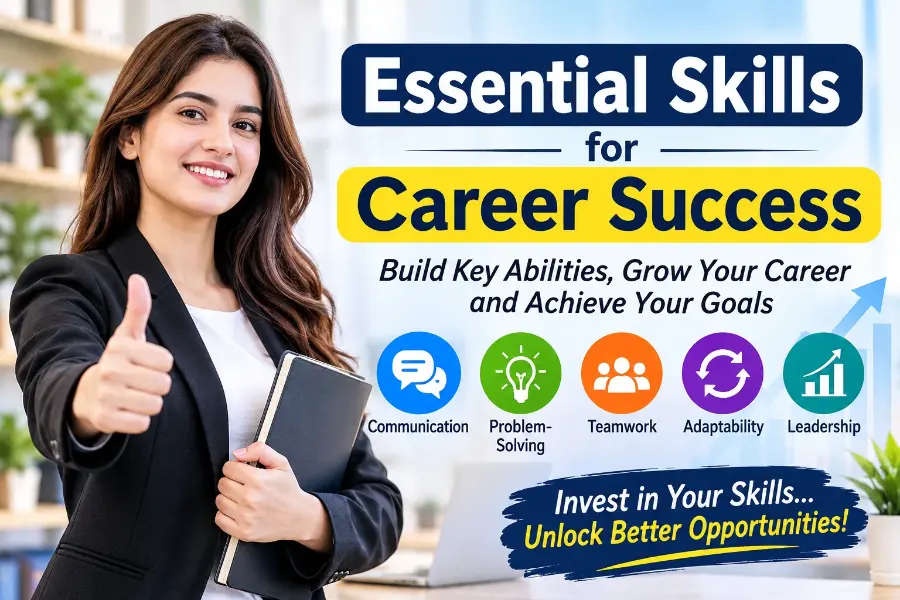
In this guide, we will explore the 15 most important skills for career success, explain why employers value them, and share practical ways to develop them for long-term professional growth.
What Are Essential Skills for Career Success?
Essential skills for career success are the abilities and personal qualities that help individuals perform their jobs effectively, build professional relationships, solve workplace challenges, and achieve long-term career goals.
These skills are useful in almost every industry. For example, a teacher needs communication and organisation skills, while an engineer needs problem-solving and technical abilities. Similarly, a business professional needs leadership, teamwork, and decision-making skills.
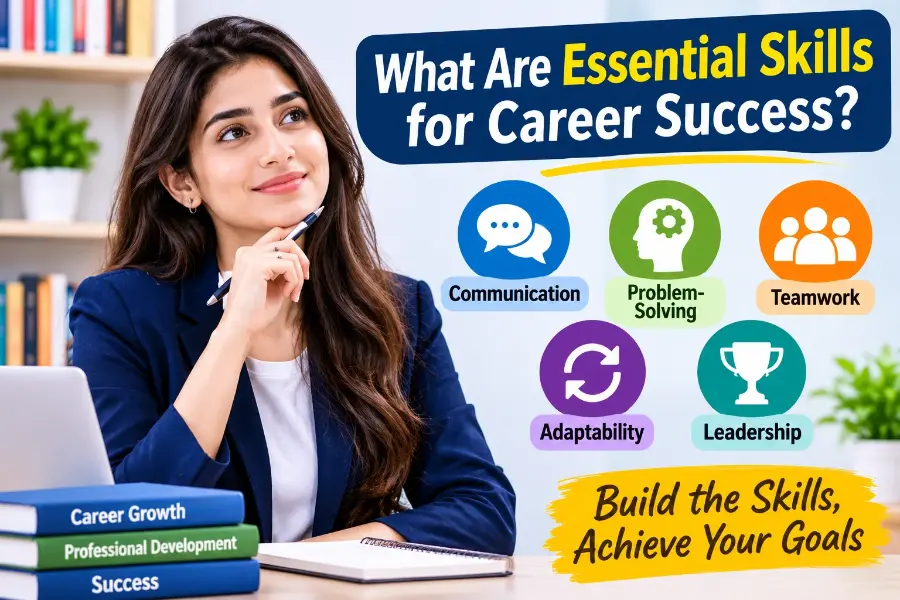
Career skills generally fall into two main categories:
1. Hard Skills
Hard skills are specific abilities that you learn through education, training, and practical experience. They are usually related to a particular profession or job.
Examples include:
- Computer programming
- Graphic design
- Financial analysis
- Data analysis
- Accounting
- Project management
- Digital marketing
2. Soft Skills
Soft skills are personal and interpersonal abilities that shape how you communicate, work, and interact with others.
Examples include:
- Communication
- Teamwork
- Leadership
- Time management
- Adaptability
- Emotional intelligence
- Problem-solving
Both types of skills are important. Having technical knowledge can help you qualify for a job, while strong soft skills can help you perform better and grow professionally.
15 Essential Skills for Career Success
Developing the right combination of professional and personal abilities can make a significant difference in your career.
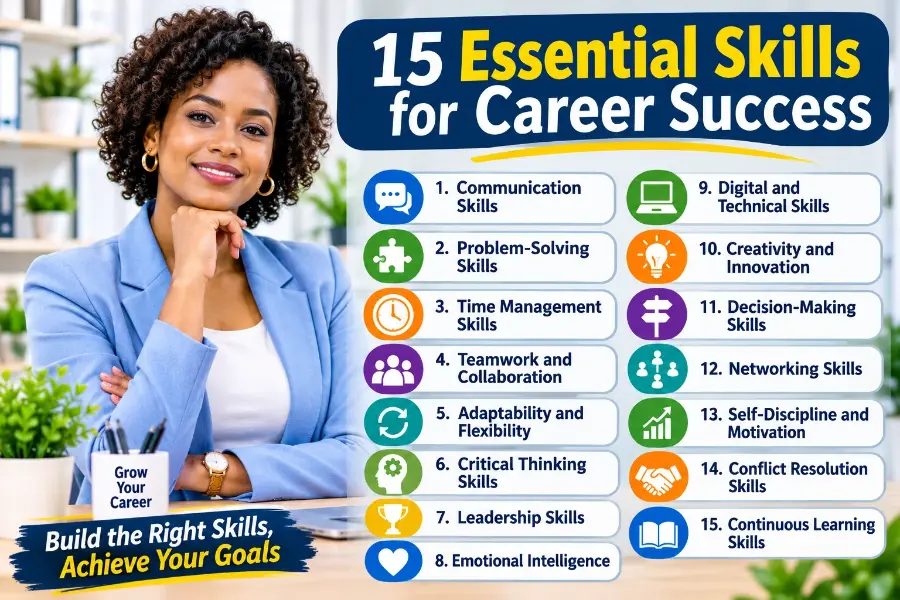
Here are 15 important skills that can help you succeed in different workplaces and industries.
1. Communication Skills
Communication is one of the most important skills for professional success. It helps you share information, explain ideas, understand instructions, and build positive relationships with colleagues, customers, and managers.
Good communication isn’t just about speaking confidently. It also includes writing clearly, listening carefully, and understanding other people’s points of view.
Important communication abilities include:
- Verbal communication: Expressing your thoughts clearly during meetings, interviews, and discussions.
- Written communication: Writing professional emails, reports, messages, and documents.
- Active listening: Paying attention to others and understanding their information before responding.
- Presentation skills: Explaining ideas confidently to individuals or groups.
How to Improve Communication Skills
Practice speaking with different people, participate in group discussions, improve your writing, and listen carefully when others are talking. You can also practice giving presentations to build confidence.
2. Problem-Solving Skills
Every workplace faces challenges. Employees who can identify problems and find practical solutions are valuable to employers.
Problem-solving skills help you understand difficult situations, evaluate possible solutions, and make decisions that improve results.
For example, a project manager may face an unexpected delay. Instead of becoming frustrated, they can identify the cause, adjust the schedule, and distribute responsibilities to keep the project moving.
How to Improve Problem-Solving Skills
- Break complicated problems into smaller parts.
- Identify the main cause of an issue.
- Consider different solutions before deciding.
- Learn from previous mistakes.
- Practice solving real-life challenges.
Strong problem-solving abilities can help you become more independent and confident at work.
3. Time Management Skills
Time management means organising your working hours and completing important responsibilities within available time.
Employees who manage their time effectively can meet deadlines, reduce unnecessary stress, and maintain consistent productivity.
Good time management is especially important when you have several responsibilities or work on multiple projects.
Important time management techniques include:
- Prioritisation: Complete important tasks before less urgent activities.
- Daily planning: Prepare a realistic schedule for your responsibilities.
- Deadline management: Set appropriate time limits for completing assignments.
- Avoiding distractions: Reduce unnecessary interruptions during working hours.
How to Improve Time Management
Start your day by identifying your most important tasks. Use a calendar, notebook, or digital planning tool to organise your responsibilities. Divide large projects into smaller activities and monitor your progress.
4. Teamwork and Collaboration
Most professional environments require employees to work with other people. Teamwork means cooperating with colleagues, sharing responsibilities, and working toward common goals.
A successful team includes people with different experiences, abilities, and opinions. Employees who respect these differences can help create a positive working environment.
Important teamwork abilities include:
- Respecting different opinions.
- Sharing information and knowledge.
- Supporting colleagues.
- Accepting responsibilities.
- Cooperating to achieve shared goals.
How to Improve Teamwork Skills
Participate in group projects, communicate openly, respect other people’s contributions, and offer help when colleagues need support.
Being a good team member does not mean agreeing with everyone. It means working respectfully toward a common objective.
5. Adaptability and Flexibility
Modern workplaces constantly experience changes in technology, customer expectations, business strategies, and working methods.
Adaptability is the ability to adjust to new situations, while flexibility means being willing to consider different approaches when circumstances change.
For example, an employee may need to learn new software, take on different responsibilities, or adjust to a remote work environment.
How to Improve Adaptability
- Stay open to new ideas and ways of working.
- Learn new technologies and tools.
- Accept constructive feedback.
- Remain calm during unexpected situations.
- Treat workplace changes as learning opportunities.
Adaptable employees can handle uncertainty more effectively and prepare themselves for new professional opportunities.
6. Critical Thinking Skills
Critical thinking means examining information carefully before forming an opinion or making a decision.
It helps professionals distinguish reliable information from incorrect assumptions, understand complicated situations, and evaluate different possibilities.
For example, a marketing professional may compare customer feedback, campaign results, and market information before choosing a new advertising strategy.
Important critical thinking abilities include:
- Analysing information.
- Evaluating evidence.
- Identifying assumptions.
- Comparing different viewpoints.
- Making logical conclusions.
How to Improve Critical Thinking
Ask questions, research information from reliable sources, consider different perspectives, and avoid making decisions without understanding the available evidence.
This skill is particularly useful in management, education, healthcare, business, engineering, and research careers.
7. Leadership Skills
Leadership is the ability to guide, motivate, and support others toward achieving shared objectives.
Leadership skills are not limited to managers or company owners. Employees at every career level can demonstrate leadership by taking responsibility, helping colleagues, and showing initiative.
Important leadership qualities include:
- Responsibility and accountability.
- Clear communication.
- Decision-making.
- Motivation and encouragement.
- Conflict management.
- Delegation and organisation.
How to Improve Leadership Skills
Volunteer to manage small projects, help team members, take responsibility for your work, and learn from experienced professionals.
Why Leadership Matters for Career Growth
Strong leadership abilities can prepare employees for supervisory positions, team management roles, and other professional opportunities.
8. Emotional Intelligence
Emotional intelligence is the ability to recognise, understand, and manage your emotions while responding appropriately to other people’s feelings.
It plays an important role in workplace relationships, teamwork, communication, and conflict management.
For example, an emotionally intelligent employee can remain professional during a disagreement instead of reacting angrily.
The main elements of emotional intelligence include:
- Self-awareness: Understanding your emotions and recognising how they affect your behaviour.
- Self-management: Controlling emotional reactions and responding calmly.
- Social awareness: Recognising the feelings and needs of other people.
- Relationship management: Building positive professional relationships.
How to Improve Emotional Intelligence
Practice self-reflection, listen to other people’s concerns, accept feedback, and learn to manage stressful situations without reacting impulsively.
Emotional intelligence is an important skill for building positive workplace relationships and becoming an effective professional. It helps individuals understand others, communicate clearly, manage conflicts, and work better in teams. Learn more about the role of emotional intelligence in leadership and how it can support professional growth.
9. Digital and Technical Skills
Technology is now an important part of almost every industry. Employees need basic digital knowledge to complete everyday responsibilities and work efficiently.
Digital and technical skills vary by profession, but basic computer literacy helps in most careers.
Examples of important digital skills include:
- Using word-processing and spreadsheet software.
- Managing emails and online communication.
- Working with digital collaboration tools.
- Understanding data and basic analytics.
- Using industry-specific software.
- Understanding cybersecurity and online safety.
How to Improve Digital Skills
Take online courses, practice using common workplace software, explore relevant digital tools, and stay informed about new technologies.
You can also develop specialised technical abilities based on your chosen profession, such as programming, graphic design, accounting software, or data analysis.
10. Creativity and Innovation
Creativity is the ability to develop original ideas, while innovation involves applying useful ideas to create improvements or solve problems.
These abilities are valuable in fields such as business, marketing, technology, education, design, and product development.
For example, a graphic designer uses creativity to develop attractive designs, while a business professional may introduce a new process to improve customer service.
How to Improve Creativity
- Explore different ideas and perspectives.
- Read books and learn about new subjects.
- Experiment with different approaches.
- Ask questions and challenge existing methods.
- Learn from successful projects and experiences.
Creative employees can help organisations discover better ways to work and respond to changing customer needs.
11. Decision-Making Skills
Decision-making means selecting the most appropriate option after considering available information, possible outcomes, and potential risks.
Professionals make decisions every day, from managing small tasks to handling important business responsibilities.
Good decision-making requires confidence, logical thinking, and an understanding of priorities.
Important decision-making abilities include:
- Collecting relevant information.
- Comparing available options.
- Understanding possible risks.
- Considering short-term and long-term results.
- Accepting responsibility for decisions.
How to Improve Decision-Making Skills
Avoid rushing important decisions. Gather relevant information, compare alternatives, consider possible consequences, and learn from the results of previous decisions.
12. Networking Skills
Networking means building and maintaining professional relationships with people who can share knowledge, experiences, and career opportunities.
It can help you learn about job openings, understand industry developments, find mentors, and connect with experienced professionals.
Useful networking opportunities include:
- Professional conferences and events.
- Industry workshops and seminars.
- University alumni networks.
- Professional social media platforms.
- Online career communities.
How to Improve Networking Skills
Start conversations with professionals in your industry, participate in relevant events, maintain meaningful connections, and offer help when possible.
Remember that effective networking is about building genuine professional relationships rather than simply collecting contacts.
13. Self-Discipline and Motivation
Self-discipline means managing your behaviour and staying committed to your responsibilities, even when you do not feel motivated.
Motivation encourages you to work toward your goals, while discipline helps you maintain consistent effort.
These abilities are particularly important for remote workers, freelancers, entrepreneurs, and employees who manage independent projects.
How to Improve Self-Discipline
- Set realistic professional goals.
- Develop a consistent daily routine.
- Avoid unnecessary distractions.
- Complete responsibilities on time.
- Monitor your achievements.
- Stay committed to long-term improvement.
Developing self-discipline can help you become more reliable and productive throughout your career.
14. Conflict Resolution Skills
Disagreements can happen in any workplace because employees have different opinions, experiences, and working styles.
Conflict resolution is the ability to handle disagreements respectfully and find solutions that support positive working relationships.
Important conflict resolution abilities include:
- Listening to different viewpoints.
- Identifying the main cause of disagreement.
- Communicating respectfully.
- Controlling emotional reactions.
- Finding mutually acceptable solutions.
How to Improve Conflict Resolution Skills
Remain calm during disagreements, avoid personal criticism, understand the other person’s perspective, and focus on solving the actual problem.
Effective conflict resolution can improve teamwork and create a healthier professional environment.
15. Continuous Learning Skills
Professional learning should not stop after completing school, college, or university. Industries continue to develop, and employees need to update their knowledge to remain competitive.
Continuous learning means regularly improving your abilities through education, training, practical experience, and independent study.
Examples of continuous learning include:
- Completing professional certifications.
- Taking online courses.
- Reading industry publications.
- Attending workshops and seminars.
- Learning new software and technologies.
- Seeking guidance from experienced professionals.
How to Develop a Continuous Learning Habit
Set aside time every week to learn something related to your career. Choose relevant subjects, practice new abilities, and review your progress regularly.
Continuous learning helps you remain professionally prepared and opens the door to new opportunities.
Why Are Essential Career Skills Important?
Career skills influence how effectively you perform your responsibilities, interact with colleagues, and respond to workplace challenges. Developing these abilities can benefit your professional life in several ways.
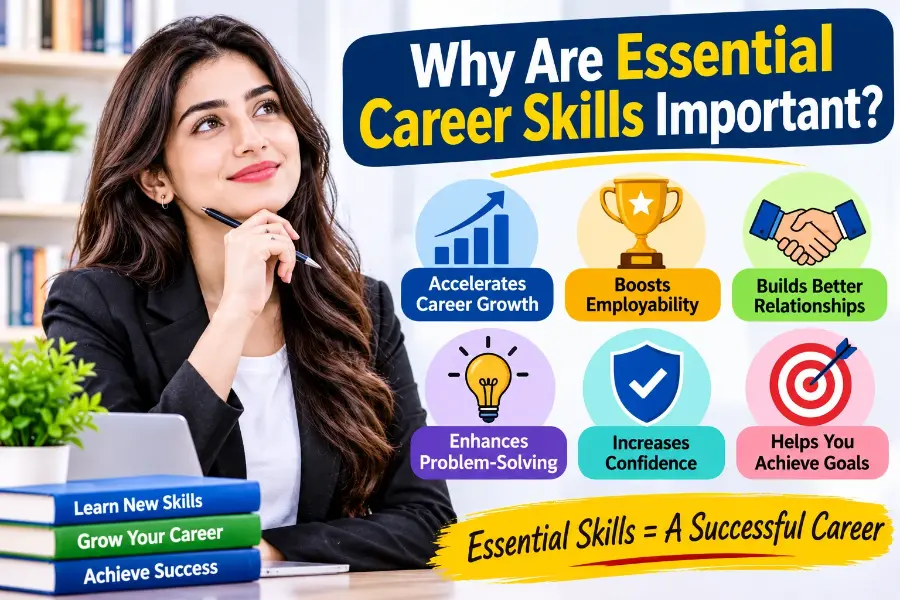
Improve Job Opportunities
Employers look for candidates with the right mix of qualifications, technical knowledge, and professional abilities.
Strong communication, teamwork, and problem-solving skills can help you stand out during recruitment and job interviews.
Increase Workplace Productivity
Employees with strong organisational and time-management skills can complete responsibilities more efficiently.
They can prioritise important activities, reduce unnecessary delays, and contribute to better workplace results.
Support Professional Growth
Developing career skills can prepare you for additional responsibilities, promotions, and leadership opportunities.
For example, an employee who improves communication and management abilities may become a suitable candidate for a supervisory position.
Build Confidence and Independence
When you develop useful professional skills, you become more confident in handling responsibilities and making decisions.
This confidence can help you work independently, communicate your ideas, and manage difficult situations.
Prepare You for Leadership Positions
Organisations need professionals who can guide teams, manage projects, and make responsible decisions.
Developing leadership, emotional intelligence, and problem-solving abilities can help you prepare for future management opportunities.
How to Develop Essential Skills for Career Success
Learning professional skills requires regular effort and practical experience. You do not need to master everything at once.
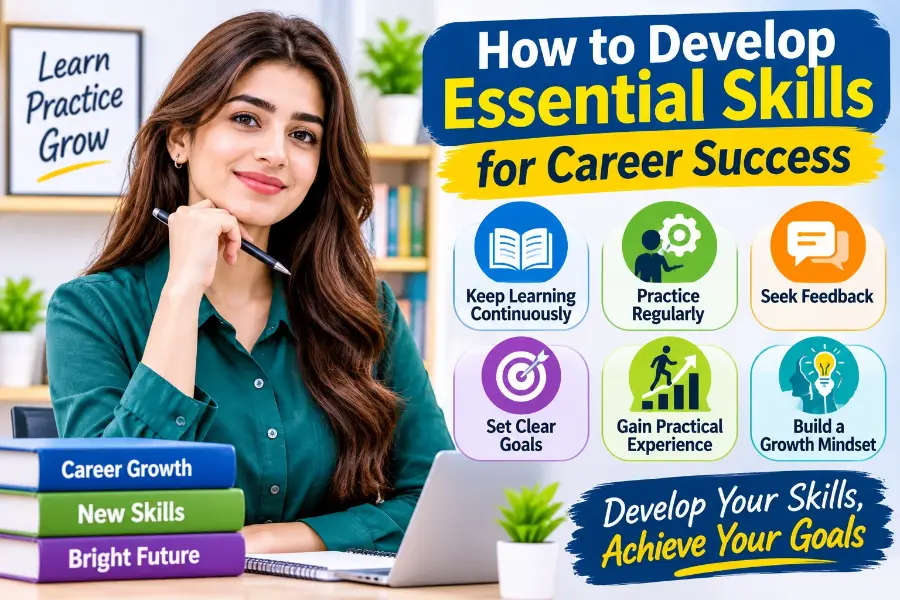
Start with the abilities that are most relevant to your career goals.
1. Set Clear Career Goals
Before developing new skills, identify what you want to achieve professionally.
For example, if you want to become a project manager, you may need to improve leadership, communication, organisation, and decision-making abilities.
Practical Steps
- Identify your short-term career goals.
- Decide which skills you need to achieve them.
- Create a realistic learning schedule.
- Review your progress regularly.
2. Take Online Courses and Training
Online courses provide opportunities to learn new skills without attending a traditional classroom.
Many educational platforms offer training in communication, business, technology, management, and other professional subjects.
What You Can Learn
- Computer and digital skills.
- Leadership and management.
- Business communication.
- Data analysis.
- Project management.
- Problem-solving techniques.
Choose courses that match your career interests and provide practical learning opportunities.
3. Gain Practical Work Experience
Reading about a skill is useful, but applying it in real situations helps you understand how it works.
Internships, volunteer opportunities, part-time jobs, and personal projects can provide valuable experience.
Examples of Practical Learning
- Participate in university group projects.
- Volunteer to organise community activities.
- Complete freelance assignments.
- Assist experienced professionals.
- Practice workplace communication.
Practical experience can also help you identify areas where you need further improvement.
4. Ask for Feedback
Feedback helps you understand your strengths and weaknesses.
Managers, teachers, colleagues, and mentors can provide useful suggestions about your performance.
How to Use Feedback Effectively
- Listen without becoming defensive.
- Ask questions when something is unclear.
- Identify areas that need improvement.
- Apply suggestions to future tasks.
- Review your progress after making changes.
Constructive feedback can help you develop professionally and avoid repeating mistakes.
5. Practice Skills in Everyday Life
You do not need a professional job to develop useful career skills. You can practise many abilities through everyday activities.
For example, organising your daily responsibilities can improve time management, while participating in group discussions can strengthen communication and confidence.
Simple Daily Activities
- Plan your daily schedule.
- Read educational material.
- Practice writing professional emails.
- Participate in group activities.
- Solve problems independently.
- Learn something new regularly.
Small improvements can create positive long-term results.
6. Learn from Experienced Professionals
Experienced professionals can share practical knowledge that may not be available in textbooks or online courses.
You can learn from their successes, mistakes, and approaches to workplace challenges.
Ways to Learn From Professionals
- Find a mentor in your industry.
- Attend professional events.
- Ask meaningful career questions.
- Observe how experienced employees handle responsibilities.
- Request advice about developing relevant skills.
Learning from others can help you understand your industry and make better career decisions.
7. Track Your Progress
Tracking your development helps you understand whether your learning efforts are producing results.
It also helps you identify which skills need more practice.
Create a Simple Skills Development Plan
- Choose three skills you want to improve.
- Set a realistic deadline for each skill.
- Select learning resources or practical activities.
- Record your progress every week.
- Review your achievements and update your goals.
A simple development plan can help you stay focused and motivated.
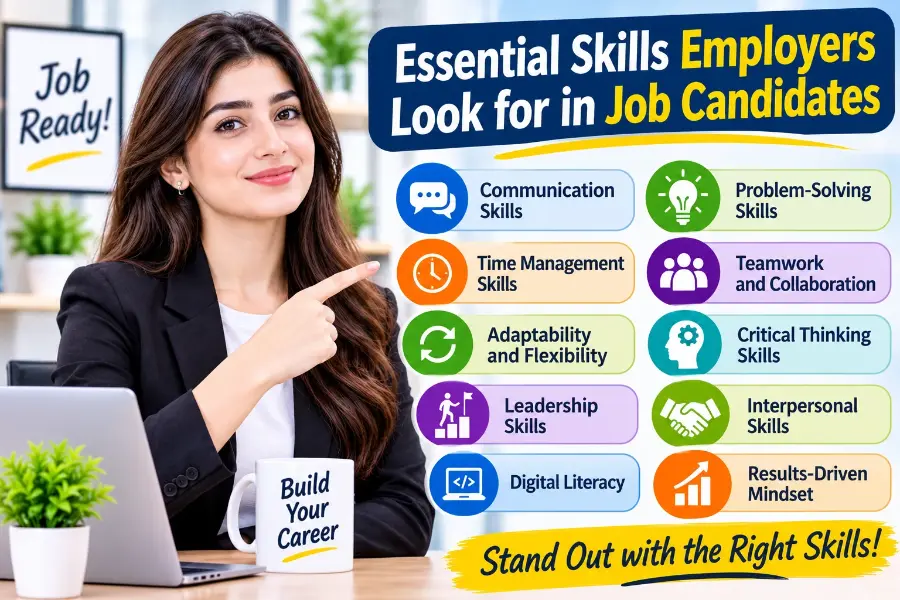
Essential Skills Employers Look for in Job Candidates
Employers want candidates who can perform job responsibilities and contribute positively to their organisations. Although requirements differ by industry, several skills are valuable across professions.
Communication and Interpersonal Skills
Employers value candidates who can explain ideas clearly, listen carefully, and communicate professionally with colleagues and customers.
Problem-Solving and Analytical Skills
Companies need employees who can understand challenges, evaluate information, and suggest practical solutions.
Teamwork and Collaboration
The ability to cooperate with colleagues and contribute to shared objectives is important in most professional environments.
Adaptability and Flexibility
Employers appreciate candidates who can learn new processes, adjust to changing responsibilities, and handle unexpected situations.
Technical and Digital Skills
Many positions require knowledge of computers, software, digital platforms, and industry-specific technologies.
Time Management and Organisation
Employers look for individuals who can organise responsibilities, manage deadlines, and maintain consistent productivity.
Leadership and Initiative
Taking responsibility, showing initiative, and supporting others can make a candidate more valuable to an organisation.
Essential Career Skills for Students and Fresh Graduates
Students and fresh graduates should begin developing professional skills before entering the job market. Academic qualifications provide important knowledge, but employers also want candidates who can apply that knowledge in practical situations.
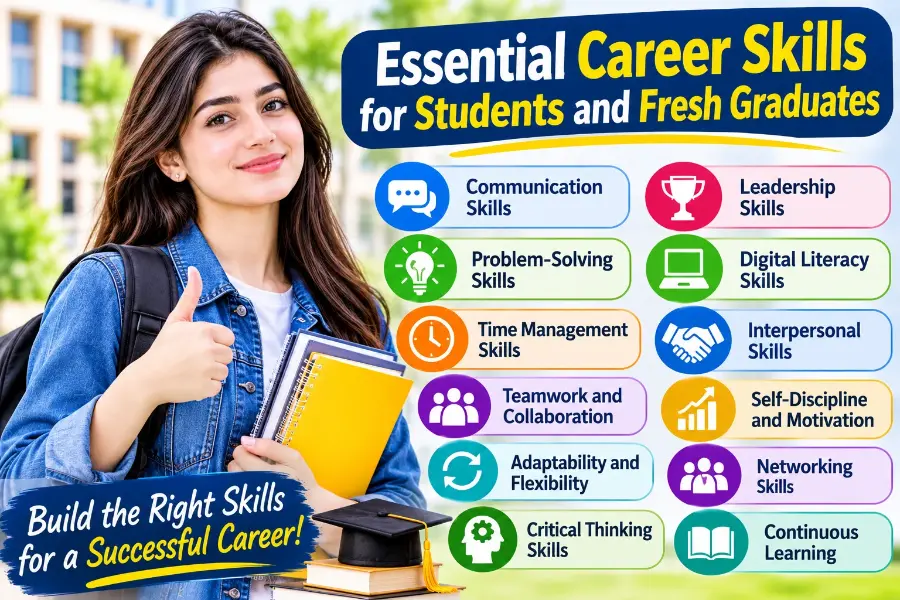
Here are some useful skills for students and new graduates.
Communication and Presentation Skills
Students should learn how to express their ideas clearly, participate in discussions, and deliver presentations confidently.
These abilities can help during job interviews, internships, and professional meetings.
Digital Literacy
Basic computer knowledge, internet research, email communication, and familiarity with common digital tools are useful in many entry-level positions.
Research and Analytical Thinking
Students should learn how to collect information, evaluate sources, understand data, and develop logical conclusions.
Teamwork and Collaboration
Group assignments, university projects, and volunteer activities can help students understand how to work with different people.
Time Management
Balancing education, personal responsibilities, and extracurricular activities helps students develop organisation and planning abilities.
Professional Networking
Connecting with teachers, alumni, industry professionals, and other students can help graduates discover internships, mentorship opportunities, and potential job openings.
Essential Skills for Career Success in the Modern Workplace
The modern workplace is influenced by digital transformation, artificial intelligence, remote work, and changing business needs.
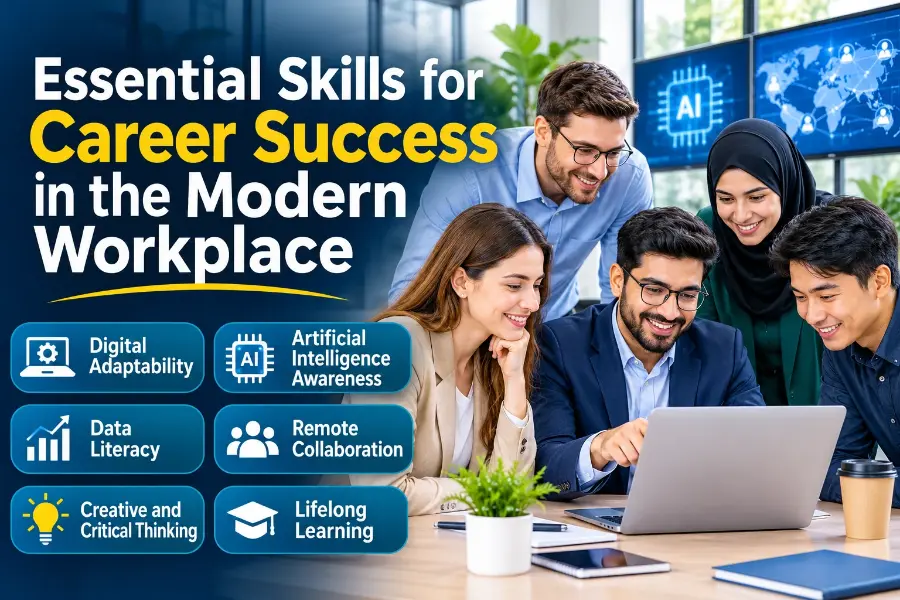
Professionals need to develop new abilities while maintaining traditional workplace skills.
Digital Adaptability
Employees should be comfortable learning new software, digital platforms, and workplace technologies.
Adjusting to technological changes can make everyday work more efficient.
Artificial Intelligence Awareness
Artificial intelligence is becoming increasingly common in different industries.
Professionals should understand how AI tools work, where they can be useful, and why human judgment remains important.
Data Literacy
Data literacy means understanding, interpreting, and using information to support decisions.
Basic knowledge of spreadsheets, charts, reports, and data analysis can be useful in business, healthcare, education, marketing, and technology careers.
Remote Collaboration
Remote and hybrid workplaces require employees to communicate and cooperate through digital platforms.
Professionals should understand online meeting tools, digital project management systems, and virtual communication practices.
Creative and Critical Thinking
Technology can automate many routine activities, but employees still need to evaluate information, develop new ideas, and make thoughtful decisions.
Lifelong Learning
Modern professionals should regularly update their knowledge and develop abilities that match changing industry requirements.
How to Highlight Your Career Skills on a Resume
Developing useful skills is important, but employers also need to understand what you can offer. Your resume should present your abilities clearly and connect them with the requirements of the position.
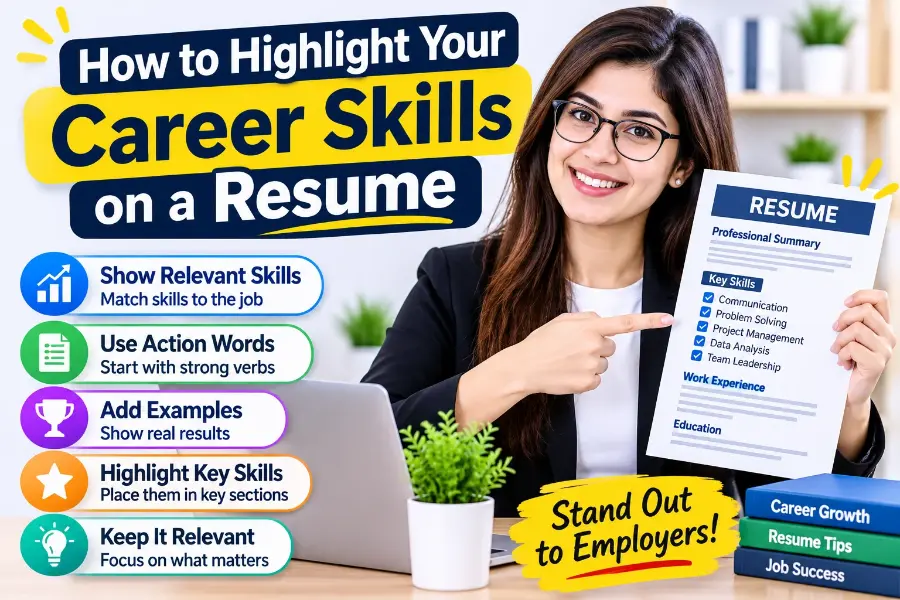
Include Relevant Skills in Your Skills Section
Create a dedicated skills section and include abilities that match the job description.
Example
Professional Skills:
- Communication and presentation
- Problem-solving
- Time management
- Team collaboration
- Microsoft Office
- Project organization
Avoid listing skills that you cannot demonstrate in practice.
Demonstrate Skills Through Work Experience
Instead of simply mentioning a skill, explain how you used it in a previous job, internship, volunteer activity, or academic project.
Example
Rather than writing:
- Good teamwork skills.
Write:
- Collaborated with a five-member team to complete a university project before the deadline.
The second example provides a clearer picture of your abilities.
Use Examples and Achievements
Whenever possible, include measurable results that demonstrate your professional contributions.
For example:
- Improved customer response time by organising daily support tasks.
- Managed a student project and completed all activities on schedule.
- Created social media content to support a small business marketing campaign.
Specific examples can make your resume more convincing.
Match Your Skills With the Job Description
Read the job advertisement carefully before applying. Identify the abilities and qualifications requested by the employer.
Include relevant skills in your resume when you genuinely possess them.
This approach helps recruiters understand why your background fits the position.
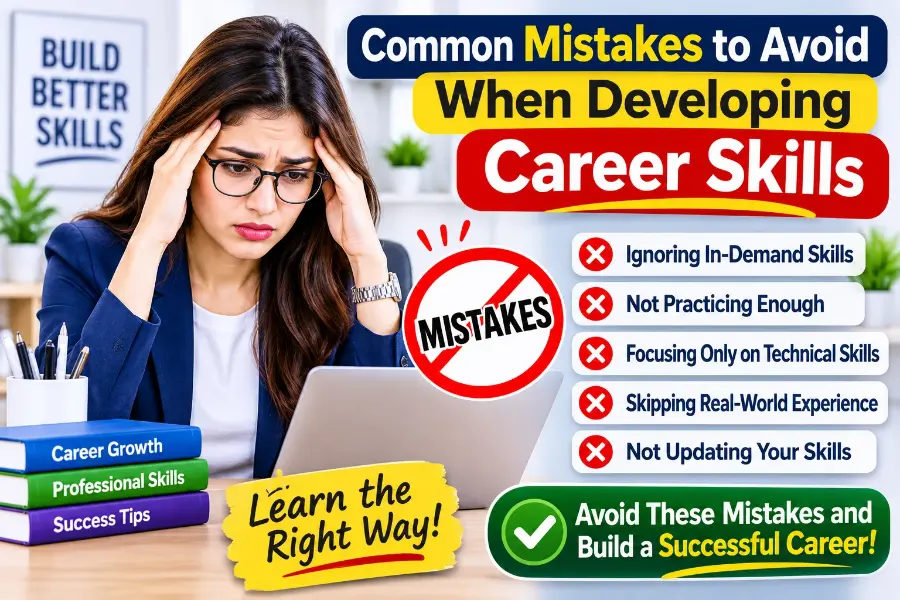
Common Mistakes to Avoid When Developing Career Skills
Learning new abilities is important, but some mistakes can slow down your professional development.
Trying to Learn Everything at Once
Trying to develop too many skills at once can make it hard to stay focused.
Better approach: Select a few important skills and improve them gradually.
Ignoring Communication Skills
Some people focus only on technical knowledge and overlook the importance of professional communication.
Better approach: Practice speaking, writing, listening, and presenting ideas clearly.
Depending Only on Academic Qualifications
Degrees and certificates can help you qualify for opportunities, but they do not automatically guarantee workplace success.
Better approach: Combine education with practical experience and professional skill development.
Avoiding Constructive Feedback
Ignoring feedback can prevent you from recognising weaknesses and improving your performance.
Better approach: Accept useful suggestions and apply them to your future work.
Not Keeping Up With Technology
Digital tools and workplace technologies keep changing. Ignoring these developments can limit your professional abilities.
Better approach: Regularly explore relevant technologies and learn how to use them effectively.
Failing to Practice Newly Learned Skills
Understanding a concept is different from applying it successfully.
Better approach: Use your new knowledge in projects, workplace activities, and everyday situations.
Conclusion
Developing the essential skills for career success is an ongoing process that requires learning, practice, and dedication. Communication, problem-solving, teamwork, adaptability, leadership, time management, and digital knowledge can help you become a more capable and confident professional.
Whether you are a student preparing for your first job, a fresh graduate looking for opportunities, or an experienced employee planning career growth, improving your abilities can make a meaningful difference.
Remember, career success doesn’t depend on one skill or qualification. It comes from combining professional knowledge with strong personal abilities and a willingness to learn.
Start by identifying the skills you need most, practice them regularly, and continue improving as your career develops. Small, consistent steps can help you build a stronger professional future.
Frequently Asked Questions (FAQs)
Choosing the right career skills can make a big difference in your professional journey. Here are answers to some common questions about developing skills for career success.
Key skills for career success include communication, problem-solving, teamwork, adaptability, time management, and critical thinking.
- Communication helps you share ideas clearly.
- Problem-solving makes it easier to handle workplace challenges.
- Teamwork helps you work effectively with others.
- Adaptability allows you to adjust to new situations.
Developing these skills can help you perform better and grow professionally.
Employers commonly look for communication, teamwork, problem-solving, adaptability, and time management.
- Communication: Share information clearly and confidently.
- Teamwork: Cooperate with colleagues to achieve common goals.
- Problem-solving: Find practical solutions to workplace challenges.
- Adaptability: Adjust to changes and learn new things.
- Time management: Complete tasks efficiently and meet deadlines.
These skills can make you a stronger candidate in almost any industry.
You can improve your professional skills through regular practice, education, and real-world experience.
- Take online courses and attend training sessions.
- Work on personal projects to gain practical experience.
- Ask experienced professionals for advice and feedback.
- Read industry-related books and follow new developments.
Consistent learning and practice can help you become more confident and capable.
Soft skills help you communicate effectively, build workplace relationships, and handle professional responsibilities.
- They make teamwork and collaboration easier.
- They improve communication and conflict resolution.
- They help you adapt to different working environments.
- They support leadership and decision-making.
Strong soft skills can help you grow in almost any profession.
Students should develop communication, digital literacy, teamwork, problem-solving, time management, and networking skills before starting their careers.
- Participate in group projects and presentations.
- Learn basic computer and digital tools.
- Take internships or volunteer opportunities.
- Build connections with teachers and industry professionals.
Developing these abilities early can make the transition from education to employment easier.
Yes. You don’t need a formal job to start developing valuable career skills.
- Academic projects can improve teamwork and problem-solving.
- Presentations help build communication and confidence.
- Online courses introduce useful technical and digital skills.
- Personal projects provide opportunities to apply what you’ve learned.
You can build a strong foundation for your career even before getting your first job.
Technical skills give you the knowledge and practical abilities needed to perform specific tasks in your chosen profession.
- They help you qualify for specialised job opportunities.
- They improve productivity and work efficiency.
- They allow you to use industry-specific tools and software.
- They help you stay competitive as technology changes.
Combining technical expertise with soft skills can improve your career opportunities.
Hard skills are specific abilities developed through education, training, and practice. Soft skills relate to how you communicate, behave, and interact with others.
- Hard skills: Programming, accounting, data analysis, and graphic design.
- Soft skills: Communication, teamwork, leadership, and adaptability.
For example, a data analyst needs technical knowledge to work with data and communication skills to explain findings to others.
Both types of skills are important for professional development and long-term career success.
Career success doesn’t happen overnight. It takes continuous learning, practical experience, and a willingness to improve. By developing a balanced combination of technical knowledge and soft skills, you can prepare yourself for new opportunities, overcome workplace challenges, and build a rewarding professional future.
You May Also Like
Looking to develop your professional skills and explore new career opportunities? These related guides can help you understand different career paths, learn valuable skills, and prepare for the job market.
1. How to Become a Web Developer
Interested in technology? Learn about web development skills, programming languages, education, and practical steps to build a career in this growing field.
2. How to Become a Data Analyst
Discover the technical and analytical skills needed to work with data, use popular analysis tools, and explore career opportunities in data analytics.
3. How to Find Remote Jobs With No Experience
Starting your career without previous work experience? Explore practical job-search strategies, useful skills, and ways to find remote opportunities.
How to Find Remote Jobs With No Experience
Explore these guides to keep learning, strengthen your professional abilities, and take the next step toward your career goals.
Keep learning and exploring new career paths to strengthen your skills, discover better opportunities, and build a successful professional future.





- Be Respectful
- Stay Relevant
- Stay Positive
- True Feedback
- Encourage Discussion
- Avoid Spamming
- No Fake News
- Don't Copy-Paste
- No Personal Attacks
- Be Respectful
- Stay Relevant
- Stay Positive
- True Feedback
- Encourage Discussion
- Avoid Spamming
- No Fake News
- Don't Copy-Paste
- No Personal Attacks
