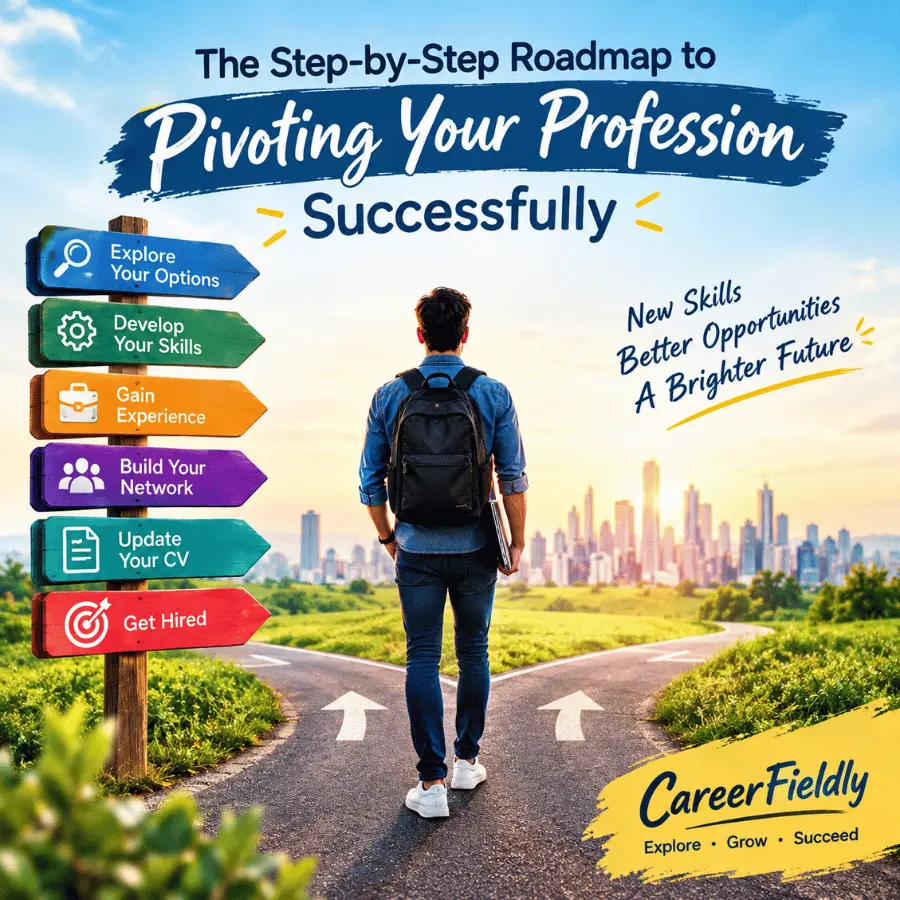
The Step-by-Step Roadmap to Pivoting Your Profession Successfully
Published: 4 Oct 2026
Changing careers can feel challenging, especially after years in one field. However, making a career change can open doors to better opportunities, professional growth, and greater job satisfaction.
Whether you want to explore a new industry, follow your passion, or find a profession with better prospects, careful planning can make the transition easier. Understanding your career goals, interests, and strengths is the first step toward building a successful future.
A successful career transition requires more than simply applying for new jobs. You need to assess your existing skills, research potential career paths, identify skill gaps, and create a practical plan to support your long-term ambitions.
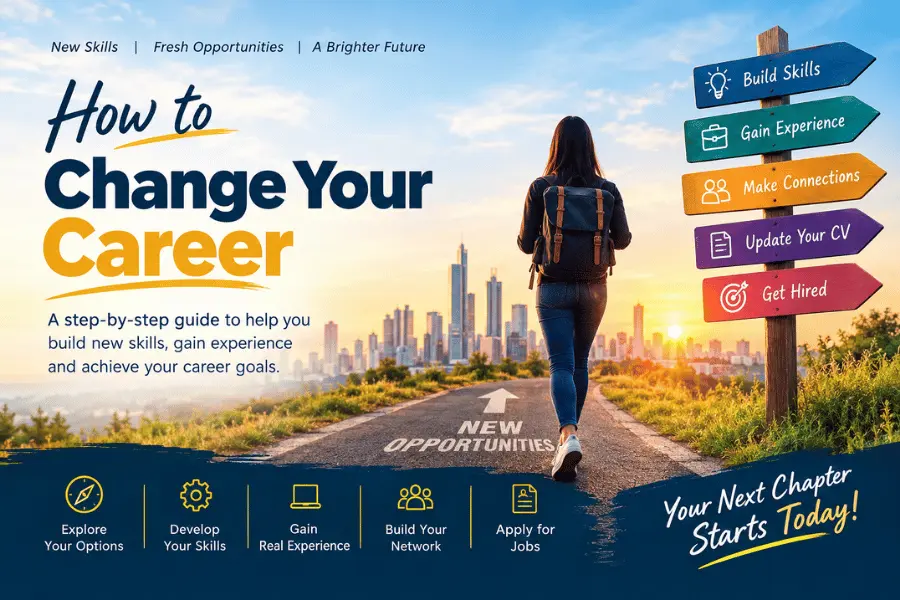
This guide provides a step-by-step roadmap for a successful career change. From choosing the right profession to developing new skills, updating your CV, and preparing for interviews, these practical strategies will help you approach your new career path with confidence.
Why People Change Careers
People decide to change careers for various reasons, including better job opportunities, personal interests, financial stability, and professional growth. Understanding these reasons can help you make informed decisions about your future and choose a career that aligns with your goals.
1. Better Salary and Financial Opportunities
One of the main reasons people change careers is the chance to earn more. When your current job offers limited salary growth, switching to a more rewarding profession can improve financial stability and create better long-term opportunities.
2. Limited Career Growth
Some professionals feel stuck in their current positions because of limited promotions, repetitive tasks, or a lack of new challenges. Moving into a different field can create opportunities to develop new skills, take on greater responsibilities, and achieve long-term professional growth.
3. Following Personal Interests and Passions
Many people choose a new profession because their interests change over time. For example, someone working in administration may discover a passion for digital marketing, graphic design, or information technology. Pursuing a field that matches your interests can increase job satisfaction and motivation.
4. Better Work-Life Balance
A demanding job can negatively affect personal time, family responsibilities, and overall well-being. Some people seek careers with flexible hours, remote work options, or less stressful conditions. A suitable career change can help create a healthier work-life balance.
5. Job Security and Industry Changes
Technology, automation, and changing market demands can affect employment opportunities in many industries. Some workers change professions to enter growing fields with stronger demand for skilled employees. Researching career opportunities and industry trends can help you identify professions with promising long-term prospects.
6. A Desire for New Challenges
After spending several years in the same role, some professionals want to explore something different. A new career can offer fresh challenges, learning opportunities, and a chance to expand your professional abilities. Developing a clear career transition plan can make this change more manageable.
Before deciding, evaluate your current situation and identify what you want in your next profession. Consider your skills, interests, financial needs, career goals, and lifestyle preferences. Understanding your priorities will help you select a career path that offers both personal satisfaction and professional opportunities.
Step 1: Identify Your Reasons for Changing Careers
Before starting a career change, take time to understand why you want to leave your current profession. Knowing your reasons will help you make better decisions and choose a career that aligns with your interests, goals, and financial needs. Understanding your motivation also helps you avoid moving into another job that creates the same problems.
Evaluate Your Current Job Satisfaction
Start by examining what you like and dislike about your current profession. Consider whether you’re satisfied with your responsibilities, salary, work environment, and growth opportunities. If you regularly feel unmotivated or believe you’re underusing your skills, it may be time to explore other career opportunities.
However, make sure you understand the real source of your dissatisfaction. Sometimes, changing employers, improving your skills, or discussing new responsibilities with your manager can solve the problem without requiring a complete career transition.
Define Your Personal and Professional Goals
Think about what you want to achieve in your next profession. You might want a higher income, greater flexibility, more meaningful work, or opportunities to develop new skills. Write down your short-term and long-term career goals so you can compare potential professions against your priorities.
For example, if you want to work remotely, you might explore digital marketing, web development, content writing, or other remote-friendly roles. Choose a path based on your interests and abilities rather than following a trend simply because it appears profitable.
Consider Your Financial Situation
A career change may require training, education, certification, or a temporary income reduction. Before leaving your current job, evaluate your savings, monthly expenses, and financial responsibilities. If possible, build an emergency fund and explore your new field while maintaining your existing income.
A realistic financial plan can reduce stress and let you focus on developing the skills you need for your next profession.
Separate Temporary Frustration from Long-Term Needs
A difficult manager, a stressful project, or a busy period can make you want to leave your job immediately. Before making a major decision, determine whether your dissatisfaction is temporary or reflects a deeper mismatch with your profession.
If your current work consistently conflicts with your interests, values, or long-term ambitions, exploring a new field may be worthwhile. A thoughtful decision based on self-assessment and career planning usually works better than an impulsive move.
Create a Clear Career Change Goal
Once you understand your reasons, summarize them in a simple statement. For example: “I want to move from administrative work into digital marketing because I enjoy creative problem-solving, want to develop in-demand skills, and seek better long-term career opportunities.”
This statement gives your career transition plan a clear direction. It will also help you evaluate future opportunities and stay focused as you work toward your new profession.
Before choosing a new career, understand what you want to change and what you hope to achieve. Clear goals, realistic expectations, and careful planning will provide a stronger foundation for a successful career change.
Step 2: Assess Your Skills, Interests, and Strengths
Before moving into a new profession, take time to evaluate your skills, interests, and strengths. Understanding what you can do and enjoy will help you identify suitable career opportunities. A successful career change doesn’t always mean starting from scratch; many of your current abilities may transfer well to a different industry.
Identify Your Existing Skills
Start by listing the skills you have developed through your current job, education, volunteer work, or personal projects. These may include communication, leadership, problem-solving, time management, writing, customer service, or technical abilities.
Pay attention to transferable skills, which are abilities that can be applied across different professions. For example, a teacher may use communication and presentation skills to work in corporate training, while an administrative professional may apply organizational skills to project coordination.
Recognizing these abilities can make your career transition easier and help you understand which skills you need to develop further.
Explore Your Interests and Passions
Your interests can offer valuable clues about the work you may enjoy. Think about the activities that motivate you, spark curiosity, and keep you engaged. Consider whether you prefer creative tasks, analytical problem-solving, working with people, or using technology.
For example, someone who enjoys writing and research might explore content writing, journalism, or digital marketing. A person who likes numbers and logical thinking might consider data analysis, accounting, or software development.
However, do not choose a profession based on interest alone. Before deciding, research the daily responsibilities, working conditions, earning potential, and required qualifications.
Recognize Your Professional Strengths
Your strengths are the qualities and abilities that help you perform tasks effectively. These may include attention to detail, creativity, adaptability, leadership, patience, or the ability to solve complex problems.
To identify your professional strengths, review your past achievements and consider which tasks you complete particularly well. You can also ask trusted colleagues, supervisors, friends, or mentors for feedback about your abilities.
Understanding your strengths lets you focus on careers where your natural abilities and developed skills give you a genuine advantage.
Identify Your Skill Gaps
After identifying possible career paths, compare your current abilities with your target profession’s requirements. This process will help you identify skill gaps that could keep you from entering the field.
For example, if you want to move into web development, you may need to learn programming languages, website development tools, and basic project management. If you are interested in digital marketing, you may need training in SEO, content strategy, analytics, and advertising platforms.
Create a practical learning plan using online courses, professional certifications, tutorials, or hands-on projects. Focus on the most important skills first, rather than trying to learn everything at once.
Use Career Assessment Tools
Career assessment tools can help you explore professions that match your interests, personality preferences, and abilities. These assessments may suggest potential career paths you had not previously considered.
You can also review job descriptions, speak with professionals, and explore career information through reputable employment websites. Treat assessment results as a starting point, not a final decision, because your experience, goals, and personal circumstances also matter.
Create a Personal Skills Inventory
Organize your findings into a simple table to understand your current position and next steps.
| Assessment area | Questions to consider |
|---|---|
| Existing skills | What can I already do well? |
| Interests | Which tasks and subjects genuinely interest me? |
| Strengths | What do others recognize as my best qualities? |
| Skill gaps | What do I need to learn to succeed in my target profession? |
| Career goals | Which profession best matches my ambitions? |
Reviewing these areas will help you make a more informed decision about your next move.
A successful career change begins with understanding yourself. By evaluating your skills, interests, strengths, and learning needs, you can choose a profession that fits your abilities and develop a realistic plan for long-term career growth.
Step 3: Research Potential Career Paths
Once you understand your skills, interests, and strengths, research potential career paths that match your goals. Choosing a new profession requires more than selecting a job that sounds attractive. You need to understand its responsibilities, qualifications, earning potential, and future opportunities. Thorough career research helps you make an informed decision and reduces the risk of entering a field that doesn’t meet your expectations.
Explore Different Career Options
Start by identifying several professions that align with your abilities and interests. Do not limit yourself to jobs similar to your current role. Your transferable skills may qualify you for opportunities in entirely different industries.
For example, someone with strong writing and communication skills might explore content writing, public relations, digital marketing, or technical writing. A professional with analytical abilities might consider data analysis, financial planning, or business operations.
Create a shortlist of three to five potential careers and investigate each one carefully. Comparing different options will help you identify the profession that best matches your long-term career goals.
Understand Job Responsibilities and Daily Tasks
Before choosing a profession, learn what people in that field do day to day. Job titles can sound appealing, but daily responsibilities may differ from what you expect.
Read job descriptions, watch interviews with industry professionals, and explore career guides to understand typical tasks, working hours, workplace environments, and performance expectations.
For example, a digital marketing professional may spend time researching keywords, creating content, analyzing campaign performance, and managing advertising platforms. Understanding these responsibilities will help you decide whether the work matches your interests and strengths.
Evaluate Salary and Earning Potential
Financial considerations play an important role in a career change. Research typical salaries, entry-level earnings, and opportunities for salary growth in your target profession. Remember that income varies by location, experience, qualifications, employer, and industry demand.
Use reliable salary reports, job ads, and professional employment platforms to set realistic expectations. If you plan to work remotely or freelance, research typical project rates and how long it takes to build a steady client base.
Rather than focusing only on the highest advertised salary, consider the profession’s long-term earning potential and whether it can support your financial goals.
Check Qualifications and Industry Demand
Some careers require university degrees, professional licenses, or specialized certifications, while others emphasize practical experience and demonstrable skills. Research the requirements before investing time or money in training.
You should also examine the job market demand for your chosen profession. Review current vacancies, in-demand skills, emerging technologies, and industry growth trends. Government employment statistics and reputable labor-market reports can provide useful information about employment prospects.
Understanding these requirements will help you determine whether your target career is accessible and what preparation you need before applying.
Speak with Professionals in Your Target Field
Connecting with people already working in your preferred industry can offer valuable insights that job descriptions may not reveal. These conversations can help you understand workplace expectations, common challenges, career progression, and the skills employers value most.
You can connect with professionals through LinkedIn, industry groups, professional associations, or local networking events. Ask thoughtful questions about their experiences and the steps they recommend for someone entering the field.
If possible, arrange an informational interview or speak with a mentor. Firsthand advice can help you develop a more realistic picture of your potential career.
Test Your Chosen Career Before Making a Full Transition
Before leaving your current job, test your preferred profession with a small project, short course, internship, volunteer opportunity, or freelance assignment. Practical experience can help you discover whether you enjoy the work and identify skills you need to improve.
For example, someone interested in graphic design could create sample designs, while an aspiring web developer could build a basic website. These projects also help you start building a professional portfolio that shows potential employers your abilities.
Testing a career on a small scale can reduce uncertainty and help you decide with more confidence.
Compare Your Career Options
After researching several professions, compare them according to your priorities. Consider the following factors:
- Personal interest: Does the work genuinely appeal to you?
- Required skills: Can you develop the necessary abilities?
- Education and training: How much preparation is required?
- Earning potential: Does the profession support your financial needs?
- Job opportunities: Are suitable positions available in your target market?
- Work-life balance: Does the career fit your lifestyle and responsibilities?
- Future growth: Does the profession offer opportunities to advance?
You can rate each career against these factors to identify the strongest option. The best choice is not necessarily the most popular or highest-paying profession; it is the one that balances your interests, abilities, financial needs, and future ambitions.
Thoroughly researching potential career paths helps you understand your options before making a major professional decision. By comparing job responsibilities, salaries, qualifications, industry demand, and growth opportunities, you can select a career path that aligns with your goals and prepares you for a successful transition.
Step 4: Identify Skill Gaps and Obtain Relevant Training
After researching potential career paths, identify the skills and qualifications you need to enter your chosen profession. Even with valuable experience, you may need to develop new abilities to meet employers’ expectations. A clear career development plan will help you focus on the right training, use your time effectively, and prepare for a successful career transition.
Identify the Skills Your New Career Requires
Start by reviewing job descriptions for positions you want to pursue. Note the qualifications, technical abilities, software knowledge, and personal qualities employers frequently request.
Compare these requirements with your existing skills and experience. This comparison will help you identify what you already know and what you need to learn before applying for jobs.
For example, someone moving into digital marketing may already have strong writing and communication skills but need to learn search engine optimization (SEO), website analytics, keyword research, and advertising tools. Identifying these gaps makes your learning process more focused and practical.
Prioritize the Most Important Skills
You do not need to learn everything at once. Focus first on the abilities that are essential for entry-level positions in your chosen profession. Separating essential requirements from optional skills will help you avoid unnecessary training and make faster progress.
Create a list of skills and organize them by importance. Begin with the fundamentals, then gradually move toward more advanced topics.
For example, an aspiring web developer might start with HTML, CSS, and JavaScript before learning advanced frameworks or specialized development tools. This step-by-step approach helps build a strong foundation for future learning.
Choose Relevant Courses and Training Programs
Once you understand your skill gaps, look for training programs that address them directly. Depending on your target profession, you may benefit from online courses, vocational training, university programs, professional certifications, or practical workshops.
Platforms such as Coursera, Udemy, and LinkedIn Learning offer courses across various professional fields. You can also explore free learning resources, official software tutorials, and industry-specific training programs.
Before enrolling, evaluate the course curriculum, instructor experience, practical exercises, cost, and certification value. Choose training that teaches skills employers actually need, not just certificates.
Develop Practical Experience Through Projects
Learning concepts matters, but employers often want proof you can apply your knowledge in real situations. Practical projects help you turn theory into job-ready skills.
For example, someone entering graphic design can create sample logos and marketing materials. An aspiring content writer can develop a portfolio of original articles, while a future data analyst can practice analyzing datasets and presenting findings.
Whenever possible, complete projects that resemble real workplace assignments. Document your work and explain the problems you solved, the tools you used, and the results you achieved. These examples can strengthen your professional portfolio and show potential employers your abilities.
Consider Professional Certifications
Some industries value certifications that demonstrate specific technical knowledge or professional competence. Depending on your field, relevant certifications can strengthen your CV and boost your credibility.
However, not every profession requires formal certification, and a certificate does not automatically guarantee employment. Research employer expectations before paying for an exam or training program.
Prioritize recognized certifications that are relevant to your target role and complement your practical experience. Combining training with demonstrable skills is often more useful than relying on credentials alone.
Create a Realistic Learning Schedule
Balancing training with an existing job, family responsibilities, and personal commitments can be challenging. A realistic schedule helps you make consistent progress without becoming overwhelmed.
Set aside regular time each week to study, practice, and review what you have learned. Break larger learning goals into smaller milestones and track your progress.
For example, you might spend 30–60 minutes each day learning a new skill and use additional time on a practical project on the weekend. Adjust the schedule according to your circumstances and the complexity of your chosen profession.
A structured learning plan can help you stay motivated and make your career transition more manageable.
Track Your Progress and Update Your Skills
As you complete courses and projects, regularly evaluate your progress against the requirements of your target profession. Review job advertisements again to identify any remaining skill gaps and determine whether your training is preparing you for real opportunities.
Ask experienced professionals for feedback on your projects, practice assessments, or portfolio. Constructive feedback can reveal weaknesses you may not notice yourself and help you improve more efficiently.
Remember that professional development continues after you enter a new field. Staying informed about industry trends, emerging technologies, and changing employer expectations will help you remain competitive throughout your career.
Identifying skill gaps and obtaining relevant training are essential steps toward a successful career change. By prioritizing in-demand abilities, choosing suitable courses, gaining practical experience, and tracking your progress, you can build the confidence and qualifications needed to pursue your new profession.
Focus on learning skills you can demonstrate, not simply collecting certificates. A combination of relevant training, practical projects, and continuous improvement will help prepare you for the next stage of your career transition.
Step 5: Gain Practical Experience in Your New Field
After developing the necessary skills, the next step is to gain practical experience in your chosen profession. Courses and training programs provide a strong foundation, but applying that knowledge to real-world tasks helps you understand how the industry works. Practical experience also builds confidence, demonstrates your abilities, and prepares you for future job opportunities.
You do not always need a full-time job to gain experience. Personal projects, internships, freelance assignments, volunteering, and entry-level opportunities can help you build relevant experience as you transition from your current profession.
Start with Small Personal Projects
One of the easiest ways to gain experience is to create projects that demonstrate your new skills. Personal projects let you practice without needing employer permission or waiting for a formal job opportunity.
For example, an aspiring web developer can build a simple website, while someone interested in digital marketing can create a sample content strategy or conduct keyword research for a fictional business. A future graphic designer can develop sample logos, social media graphics, or promotional materials.
Focus on projects that reflect the actual responsibilities of your target profession. Completing several meaningful projects can help you build a professional portfolio that demonstrates your capabilities to potential employers.
Apply for Internships and Entry-Level Positions
Internships and entry-level jobs let you learn directly from experienced professionals. They help you understand workplace expectations, collaborate with colleagues, and apply your skills to real business challenges.
When searching for opportunities, look for positions that welcome beginners or candidates transitioning from another industry. Some employers value transferable skills, motivation, and a willingness to learn as much as formal qualifications.
Even if an opportunity offers limited initial responsibilities, it may help you gain relevant experience and establish professional connections. Before accepting an unpaid internship, carefully consider its learning value, duration, working conditions, and financial implications.
Explore Freelancing and Short-Term Projects
Freelancing can be an effective way to gain practical experience, especially in fields like writing, graphic design, web development, digital marketing, and data analysis.
Start by identifying small tasks that match your current abilities. You might write blog posts, design promotional graphics, build simple websites, or help a small business improve its online presence.
Platforms like Upwork and Fiverr can help freelancers connect with potential clients, though competition can be strong. You can also approach local businesses, professional contacts, or community organizations directly.
Begin with projects you can complete reliably, communicate clearly with clients, and use each assignment to improve your skills. As your experience grows, you can take on more complex projects and build a stronger professional reputation.
Volunteer to Build Relevant Experience
Volunteering can provide practical experience when paid opportunities are difficult to find. Nonprofit organizations, educational institutions, community groups, and small local organizations may need help with activities related to your new profession.
For example, you could manage a community organization’s social media accounts, help a nonprofit update its website, or assist with administrative and research tasks. These opportunities let you apply your skills while contributing to a meaningful project.
Choose volunteer work that relates directly to your target career path. Agree on clear responsibilities and deliverables so you can demonstrate your accomplishments when applying for future positions.
Build a Professional Portfolio
A professional portfolio is a collection of work that demonstrates your skills, experience, and achievements. It can be particularly valuable when entering a field where employers assess practical ability alongside qualifications.
Include your strongest projects, a brief explanation of each assignment, the tools or methods you used, and the results where available. If you have completed client work, obtain permission before sharing confidential information or unpublished materials.
Depending on your profession, your portfolio might include writing samples, website links, design projects, research reports, marketing campaigns, or data analysis examples.
Keep your portfolio organized and relevant to the jobs you want. A focused collection of high-quality work is generally more persuasive than a large collection of unrelated projects.
Learn from Experienced Professionals
Connecting with people already working in your target industry can help you understand professional standards and avoid common beginner mistakes. Experienced professionals may also offer advice on workplace expectations, industry tools, and further development opportunities.
You can build these relationships through professional networking, LinkedIn, industry events, online communities, and mentorship programs.
Ask thoughtful questions, listen to feedback, and remain open to learning. When someone reviews your work, use their suggestions to improve your skills rather than treating feedback as criticism.
Strong professional relationships can offer valuable guidance and may introduce you to opportunities that aren’t widely advertised.
Turn Your Experience into Measurable Achievements
As you complete projects, record what you accomplished. Whenever possible, describe your contributions using specific outcomes rather than vague statements.
For example, instead of writing, “Worked on social media marketing,” you could explain that you developed a content calendar, created promotional graphics, or analyzed campaign engagement. Include numerical results only when you have accurate evidence to support them.
These details can strengthen your CV, portfolio, and job applications by showing employers how you apply your skills in practical situations.
Practical experience turns newly acquired knowledge into demonstrable professional ability. Through personal projects, internships, freelancing, volunteering, and networking, you can build the real-world skills and experience you need to enter a new industry.
Start with manageable opportunities, document your progress, and keep improving your work. Every relevant project can bring you closer to a successful career transition and help you demonstrate your value to future employers.
Step 6: Update Your CV and LinkedIn Profile
Once you have developed relevant skills and gained practical experience, update your CV and LinkedIn profile to reflect your new career direction. These professional tools help employers understand your qualifications, transferable skills, and suitability for a role. A well-prepared CV and a strong online presence can make it easier to communicate your value when applying for jobs in a new industry.
When you change careers, you don’t need to hide your previous experience. Instead, highlight the abilities, achievements, and projects that connect your background to your target profession.
Tailor Your CV to Your New Career
Your CV should emphasize the qualifications and experience most relevant to the jobs you want. Review job descriptions in your target field and identify the skills, responsibilities, and keywords employers commonly mention.
Adjust your CV for each application rather than sending the same version to every employer. Highlight transferable skills, relevant training, certifications, and practical projects that demonstrate your readiness for the new role.
For example, if you are moving from customer service into digital marketing, emphasize your communication skills, customer insights, content-related experience, and any marketing projects you have completed. This approach shows employers how your existing abilities support your new career.
Write a Strong Professional Summary
A professional summary is a short introduction at the top of your CV that explains your background, key strengths, and career objectives. It should immediately communicate why you are a suitable candidate for the position.
Avoid vague statements that could apply to almost anyone. Instead, mention relevant skills, recent training, practical experience, and the type of role you are pursuing.
For example:
“Motivated professional transitioning into digital marketing, with strong communication skills, practical SEO knowledge, and experience creating content strategies. Eager to apply analytical thinking and creative problem-solving to support business growth.”
Use this example as a starting point and adapt it to your actual qualifications and target profession.
Highlight Transferable Skills and Achievements
Your previous job may have helped you develop abilities that are valuable in your new industry. These transferable skills can include communication, leadership, organization, teamwork, problem-solving, and project management.
Rather than listing responsibilities alone, explain what you accomplished and how your work created value. Whenever possible, include measurable results supported by accurate information.
For example, if you managed schedules, coordinated projects, trained colleagues, or resolved customer problems, explain how these experiences demonstrate skills relevant to your target role.
Also include any relevant certifications, freelance assignments, internships, and personal projects that show you have actively prepared for your career transition.
Optimize Your CV for Applicant Tracking Systems
Many employers use Applicant Tracking Systems (ATS) to organize applications and identify candidates whose qualifications match a job description. A clear, readable CV can help these systems process your information more effectively.
Use standard section headings such as Professional Summary, Work Experience, Skills, and Education. Include relevant keywords naturally when they accurately describe your abilities and qualifications.
Avoid unnecessary graphics, complicated layouts, and keyword stuffing. Make sure your dates, job titles, qualifications, and contact details are accurate and consistent.
An ATS-friendly CV should be easy for both recruitment software and human recruiters to understand.
Update Your LinkedIn Headline and Profile
Your LinkedIn profile should support the same career direction as your CV. Start by updating your headline to communicate your target profession and relevant strengths.
For example, instead of using only your current job title, someone moving into web development might write:
“Entry-Level Web Developer | HTML, CSS and JavaScript | Building Practical Web Projects”
Use a headline that reflects your actual skills and experience. Also update your About section to explain your professional background, the skills you are developing, and the opportunities you are seeking.
Add relevant certifications, completed projects, portfolio links, and experience to demonstrate your preparation for the new field.
Strengthen Your LinkedIn Professional Network
LinkedIn networking can help you learn about industry developments, find job opportunities, and connect with recruiters and experienced professionals.
Follow companies in your target industry, join relevant professional communities, and engage thoughtfully with useful posts. You can also contact professionals to ask about their career experiences or request informational interviews.
When sending connection requests, write a brief, personalized message explaining your professional interest. Avoid sending generic messages asking strangers for jobs immediately.
Building genuine professional relationships can help you better understand the industry and discover opportunities that match your qualifications.
Prepare Your Portfolio and Supporting Documents
If your target profession involves practical or creative work, include a link to your professional portfolio on your CV and LinkedIn profile. Your portfolio should showcase projects that demonstrate the skills employers expect.
Depending on your field, you might include writing samples, website projects, design work, marketing campaigns, or data analysis reports. Provide a short explanation of each project and describe your contribution accurately.
Keep your portfolio current and remove outdated or irrelevant examples. If you are applying for different types of roles, organize your projects so recruiters can quickly find the work most relevant to each position.
Review and Proofread Your Professional Profiles
Before submitting applications, carefully review your CV and LinkedIn profile for spelling mistakes, outdated information, broken links, and inconsistent dates. Make sure your contact information is correct, and your professional summary reflects your current career goals.
Ask a trusted colleague, mentor, or career adviser to review your documents if possible. An outside perspective can help you identify unclear wording and improve how you present your experience.
Remember that consistency and accuracy are essential. Your CV, LinkedIn profile, and portfolio should tell a coherent professional story without exaggerating your qualifications.
Updating your CV and LinkedIn profile helps show you’re ready for a new profession. By highlighting transferable skills, relevant training, practical experience, and measurable achievements, you can present a stronger application to potential employers.
Treat your professional profiles as tools that evolve with your career. Keep them accurate, tailor your CV to each opportunity, and maintain a relevant LinkedIn presence to support your successful career transition.
Step 7: Build Professional Connections and Apply for Jobs
After developing your skills, gaining practical experience, and updating your CV, the next step is to build professional connections and begin applying for suitable jobs. Networking can help you learn about industry opportunities, connect with potential employers, and gain valuable advice from people who understand your chosen profession.
A successful career transition often requires patience, consistent effort, and a proactive approach. By combining professional networking with targeted job applications, you can improve your chances of finding a role that matches your skills, interests, and long-term career goals.
Build Your Professional Network
Professional networking lets you connect with people in your target industry. These relationships can help you understand employer expectations, discover job openings, and learn about career opportunities that may not be widely advertised.
Start by connecting with former colleagues, classmates, mentors, and professionals working in your preferred field. You can also attend industry events, join professional associations, and participate in online communities relevant to your career interests.
When you reach out, introduce yourself politely and explain your professional interests. Ask thoughtful questions about their experience instead of immediately asking for a job. Building genuine relationships can create valuable opportunities as you develop your new career.
Use LinkedIn to Discover Job Opportunities
LinkedIn is a useful platform for finding job openings, researching employers, and connecting with recruiters. Create a professional profile that clearly communicates your target role, relevant skills, and career objectives.
Use the job search feature to find positions that match your qualifications. Apply filters such as location, experience level, employment type, and remote-work availability to narrow your results.
Follow companies you are interested in and engage with relevant industry content. You can also set up job alerts to receive notifications when suitable positions become available.
Personalize connection requests and keep your profile updated so recruiters can understand your professional background and career direction.
Target Jobs That Match Your Skills
When changing professions, focus on positions that align with your current abilities and the skills you have recently developed. You may not qualify for every role immediately, but many employers consider candidates with transferable skills, relevant training, and a willingness to learn.
Look for entry-level positions, junior roles, apprenticeships, internships, and opportunities that welcome candidates from different professional backgrounds.
Read each job description carefully before applying. Identify the essential qualifications, responsibilities, and technical skills, then compare them with your experience. Prioritize opportunities where you meet most of the key requirements instead of submitting applications indiscriminately.
Customize Your CV and Cover Letter
A tailored CV and cover letter can help you explain why your previous experience makes you a suitable candidate for a new profession.
For each application, highlight the skills and achievements most relevant to the position. Explain how your previous responsibilities, training, or personal projects have prepared you for the role.
Your cover letter should briefly explain your interest in the position, the value you can offer, and your motivation for entering the field. Avoid focusing entirely on what you hope to gain from the job; demonstrate how your abilities can contribute to the employer’s needs.
Keep your application professional, concise, and accurate. Whenever possible, address the employer’s specific requirements rather than using the same generic letter for every vacancy.
Prepare for Job Interviews
Once you begin receiving interview invitations, prepare to explain your career change clearly and confidently. Employers may want to understand why you are changing professions, how you have prepared for the transition, and what makes you a suitable candidate.
Practice answering common questions, such as:
- Why do you want to change careers?
- What interests you about this particular role?
- Which of your existing skills are transferable to this position?
- How have you prepared yourself for this new profession?
- What challenges do you expect, and how will you address them?
Use specific examples from your previous work, training, or practical projects to demonstrate your abilities. Research the company, review the job description, and prepare thoughtful questions for the interviewer.
Clearly explain your motivation and preparation to show employers your career change is a considered decision, not an impulsive move.
Follow Up After Submitting Applications
Professional follow-up can demonstrate your interest in a position. If an employer provides a specific recruitment timeline, respect it. Otherwise, send a brief follow-up message after about one to two weeks, as long as the vacancy is still active and no instructions prohibit follow-up.
Thank interviewers for their time and reiterate your interest in the role. Keep your message polite and avoid contacting recruiters repeatedly over a short period.
Keep a simple job application tracker with company names, job titles, application dates, interview schedules, and follow-up dates. This organization helps you manage your search and identify which approaches are producing the best results.
Stay Consistent and Learn from Rejection
Finding your first job in a new profession can take time. You may receive rejections or hear nothing from some employers, but these experiences do not necessarily mean you lack the ability to succeed.
Review your applications regularly and look for opportunities to improve. If you consistently receive no responses, consider revising your CV, strengthening your portfolio, or applying to positions that better match your experience.
If you reach the interview stage but don’t receive an offer, reflect on the questions asked and areas where you could improve. Where appropriate, request constructive feedback from the employer.
Maintain a consistent routine for networking, applying for suitable jobs, practicing interviews, and improving your skills. Persistence, adaptability, and continuous learning can help you move closer to your professional goals.
Building professional connections and applying strategically for jobs are essential steps toward a successful career transition. By networking with industry professionals, targeting suitable vacancies, customizing your applications, and preparing thoroughly for interviews, you can improve your chances of entering your chosen field.
Stay patient, learn from each experience, and keep refining your approach. Every meaningful connection and carefully prepared application can bring you closer to a rewarding new career opportunity.
Common Mistakes to Avoid When Changing Careers
Making a career change can open doors to new opportunities, personal growth, and greater job satisfaction. However, changing professions without proper preparation can create unnecessary stress, financial difficulties, and disappointment. Understanding common mistakes before making the transition can help you make better decisions and build a stronger foundation for your new career path.
1. Changing Careers Without a Clear Plan
One of the most common mistakes is leaving a current profession without knowing what to pursue next. Without a clear direction, you may spend time applying for unsuitable positions or investing in training that does not support your goals.
Before you move, identify your interests, assess your skills, research potential professions, and set realistic objectives. A practical career transition plan should include the skills you need, the steps you will take, and a reasonable timeline for achieving your goals.
2. Ignoring Financial Responsibilities
A career change may involve training costs, a temporary reduction in income, or a period of unemployment. Ignoring these financial considerations can make the transition more stressful and push you into unsuitable opportunities.
Review your savings, monthly expenses, debts, and family responsibilities before leaving your current job. If possible, build an emergency fund and explore your new profession through part-time work, freelancing, or training while maintaining your existing income.
A realistic financial plan gives you more flexibility and reduces the pressure to make rushed decisions.
3. Underestimating the Skills Required
Some people assume their existing experience automatically qualifies them for a new profession. While transferable skills can help, many industries also require specific technical knowledge, qualifications, or practical experience.
Research job descriptions in your target field and identify the skills employers expect. Complete relevant courses, practice through real-world projects, and earn professional certifications when they genuinely add value.
Investing in skill development before applying for jobs can make you a stronger candidate and help you approach the transition with more confidence.
4. Choosing a Career Only for Money
A higher salary can be a strong reason to change professions, but income shouldn’t be your only consideration. A well-paying job may still be unsuitable if its daily responsibilities, work environment, or demands conflict with your interests and lifestyle.
Evaluate salary potential, job satisfaction, personal interests, work-life balance, and long-term opportunities together. Research the profession’s actual responsibilities rather than relying on advertised salaries or success stories.
The goal is to find a career that meets your financial needs while remaining compatible with your strengths and priorities.
5. Failing to Research the Job Market
Entering a new field without understanding its employment opportunities can lead to unrealistic expectations. Some professions may have intense competition, limited entry-level positions, or qualifications that take considerable time to obtain.
Before committing to a career, investigate industry demand, salary ranges, common job requirements, and available opportunities in your preferred location. Review current vacancies and speak with professionals who understand the field.
Thorough research helps you spot potential challenges and choose a career path with realistic development opportunities.
6. Underestimating Your Transferable Skills
Another mistake is assuming that your previous professional experience has no value in a new industry. In reality, skills such as communication, leadership, problem-solving, organization, and customer service can be useful across many professions.
Identify the abilities you have developed and explain how they apply to your target role. For example, a teacher moving into corporate training can highlight presentation, communication, and instructional skills.
Recognizing your transferable skills helps you present your previous experience as an advantage rather than treating your career change as a complete restart.
7. Neglecting Networking and Professional Relationships
Relying exclusively on online job applications can limit your exposure to opportunities. Professional connections can offer industry insights, advice, referrals, and information about openings.
Build relationships through LinkedIn, professional associations, industry events, and relevant online communities. Connect with people in your target field and learn from their experiences.
Networking doesn’t guarantee employment, but genuine professional relationships can help you understand the industry and find opportunities that may otherwise be hard to discover.
8. Expecting Immediate Results
A successful career transition often takes time. You may need to complete training, gain practical experience, improve your portfolio, or apply for several positions before receiving an offer.
Expecting immediate success can lead to frustration and premature decisions. Instead, establish achievable milestones, track your progress, and review your approach regularly.
Celebrate small wins, like completing a course, finishing a project, getting interview invitations, or making valuable professional connections. Consistent progress is more useful than expecting overnight results.
9. Leaving Your Current Job Too Early
Resigning before you research your options or prepare financially can create unnecessary pressure. Without savings, relevant skills, or a realistic understanding of the job market, you may struggle to manage the transition.
Whenever possible, prepare for your career change before resigning. Develop your skills, update your CV, build a portfolio, and explore potential opportunities while continuing your current employment.
In some cases, you may need to leave, but making the decision carefully can reduce financial uncertainty and give you more control over your next steps.
10. Failing to Update Your CV and LinkedIn Profile
Your previous CV may not clearly show why you’re suited to a new profession. If it focuses entirely on unrelated responsibilities, employers may overlook the skills and experience you can bring to the role.
Update your CV and LinkedIn profile to highlight relevant achievements, transferable skills, certifications, and practical projects. Tailor your application to each position and use industry-specific terminology where appropriate.
A well-presented professional profile helps employers understand your career direction and recognize how your background fits their requirements.
How to Avoid These Career Change Mistakes
You can reduce the risks associated with changing professions by following a few practical principles:
- Set clear goals: Identify what you want from your next profession.
- Research thoroughly: Understand the responsibilities, qualifications, and job prospects before committing.
- Plan your finances: Prepare for potential training costs and changes in income.
- Develop relevant skills: Focus on abilities that employers genuinely need.
- Gain practical experience: Build a portfolio through projects, internships, or freelance work.
- Build professional connections: Learn from people who already work in your target industry.
- Remain flexible: Adjust your approach when new information or opportunities emerge.
These steps can make your career transition more manageable and help you avoid preventable setbacks.
Changing careers can be rewarding, but success depends on preparation, realistic expectations, and consistent effort. Avoiding mistakes such as poor planning, inadequate financial preparation, insufficient research, and neglecting skill development can help you move toward your new profession with greater confidence.
Remember, a successful career change is a process, not a single decision. Take time to understand your goals, prepare for the challenges ahead, and make informed choices that support your long-term professional growth.
FAQs
Changing careers can raise many questions, especially about choosing the right profession, developing new skills, and finding suitable job opportunities. Below are answers to some frequently asked questions about changing careers to help you make informed decisions and plan a successful career transition.
A successful career change begins with understanding your interests, strengths, and long-term professional goals. Research potential career paths, identify the skills you need, and gain practical experience through courses, personal projects, or internships.
Key steps to follow:
- Identify your career goals and motivations.
- Research suitable professions and job opportunities.
- Build the skills and practical experience you need.
- Apply strategically for positions that match your abilities.
Before applying for jobs, update your CV and LinkedIn profile to highlight your transferable skills and relevant achievements.
Yes, you can change careers without earning another degree, depending on the profession you choose. Many employers value practical skills, relevant experience, professional certifications, and a strong portfolio. However, certain professions require specific academic qualifications or licenses.
Consider these options before enrolling in a new degree program:
- Complete online courses to develop relevant skills.
- Earn industry-recognized certifications when appropriate.
- Build a portfolio demonstrating your practical abilities.
- Gain experience through internships, volunteering, or freelance projects.
Always research your target profession’s requirements before investing in additional education.
The time required for a career transition depends on your existing experience, the complexity of your new profession, and the qualifications you need. Some people can transition within a few months, while others may need a year or longer.
Your timeline may depend on several factors:
- Skill development: How much training do you need?
- Qualifications: Does the profession require a degree or certification?
- Practical experience: How long will it take to build a portfolio?
- Job availability: How competitive is your target industry?
Set realistic milestones and review your progress regularly rather than expecting immediate results.
You can prepare for a career change while working full-time by learning new skills gradually and exploring opportunities without immediately giving up your income.
Here are some practical strategies:
- Dedicate 30–60 minutes daily to learning, if your schedule allows.
- Take flexible online courses related to your target profession.
- Work on personal projects in the evenings or on weekends.
- Build professional connections through LinkedIn and industry communities.
- Update your CV and apply for suitable positions as you become qualified.
This approach can help you prepare for a new profession while maintaining greater financial stability.
The most valuable skills depend on your target profession, but transferable skills can help you move between industries more effectively. These abilities allow you to apply your previous experience in a new working environment.
Important transferable skills include:
- Communication: Sharing information clearly and professionally.
- Problem-solving: Finding effective solutions to challenges.
- Adaptability: Learning new processes and adjusting to change.
- Time management: Organizing tasks and meeting deadlines.
- Teamwork: Collaborating effectively with colleagues.
- Technical skills: Using the tools and technologies required in your chosen field.
Compare your existing abilities with job descriptions to identify which skills you need to improve.
You can develop practical experience before securing a full-time position by completing projects and participating in activities related to your chosen profession.
Consider these opportunities:
- Personal projects: Create sample websites, articles, designs, or reports.
- Freelancing: Complete suitable assignments for clients.
- Internships: Learn workplace skills under professional guidance.
- Volunteering: Support organizations that need your abilities.
- Portfolio development: Collect your strongest work to demonstrate your capabilities.
Focus on projects that reflect real workplace responsibilities. A relevant portfolio can help employers evaluate your skills even if you have limited formal experience in the industry.
In most situations, it is safer to prepare for your career change before resigning. Staying in your current job while building new skills and searching for opportunities can reduce financial pressure.
Before making your decision, consider the following:
- Review your finances: Calculate monthly expenses and available savings.
- Build an emergency fund: Prepare for unexpected costs or delays in employment.
- Develop new skills: Complete essential training and practical projects.
- Research job opportunities: Understand the requirements and demand in your target field.
- Create a transition plan: Set realistic goals and decide when you’re ready to move.
If your current circumstances require you to leave earlier, carefully assess your financial resources and available alternatives.
A successful career change requires patience, preparation, and continuous learning. By understanding your goals, building relevant skills, gaining practical experience, and carefully planning your next steps, you can move toward a new profession with greater confidence.
Conclusion
A successful career change requires careful planning, self-assessment, continuous learning, and consistent effort. By identifying your goals, evaluating your skills and strengths, researching suitable career paths, and building the qualifications employers need, you can transition confidently into a new profession.
Remember that a successful career transition does not happen overnight. Take small, practical steps, gain relevant experience, build professional connections, and update your CV and LinkedIn profile to reflect your abilities. If possible, maintain financial stability while you prepare for your new career, and avoid rushed decisions without proper research.
Most importantly, stay patient, flexible, and committed to your goals. Every new skill you learn and every connection you build brings you closer to the right opportunity. With the right career change strategy, a clear plan, and a willingness to adapt, you can move toward a more rewarding profession that aligns with your interests, strengths, financial goals, and long-term ambitions.





- Be Respectful
- Stay Relevant
- Stay Positive
- True Feedback
- Encourage Discussion
- Avoid Spamming
- No Fake News
- Don't Copy-Paste
- No Personal Attacks
- Be Respectful
- Stay Relevant
- Stay Positive
- True Feedback
- Encourage Discussion
- Avoid Spamming
- No Fake News
- Don't Copy-Paste
- No Personal Attacks
