How to Build a Strong Resume With No Work Experience
Published: 19 Oct 2026
Creating a resume with no work experience can feel challenging, especially when you are applying for your first job. You may wonder what to include, how to demonstrate your abilities, and how to convince employers to consider you without a professional employment history. The good news is you don’t need years of experience to create a strong resume.
A well-written resume highlights your education, skills, academic projects, internships, volunteer activities, and other relevant achievements. Employers want to know what you can contribute, how you approach problems, and whether you are ready to learn and grow in the workplace.
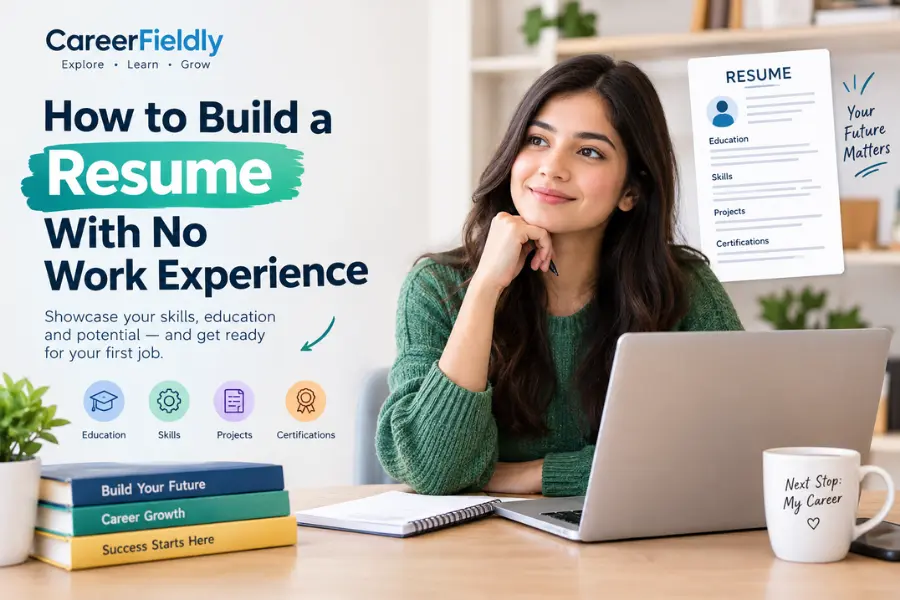
Whether you are a student, recent graduate, or someone entering a new career field, this guide explains how to build a resume with no work experience, choose the right format, highlight your strengths, and avoid common mistakes.
What Is a Resume With No Work Experience?
A resume with no work experience is a professional document for people who haven’t held a formal job yet. Instead of focusing on employment history, it emphasizes transferable skills, education, relevant projects, certifications, and other evidence of your abilities.
This type of resume is particularly useful for:
- Students applying for internships or part-time jobs.
- Recent graduates entering the job market.
- Individuals seeking their first full-time position.
- Career changers with limited experience in a new industry.
- Candidates returning to work after an extended break.
The goal is to demonstrate your potential and show employers why you are a suitable candidate for the position.
1. Choose the Right Resume Format
Choosing the right format is the first step when building a resume with no work experience. Your layout should make your qualifications easy to understand and help recruiters quickly identify your strengths.
A chronological resume usually emphasizes employment history. Since you have little or no professional experience, a skills-focused or combination format may be more suitable.
Use a Skills-Focused Resume
A skills-focused resume emphasizes relevant abilities, education, projects, and achievements. It can help you present your qualifications without drawing unnecessary attention to a short employment history.
For example, if you are applying for an entry-level digital marketing position, you might highlight content writing, keyword research, social media management, and relevant coursework.
Keep Your Layout Simple
Use a clean design with clear headings, consistent spacing, and readable fonts. Avoid excessive graphics, complicated tables, and decorative elements that may make your resume difficult to scan.
For most entry-level applicants, one page is sufficient. Include only information that supports your application.
2. Start With Your Contact Information
Place your contact information at the top of your resume so employers can easily reach you.
Include the following details:
- Full name.
- Professional email address.
- Phone number.
- City and country, if relevant to the position.
- LinkedIn profile or professional portfolio, if available.
You generally do not need to include your complete home address, national identification number, marital status, or other unnecessary personal details.
Make sure your email address looks professional. An address based on your name is usually better than one with nicknames or unrelated words.
If you have an online portfolio, GitHub profile, writing samples, or another relevant professional profile, include it when it helps demonstrate your qualifications.
3. Write a Strong Resume Summary
A resume summary is a short introduction that explains who you are, what skills you offer, and what kind of opportunity you are seeking.
Although you lack formal work experience, you can still write a compelling summary by focusing on your education, strengths, and career interests.
For example:
Resume summary example:
Motivated business graduate with strong communication, research, and organizational skills. Experienced in completing academic projects, analyzing information, and collaborating with classmates to achieve shared goals. Eager to apply these skills in an entry-level administrative or business support role while building practical professional experience.
Your summary should be specific to the job you want. Avoid generic statements such as “I am hardworking and looking for a challenging position” unless you support them with relevant abilities or examples.
If you are applying for different types of jobs, adjust your summary to match each position.
4. Highlight Your Education
When you have no work experience, education can be one of the most important sections of your resume. It helps employers understand your academic background and identify knowledge relevant to the position.
Include your degree or qualification, institution, graduation date or expected completion date, and relevant academic achievements.
You may also include:
- Relevant coursework.
- Academic awards or distinctions.
- Research assignments.
- Final-year projects.
- Presentations or competitions.
- Relevant extracurricular activities.
For example, a computer science graduate applying for a junior developer role could highlight coursework in programming, databases, software development, and web technologies.
Avoid listing every subject you studied. Focus on the qualifications and coursework most relevant to the job description.
5. Showcase Relevant Skills
A strong resume with no work experience should clearly demonstrate the skills you can bring to an employer.
Divide your skills into relevant categories when this improves readability.
Technical Skills
Technical skills are abilities related to specific tools, software, or professional tasks. Examples include:
- Microsoft Excel and Word.
- Data analysis and reporting.
- Graphic design software.
- Programming languages.
- Content management systems.
- Social media analytics.
- Laboratory techniques, where relevant.
Only list tools and skills you can genuinely use or explain.
Transferable Skills
Transferable skills can be useful across different jobs and industries. Examples include:
- Written and verbal communication.
- Teamwork and collaboration.
- Problem-solving.
- Time management.
- Research and critical thinking.
- Organization and attention to detail.
- Adaptability.
Whenever possible, demonstrate these skills through projects, coursework, volunteer activities, or other real examples rather than simply listing them.
For instance, completing a group assignment may demonstrate collaboration, while managing a student event may show planning and organizational abilities.
6. Include Academic and Personal Projects
Projects are an excellent way to strengthen a resume when you have no employment history. They provide evidence that you can apply your knowledge to practical tasks.
Relevant projects might include a university assignment, personal website, research paper, data analysis project, marketing campaign, design portfolio, or software application.
For each project, include its title, the date or period, your role, and a short explanation of what you accomplished.
Example:
Student Market Research Project
- Conducted a survey to understand customer preferences for a selected product.
- Organized responses in a spreadsheet and summarized the main findings.
- Prepared a written report and presented recommendations to classmates.
This example demonstrates research, data organization, communication, and analytical thinking without requiring previous employment.
Use action verbs such as developed, researched, designed, analyzed, organized, presented, and created. Where possible, explain the outcome of your work.
Never invent projects or exaggerate your contribution. A small, genuine project is more valuable than an impressive but inaccurate claim.
7. Add Internships, Volunteering, and Extracurricular Activities
You don’t need a paid job to show responsibility or practical experience. Internships, volunteer work, student societies, community activities, and independent initiatives can all strengthen your resume.
For example, volunteering at a community event may demonstrate teamwork and organization. Helping a student society manage its social media accounts can show communication and content-creation skills.
If you completed an internship, include your responsibilities and any meaningful contributions.
If you have no experience in these areas yet, consider participating in a relevant project, volunteering for a local organization, or creating a portfolio project. These activities can help you develop skills and provide concrete examples for future applications.
Describe your activities honestly and focus on the abilities you developed.
8. Include Relevant Certifications and Online Courses
Certifications and short courses show you are actively building your professional knowledge.
Choose courses that relate directly to your target position. For example, an aspiring data analyst might study spreadsheet analysis, SQL, or data visualization. Someone interested in digital marketing could explore SEO, analytics, or content marketing.
When listing a course or certification, include:
- The course or credential name.
- The issuing organization.
- The completion date, when useful.
- A credential link, if available and appropriate.
Distinguish between completed certifications and courses you are still taking. Do not describe an unfinished course as a completed qualification.
Quality matters more than quantity. A few relevant credentials supported by practical work can be more persuasive than a long list of unrelated courses.
9. Tailor Your Resume to Each Job
One of the most effective ways to improve your resume is to customize it for the position you want.
Start by carefully reading the job description. Identify the main responsibilities, required skills, relevant tools, and qualifications.
Then adjust your resume to highlight the most relevant information.
For example, if a job description emphasizes customer communication and organization, highlight a project or activity that demonstrates those abilities. If the position requires Excel, mention your spreadsheet skills and describe how you have used them.
Use relevant keywords naturally, especially when the employer uses an applicant tracking system (ATS) to organize applications. However, don’t add skills you don’t possess just because they appear in the job advertisement.
Keep your content accurate and easy to read. The objective is to show a genuine match between your abilities and the employer’s needs.
10. Write an Effective Cover Letter
A cover letter lets you explain why you are interested in a role and how your background prepares you for it.
When applying without work experience, use your cover letter to connect your education, projects, skills, and career goals to the position.
A simple structure works well:
- Introduce yourself and identify the role you are applying for.
- Explain two or three relevant strengths, using examples where possible.
- Describe why you are interested in the organization or position.
- Close professionally and express your interest in discussing your application.
Avoid apologizing for your lack of experience. Instead, focus on your preparation, willingness to learn, and relevant strengths.
Keep the letter concise and customize it for each employer rather than sending the same generic message with every application.
11. Avoid Common Resume Mistakes
Even a well-qualified candidate can weaken an application by submitting a poorly organized resume. Before applying, check for the following mistakes.
Spelling and grammar errors: Proofread your document carefully. Ask someone else to review it if possible.
Generic content: Replace vague claims with specific skills, projects, and examples.
Unnecessary personal information: Include details that support your application and follow the employer’s instructions.
Unprofessional formatting: Use clear headings, consistent fonts, and a logical structure.
False claims: Never invent qualifications, work history, certifications, or achievements.
Unrelated information: Remove details that do not help demonstrate your suitability for the position.
Poor file naming: Save your resume with a professional filename, such as YourName_Resume.pdf.
Unless the employer requests a different format, a properly formatted PDF is often a practical choice because it preserves the document’s appearance.
12. Resume Checklist Before Applying
Use this checklist to review your resume before submitting an application.
- My contact information is accurate and professional.
- My summary matches the role I want.
- My education and relevant coursework are clearly presented.
- My skills are relevant and truthful.
- My projects demonstrate practical abilities.
- My certifications and activities are accurately described.
- I have included appropriate keywords from the job description.
- My resume is easy to read and consistently formatted.
- I have corrected spelling and grammar mistakes.
- My file is saved with a professional name.
- I have checked the employer’s application instructions.
Review this checklist for every application. Even small improvements can make your qualifications easier for employers to understand.
Frequently Asked Questions
Here are some questions and answers about creating a resume with no work experience
Can I get a job with no work experience?
Yes. Many entry-level positions, internships, and trainee programs are designed for candidates who are still developing professional experience. Your chances depend on the role, the employer’s requirements, your skills and qualifications, and the quality of your application.
How long should a resume with no experience be?
For most students and recent graduates, a one-page resume is a good starting point. Focus on relevant information instead of adding unnecessary content to fill space.
Should I include hobbies on my resume?
You can include hobbies when they demonstrate relevant skills, meaningful involvement, or a genuine connection to the role. However, they should not take priority over education, projects, certifications, and relevant abilities.
Do I need a professional reference?
Follow the employer’s instructions. If references are requested, provide appropriate people who have agreed to serve as references, such as a teacher, academic supervisor, or volunteer coordinator. Otherwise, you generally do not need to list references on the resume itself.
What should I do if I have no projects or certifications?
Start with a small project related to your target career. You could create a sample website, analyze a public dataset, develop a design portfolio, or complete a relevant online course. Choose an activity that helps you practice a useful skill and gives you something concrete to discuss in an interview.
Conclusion
Building a resume with no work experience is about presenting your potential clearly and honestly. By choosing a suitable format, highlighting your education, showcasing relevant skills, and including projects or volunteer activities, you can create a professional application even if you have never held a formal job.
Start by identifying the type of position you want, then tailor your resume to demonstrate the qualifications that matter most for that role. Keep building practical skills, seek opportunities to gain experience, and review every application before you submit it.
Your first resume does not need to be perfect. It needs to show what you can offer today and that you are ready to grow. With thoughtful preparation and consistent effort, you can take a confident first step toward your professional career.



- Be Respectful
- Stay Relevant
- Stay Positive
- True Feedback
- Encourage Discussion
- Avoid Spamming
- No Fake News
- Don't Copy-Paste
- No Personal Attacks
- Be Respectful
- Stay Relevant
- Stay Positive
- True Feedback
- Encourage Discussion
- Avoid Spamming
- No Fake News
- Don't Copy-Paste
- No Personal Attacks
