Navigating High-Demand Tech Roles for the Next Decade
Published: 11 Oct 2026
Choosing the right tech career can open the door to exciting opportunities in the coming years. As businesses adopt artificial intelligence, cloud computing, and digital tools, the need for skilled technology professionals continues to change. Understanding high-demand tech roles can help students, graduates, and working professionals make better career decisions. This guide explores promising technology careers, the skills they require, and how to prepare for future opportunities.
“The future belongs to those who keep learning, adapt to change, and turn new challenges into opportunities.”
Technology careers offer many paths, from software development and cybersecurity to data science and artificial intelligence. Each role requires different skills, training, and interests, so the best choice depends on your strengths and career goals. By exploring these options and understanding how the industry is changing, you can identify a suitable path, build practical skills, and prepare for opportunities in the global job market over the next decade.


Navigating High-Demand Tech Roles
Technology is changing how people work, how businesses operate, and how services are delivered. Companies across many industries rely on digital tools to improve efficiency, solve problems, and meet customer needs. As a result, high-demand tech roles in artificial intelligence, cybersecurity, software development, and data science are becoming important career options.
How Technology Is Changing the Workplace
Businesses are increasingly using automation, cloud computing, and artificial intelligence to manage information and complete tasks more efficiently. For example, AI engineers develop intelligent systems, cybersecurity analysts protect computer networks, and software developers create applications and websites. These changes are creating new career opportunities while also changing the skills employers expect from technology professionals.

Why High-Demand Tech Roles Matter for the Future
Choosing a technology role involves more than finding a job today. It also means considering how a profession may develop as technology changes. Some roles may grow as businesses invest in digital services, while others may change as automation takes over certain tasks. Understanding high-demand tech roles can help you identify promising career paths and make informed decisions about your education and professional development.
How to Choose the Right Tech Role
The best technology role depends on your interests, abilities, and career goals. If you enjoy solving technical problems, software development may suit you. If you are interested in protecting data and preventing online attacks, cybersecurity could be a good option. People who enjoy working with numbers, finding patterns, and understanding information may prefer data analysis or data science.
Before choosing a role, research its daily responsibilities, required skills, education options, and employment opportunities. Consider the time and money you can invest in training, as well as the type of work you would enjoy doing regularly.
Preparing for High-Demand Tech Roles Over the Next Decade
You do not need to learn every new technology to build a successful career. Instead, focus on relevant technical skills, problem-solving, communication, and practical experience. Online courses, personal projects, internships, and entry-level positions can help you build these abilities and show employers what you know.
Technology will keep evolving, so continuous learning matters. By choosing a role that matches your strengths, building useful skills, and adapting to industry changes, you can improve your readiness for future opportunities in the technology sector.
Why Technology Careers Are Growing
Technology is becoming an important part of everyday life, from online shopping and digital banking to healthcare, education, and transportation. Businesses use modern tools to improve services, protect information, and make better decisions. This change is increasing the need for people who understand technology and can use it to solve real problems.
For anyone exploring High-Demand Tech Roles, understanding why the industry is growing can help them choose a suitable career path. Artificial intelligence, digital transformation, cybersecurity, and data analysis are four important areas to consider when planning for the next decade.
The Rise of Artificial Intelligence
Artificial intelligence (AI) is changing how businesses complete tasks, analyse information, and serve customers. AI tools can help companies answer questions, identify patterns, prepare reports, and automate repetitive work. As more organisations adopt these tools, they need professionals who can develop, manage, test, and use AI systems responsibly.
This growth is creating opportunities in roles such as AI engineers, machine learning engineers, AI specialists, and AI researchers. These jobs may require knowledge of programming, mathematics, data, and machine learning, depending on the position. Beginners can start by learning basic programming and exploring how AI tools work before moving on to more advanced skills.
AI is also changing existing jobs, not just creating new ones. Learning to work effectively with AI tools can therefore help across many technology careers.
Digital Transformation Across Industries
Digital transformation means using technology to improve how an organisation works and delivers its services. Businesses are moving from paper-based systems to digital platforms, online services, and automated processes. This change is happening in industries such as healthcare, education, banking, retail, manufacturing, and transportation.
For example, hospitals use digital systems to manage patient records, banks provide mobile banking services, and online stores use software to manage orders and payments. These systems need technology professionals to build, maintain, and improve them.
This creates opportunities for software developers, cloud computing engineers, IT support specialists, and digital transformation specialists. Professionals who understand both technology and business needs can help organisations choose suitable tools and use them effectively.
The World Economic Forum identifies broader digital access as a key force expected to transform businesses by 2030. This suggests that digital skills will remain valuable across many industries.
Growing Cybersecurity Needs
As more people and businesses use the internet, protecting digital information has become increasingly important. Cybercriminals may try to steal personal details, access business accounts, spread harmful software, or disrupt computer systems. A single security problem can cause financial losses and damage an organisation’s reputation.
Cybersecurity professionals help prevent these problems by identifying risks, monitoring networks, testing security systems, and responding to attacks. Common roles include cybersecurity analyst, information security analyst, security engineer, and penetration tester.
People interested in this field should learn about computer networks, operating systems, security tools, and risk management. Problem-solving skills and attention to detail are also important because security threats can change quickly.
Cybersecurity is not limited to large technology companies. Hospitals, banks, government departments, schools, and small businesses also need to protect their information. The World Economic Forum lists networks and cybersecurity among the skills expected to grow in importance through 2030.
The Importance of Data and Automation
Businesses collect large amounts of information through websites, mobile applications, sales systems, and customer interactions. However, collecting information is only the first step. Organisations also need professionals who can organise data, find useful patterns, and turn those findings into better decisions.
Data analysts, data scientists, and data engineers help businesses understand and use information. Data analysts prepare reports and explain trends, data scientists use statistical methods and machine learning to investigate complex problems, and data engineers build systems that collect and process data.
Automation is another important part of this change. It allows computers and machines to handle repetitive tasks, such as processing records, organising information, or checking routine transactions. This can save time and allow employees to focus on work that requires judgement and creativity.
As AI, big data, and automation become more widely used, professionals who understand these technologies may find opportunities in many sectors. The World Economic Forum identifies AI and big data among the fastest-growing skill areas in its projections for 2025–2030.
What This Means for Future Tech Professionals
Technology growth creates opportunities, but it does not guarantee every technology job will be in high demand everywhere. Employment opportunities depend on location, industry, experience, and employers’ needs.
If you are preparing for a technology career, start by choosing one area that matches your interests. Learn the basics, practise with small projects, and keep up with industry changes. Combining technical knowledge with communication, critical thinking, and a willingness to learn can help you prepare for high-demand tech roles over the next decade.
10 High-Demand Tech Roles for the Next Decade
Technology offers many career paths for people with different interests, skills, and educational backgrounds. Some professionals build software, others protect computer systems, and some use data or artificial intelligence to solve complex problems. Understanding these roles can help you choose a career that matches your strengths and long-term goals.
The World Economic Forum’s Future of Jobs Report 2025 identifies AI and machine learning specialists, big data specialists, software developers, and security-related professionals among the roles expected to grow in importance through 2030. However, job opportunities vary by country, industry, and experience.
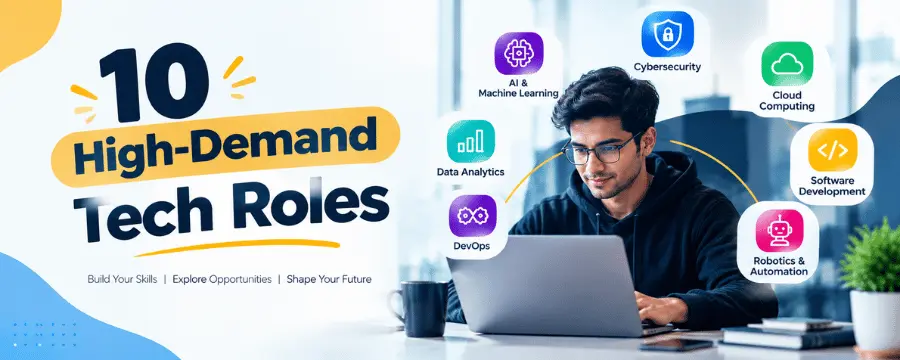
Below are 10 technology careers worth exploring, including their responsibilities, important skills, training options, and possible career paths.
1. Artificial Intelligence and Machine Learning Engineer
Artificial intelligence (AI) and machine learning engineers develop systems that can learn from data, recognise patterns, and help solve problems. Their work can support applications such as chatbots, recommendation systems, language tools, fraud detection, and image recognition.
Main responsibilities
- Develop and test AI and machine learning models.
- Prepare data for training and testing systems.
- Evaluate model accuracy and improve performance.
- Work with developers and data specialists to integrate AI into products.
- Help ensure that AI systems are reliable, secure, and used responsibly.
Important skills
Useful skills include Python programming, mathematics, statistics, data handling, and knowledge of machine learning methods. Familiarity with AI frameworks and cloud platforms can also help.
Education and training
A degree in computer science, software engineering, mathematics, or a related field can provide a strong foundation. Beginners can start with Python, basic statistics, and introductory machine learning courses before building small projects.
Possible career paths
You may start as a junior developer, data analyst, or AI trainee and progress towards roles such as machine learning engineer, AI engineer, AI researcher, or AI solutions architect. Research-focused positions may require advanced education.
2. Data Scientist and Data Analyst
Data scientists and data analysts help organisations understand information and make better decisions. Although their work overlaps, data analysts often focus on reports and trends, while data scientists may use more advanced statistics and machine learning to answer complex questions.
For example, a retailer may use data to understand which products customers prefer, while a hospital may analyse information to improve its services.
Main responsibilities
- Collect, clean, and organise data.
- Identify patterns, trends, and useful insights.
- Prepare reports, charts, and dashboards.
- Explain findings to managers and other teams.
- Build statistical models or predictive tools when required.
Important skills
Key skills include Excel, SQL, statistics, data visualisation, and analytical thinking. Python or R helps with more advanced analysis, especially in data science.
Education and training
Degrees in data science, computer science, statistics, mathematics, or related subjects can be helpful. Beginners can start with spreadsheets and SQL, then learn a visualisation tool and basic Python. A project portfolio using real or publicly available datasets can demonstrate practical ability.
Possible career paths
Common options include junior data analyst, business intelligence analyst, data scientist, analytics consultant, and senior data scientist. With experience, professionals may move into data science leadership or specialised research.
The US Bureau of Labor Statistics projects 33.5% employment growth for data scientists from 2024 to 2034. This is a US forecast, not a guarantee of similar growth in every country.
3. Cybersecurity Analyst
A cybersecurity analyst helps protect an organisation’s computers, networks, applications, and sensitive information from digital threats. As businesses rely more on online services, they need people who can identify security weaknesses and respond to suspicious activity.
For example, a cybersecurity analyst may investigate an unusual login, help prevent a data breach, or check whether a company’s systems are protected against known attacks.
Main responsibilities
- Monitor computer networks and security alerts.
- Investigate suspicious activity and possible cyberattacks.
- Identify weaknesses in systems and recommend improvements.
- Help manage security tools, access controls, and company policies.
- Support incident response and recovery after security problems.
Important skills
Cybersecurity professionals benefit from knowledge of computer networks, operating systems, security tools, and risk management. Analytical thinking, attention to detail, and clear communication are also important.
Education and training
A degree in cybersecurity, computer science, or information technology can be useful. Beginners can start by learning networking and operating system basics, then practise in safe training labs. Relevant certifications may help demonstrate knowledge, although employers have different requirements.
Possible career paths
You could progress from IT support or a junior security role to cybersecurity analyst, security engineer, incident response specialist, penetration tester, or security manager.
Cybersecurity has strong growth potential. US employment projections estimate 28.5% growth for information security analysts between 2024 and 2034. Actual opportunities depend on local demand and employers’ requirements.
4. Software Developer
Software developers design, build, test, and maintain computer programs and applications. Their work supports many of the digital services people use every day, including websites, mobile apps, business software, educational platforms, and online shopping systems.
Developers usually work with other professionals to understand users’ needs and turn them into working software.
Main responsibilities
- Design and develop software applications.
- Write, test, and improve computer code.
- Fix bugs and solve technical problems.
- Update existing applications and improve their performance.
- Work with designers, testers, and other developers.
Important skills
Useful skills include programming, logical thinking, problem-solving, debugging, and teamwork. Depending on the role, developers may learn languages such as Python, JavaScript, Java, or C#.
Education and training
A degree in computer science or software engineering can be helpful, but some people enter the field through practical training and strong project portfolios. Beginners can choose one programming language, build simple applications, learn version control, and gradually work on more complex projects.
Possible career paths
Common roles include junior software developer, web developer, mobile app developer, backend developer, frontend developer, and full-stack developer. With experience, you may move into software architecture, technical leadership, or engineering management.
Software development supports many industries, so professionals can work in technology companies, banks, hospitals, education, retail, and other sectors. US projections estimate 15.8% employment growth for software developers between 2024 and 2034.
5. Cloud Computing Engineer
Cloud computing engineers help businesses use computing services over the internet instead of relying entirely on equipment in their own offices. These services can include online storage, databases, servers, and tools for running applications.
For example, an online store may use cloud services to manage its website and handle increased traffic during busy shopping periods.
Main responsibilities
- Set up and maintain cloud infrastructure.
- Manage cloud storage, networks, and computing resources.
- Monitor system performance and reliability.
- Help protect cloud environments and control access.
- Improve costs, backups, and recovery processes.
Important skills
Useful skills include networking, Linux, cloud security, scripting, and system administration. Familiarity with platforms such as Amazon Web Services (AWS), Microsoft Azure, or Google Cloud can be valuable.
Education and training
A degree in information technology, computer science, or a related field can provide a foundation. Beginners should first learn basic networking and operating systems, then focus on one cloud platform. Practical labs and relevant certifications can help demonstrate skills.
Possible career paths
You may start in IT support, systems administration, or junior cloud support, then progress to cloud engineer, cloud security engineer, cloud architect, or infrastructure specialist.
Cloud computing can suit people who enjoy building reliable systems, solving technical problems, and working with the infrastructure that supports online services.
6. Data Engineer
Data engineers build and maintain the systems that collect, organise, and deliver data. Their work helps ensure data scientists, analysts, and business teams can access accurate, ready-to-use information.
For example, a company may receive information from its website, sales system, and mobile app. A data engineer creates processes to bring this information together in a useful format.
Main responsibilities
- Build systems that collect and process data.
- Create and maintain data pipelines.
- Organise data in databases and data warehouses.
- Check data quality and resolve processing problems.
- Improve the reliability, security, and performance of data systems.
Important skills
Key skills include SQL, Python, databases, data modelling, and data processing. Knowledge of cloud platforms and distributed data tools can also be useful as projects become more complex.
Education and training
Degrees in computer science, software engineering, information technology, and data-related fields can be a good fit. Beginners can start with SQL and Python, learn how databases work, and build a project that collects, cleans, and stores data.
Possible career paths
Career options include junior data engineer, database developer, analytics engineer, senior data engineer, and data platform engineer. Experienced professionals may move into data architecture or engineering leadership.
Data engineering may be a good choice if you enjoy programming and organising information but prefer building the systems behind data analysis rather than focusing mainly on reports.
7. Robotics and Automation Engineer
Robotics and automation engineers design, develop, and maintain machines and systems that perform tasks with limited human intervention. Their work can be found in factories, warehouses, agriculture, healthcare, and other industries where automated equipment helps improve safety, speed, or accuracy.
For example, a factory may use robotic arms to assemble products, while a warehouse may use automated machines to move packages.
Main responsibilities
- Design and test robotic systems and automated equipment.
- Program machines to complete specific tasks.
- Maintain sensors, motors, and control systems.
- Identify faults and improve machine performance.
- Work with mechanical, electrical, and software engineering teams.
Important skills
Useful skills include robotics, programming, electronics, mathematics, and problem-solving. Knowledge of mechanical engineering, control systems, sensors, and languages such as Python or C++ can also be valuable.
Education and training
A degree in robotics, mechanical engineering, electrical engineering, mechatronics, or a related field can provide a strong foundation. Practical training with electronics, microcontrollers, and robotics kits can help beginners understand how these systems work.
Possible career paths
You may start as a junior automation technician or robotics engineer and progress towards robotics engineer, control systems engineer, automation specialist, or robotics project manager.
This career may suit people who enjoy both physical machines and computer technology. Opportunities depend on automation growth and the availability of robotics industries in your region.
8. DevOps Engineer
A DevOps engineer helps software development and IT operations teams work together. The role focuses on making it easier to build, test, release, and maintain software reliably.
For example, when a company updates its mobile application, DevOps tools can automate parts of testing and release. This helps teams deliver improvements more efficiently while reducing errors.
Main responsibilities
- Automate software testing and deployment processes.
- Maintain the infrastructure used to run applications.
- Monitor applications and investigate system failures.
- Manage development and production environments.
- Improve system reliability, security, and performance.
Important skills
DevOps engineers need knowledge of Linux, scripting, cloud computing, networking, and automation. Tools for version control, containers, monitoring, and continuous integration can also be important.
Education and training
A degree in computer science or information technology can be helpful. Beginners can learn basic Linux commands, Git, scripting, and networking before exploring cloud platforms and deployment tools. Building a small application and practising deployment and monitoring is a useful learning project.
Possible career paths
Common progression routes include IT support, systems administration, junior DevOps engineer, DevOps engineer, site reliability engineer, and platform engineer. Experienced professionals may move into cloud architecture or technical leadership.
DevOps can suit people who enjoy solving infrastructure problems and helping development teams deliver reliable software.
9. UX/UI Designer
UX/UI designers help make websites, mobile applications, and digital products easier and more pleasant to use. UX means user experience, which focuses on how a product works for people. UI means user interface, which focuses on the screens, buttons, layouts, and visual elements people interact with.
For example, a designer may improve an online shopping website so customers can find products, understand prices, and complete purchases more easily.
Main responsibilities
- Research users’ needs and problems.
- Plan page layouts and user journeys.
- Create wireframes and interactive prototypes.
- Design clear, accessible interfaces.
- Test designs with users and improve them based on feedback.
Important skills
Useful skills include visual design, user research, wireframing, prototyping, and problem-solving. Communication and understanding user behaviour are also important. Tools like Figma help designers create and share their work.
Education and training
A degree in design, human-computer interaction, or a related field can help, but a strong portfolio matters most in many UX/UI roles. Beginners can study design principles, practise with design tools, and create sample projects that explain the problems they solved and the decisions they made.
Possible career paths
You could start as a junior UI designer, UX designer, or product design intern, then progress to product designer, UX researcher, design systems specialist, or design lead.
This career may suit people who enjoy creativity, understanding people’s needs, and improving digital products. However, the field is competitive, and AI tools are changing some design tasks, so strong research, usability, and problem-solving skills are valuable.
10. Internet of Things (IoT) Specialist
An Internet of Things (IoT) specialist works with physical devices connected to the internet or other networks. These devices collect and exchange data, allowing people and organisations to monitor equipment, automate tasks, and remotely control systems.
Examples include smart home devices, connected medical equipment, agricultural sensors, and machines that report their operating condition to a factory’s computer system.
Main responsibilities
- Connect sensors, devices, and software systems.
- Develop or configure connected-device applications.
- Collect and process information from devices.
- Test device performance and troubleshoot problems.
- Help protect connected devices against security threats.
Important skills
Important skills include networking, programming, electronics, sensors, and data handling. Depending on the job, knowledge of embedded systems, microcontrollers, cloud services, and cybersecurity may also be required.
Education and training
Suitable educational paths include computer science, electrical engineering, electronics, telecommunications, and embedded systems. Beginners can experiment with a microcontroller, a sensor, and a simple programming project to learn how devices collect and transmit information.
Possible career paths
Potential roles include IoT developer, embedded systems engineer, IoT solutions engineer, connected-device security specialist, and IoT architect.
IoT can be a good choice for people who enjoy combining hardware and software. Opportunities may be available in smart buildings, agriculture, manufacturing, transportation, energy, and healthcare.
How to Choose Among These 10 Tech Roles
Each career requires a different mix of skills, so the best fit depends on your interests and preferred type of work.
| If you enjoy… | Consider exploring… |
|---|---|
| Building intelligent systems | AI and machine learning |
| Finding patterns in information | Data science or data analysis |
| Protecting systems and information | Cybersecurity |
| Creating applications and websites | Software development |
| Managing online infrastructure | Cloud computing |
| Building systems for data | Data engineering |
| Working with machines and electronics | Robotics and automation |
| Automating software delivery | DevOps |
| Designing and understanding users | UX/UI design |
| Connecting physical devices | IoT |
You do not need to decide your entire career at once. Choose one or two fields that interest you, learn the basics, and complete a small practical project before investing heavily in training.
Remember that these are potential career paths, not guaranteed job opportunities. Demand varies by country, and employers may require different qualifications and experience levels. The best long-term approach is to develop useful skills, build a portfolio, gain practical experience, and keep learning as technology changes.
Which Tech Careers Have the Strongest Growth Potential?
When choosing among High-Demand Tech Roles, look at employment forecasts rather than relying only on popular trends. Some technology careers are expected to grow quickly, while others may create more new jobs because they already employ many people.
The US Bureau of Labor Statistics (BLS) provides employment projections for 2024–2034. These figures offer a useful comparison of selected careers, but they describe the United States job market, not the worldwide market or Pakistan specifically.
Comparing Growth Rates and Projected Job Gains
The following figures show how employment in three technology-related occupations is projected to change over the decade.
| Tech career | Projected growth (2024–2034) | Projected additional jobs |
|---|---|---|
| Data scientist | 33.5% | 82,500 |
| Information security analyst | 28.5% | 52,100 |
| Software developer | 15.8% | 267,700 |
Source: US Bureau of Labor Statistics. Figures represent projected employment changes, not guaranteed job openings.
Why Percentage Growth Does Not Tell the Whole Story
Percentage growth shows how quickly employment is expected to increase compared with its starting size. The number of additional jobs shows how many positions the occupation may add overall.
For example, data science has the highest projected growth rate among these three careers, at 33.5%. However, software development is projected to add approximately 267,700 jobs, compared with 82,500 for data science. Software development starts from a much larger employment base, which helps explain the difference.
This distinction matters when planning your career. A high-growth field may still have fewer positions than a larger occupation with slower growth. Remember that projected job growth is not the same as annual job openings. Openings can include positions created by growth as well as vacancies left by people who change careers or leave the workforce.
Which Tech Career Should You Consider?
Your best option depends on your interests, skills, and the opportunities available where you want to work.
- Data science: Consider this path if you enjoy mathematics, statistics, programming, and finding patterns in information.
- Cybersecurity: Explore this field if you like investigating problems, protecting systems, and learning how digital threats work.
- Software development: Consider this option if you enjoy building applications, writing code, and solving practical problems.
You can also explore AI engineering, cloud computing, data engineering, and other technology careers. The three occupations above are useful for comparison because the BLS provides specific projections for them, but they are not the only promising career paths.
How to Use Employment Forecasts When Planning Your Career
Employment projections are a helpful starting point, but they should not be your only reason for choosing a profession. Before committing to a career, research local job listings, common entry-level requirements, expected training costs, and the skills employers are seeking.
If you plan to work remotely or apply for international positions, check the requirements of employers in your target markets. A career with strong US growth may offer different opportunities in Pakistan or another country.
Ultimately, the strongest choice is a career that combines realistic employment opportunities, skills you enjoy developing, and room for professional growth. Build a solid foundation, practise through projects, and continue learning as technology and employer needs change.
Essential Skills for Future Tech Professionals
Building a successful career in technology requires more than knowing how to use a computer. Employers often look for people who can solve problems, communicate clearly, learn new tools, and apply their knowledge to real situations. As technology changes, developing a mix of technical skills and human skills can help you prepare for different career opportunities.
Whether you want to work in software development, cybersecurity, data science, or artificial intelligence, start by learning the skills that match your chosen field. You do not need to master everything at once. Focus on the basics, practise regularly, and improve as you gain experience.
Programming and Technical Skills
Programming and technical skills help technology professionals build software, manage systems, analyse information, and solve digital problems. The skills you need will depend on the career you choose. For example, software developers write code, cybersecurity analysts protect computer systems, and data analysts use tools to find useful information.
Some useful technical skills include:
- Programming: Learn a language such as Python, JavaScript, Java, or C++, depending on your career goals.
- Databases and SQL: Understand how information is stored, organised, and retrieved.
- Networking: Learn how computers and other devices communicate with one another.
- Cloud computing: Understand how online platforms provide storage, computing power, and other services.
- Data analysis: Practise working with spreadsheets, charts, and data visualisation tools.
- Cybersecurity basics: Learn about secure passwords, access controls, common threats, and data protection.
You do not need to learn every skill on this list. Choose the ones that fit your interests and build a strong foundation before moving to advanced topics.
For example, if you want to become a software developer, begin with one programming language and create a simple website or application. If you are interested in data analysis, practise using spreadsheets and SQL to organise a dataset and explain what it shows.
Problem-Solving and Critical Thinking
Technology professionals regularly face problems without an obvious answer. An application may stop working, a computer system may become slow, or a dataset may contain errors. Problem-solving and critical thinking help professionals understand what went wrong and identify a suitable solution.
Instead of guessing, learn to break a problem into smaller steps. Check the available information, test possible explanations, and evaluate the results before deciding what to do next.
You can develop these skills by working on practical projects, solving coding exercises, analysing sample datasets, or troubleshooting common computer problems. When something doesn’t work, try to understand why rather than simply copying a solution.
Critical thinking is also important when using AI tools. Their answers may contain mistakes, so you should check important information, compare reliable sources, and use your own judgement before accepting a result.
Over time, these habits can help you become more independent and confident when handling technical challenges.
Communication and Teamwork
Even highly skilled technology professionals often work with people from different departments and backgrounds. Developers may discuss requirements with clients, data analysts may explain reports to managers, and cybersecurity teams may help employees understand security risks.
Communication and teamwork help people share information, understand expectations, and work towards common goals.
Important communication skills include:
- Clear writing: Explain technical information in simple language.
- Active listening: Understand the problem before suggesting a solution.
- Team collaboration: Share ideas, accept feedback, and respect different viewpoints.
- Documentation: Record instructions, project decisions, and technical processes.
- Presentation skills: Explain your work and results to people who may not have a technical background.
You can practise these skills by working on group projects, writing clear project descriptions, participating in online learning communities, or explaining a technical concept to a friend.
Good communication is especially valuable when working remotely because team members may rely on written messages, online meetings, and shared documents to coordinate their work.
AI Literacy and Continuous Learning
Artificial intelligence is changing how many technology professionals work. AI tools can help write code, summarise information, analyse data, and automate routine tasks. However, using these tools effectively requires more than knowing which buttons to press.
AI literacy means understanding what AI tools can do, where they may fail, and how to use them responsibly. It includes checking AI-generated information, protecting private data, recognising possible bias, and reviewing results before using them in important work.
For example, a software developer may use AI to suggest code but still needs to test it for errors and security problems. A data analyst may use AI to explore a dataset but should verify the findings before presenting them.
Continuous learning matters because programming languages, software tools, and industry practices change over time. You can keep your skills current by taking online courses, reading technical documentation, building projects, and following reliable industry resources.
To make learning manageable, set a small weekly goal. You might complete one lesson, improve a portfolio project, or practise a new tool. Regular progress is often more useful than trying to learn everything in a short period.
How to Combine These Skills for Career Growth
The strongest approach combines technical knowledge with problem-solving, communication, and a willingness to learn. For example, a cybersecurity analyst needs to understand security tools, investigate suspicious activity, explain risks, and adapt to new threats.
Start with the skills your chosen high-demand tech role requires, then practise them through projects and real-world exercises. As your experience grows, keep updating your knowledge and learn to work effectively with new technologies.
You don’t need to be an expert in every area before applying for your first job. Build a solid foundation, demonstrate what you can do, and keep improving. This approach can help you prepare for changing requirements and pursue long-term opportunities in the technology industry.
How to Start a Career in Technology
Starting a career in technology may seem difficult when you are new to the field, but you do not need to learn everything at once. With a clear plan, the right training, and regular practice, you can build the skills you need to pursue technology jobs. Whether you want to become a software developer, cybersecurity analyst, data scientist, or AI specialist, taking small steps can help you move towards your goal.
The most important thing is to choose a suitable career path, learn the required skills, and gain practical experience. Here are five steps to help you get started.
Choose a Career Based on Your Interests
First, identify the type of technology work that matches your interests, abilities, and goals. The technology industry offers many career paths, and each involves different responsibilities. Choosing a field you enjoy can make learning more enjoyable and help you stay motivated.
For example, if you enjoy creating websites and applications, software development may be a good option. If you like investigating problems and protecting information, consider cybersecurity. People who enjoy working with numbers and finding patterns may prefer data analysis, while those interested in intelligent systems may explore artificial intelligence.
Before deciding, research the daily responsibilities, required skills, and entry-level requirements for two or three careers that interest you. You can also try free introductory lessons to understand what the work involves.
Don’t choose a career just because it is popular. Consider your strengths, available learning resources, budget, and the type of work you would enjoy doing regularly.
Select a Degree, Course, or Certification
Once you have chosen a career path, identify the education and training needed to enter that field. Some technology jobs commonly require a university degree, while others may be accessible through practical training, recognised certifications, and a strong portfolio. Requirements vary by employer and position.
A degree in computer science, software engineering, information technology, mathematics, or a related subject can provide a useful foundation for many technical careers. However, you can also start with online courses, vocational training, and structured self-study.
Consider these learning options:
- University degrees: Suitable for people seeking a broader academic foundation and careers that require formal qualifications.
- Online courses: Useful for learning specific skills such as programming, data analysis, or web development.
- Professional certifications: Can demonstrate knowledge in areas such as cloud computing, networking, and cybersecurity.
- Practical training: Builds hands-on experience through exercises, labs, and guided projects.
Start with the basic skills required for your chosen role. For example, a beginner interested in data analysis could learn spreadsheets, SQL, and data visualisation before exploring advanced analytics.
Compare course costs, time commitments, and employer requirements before paying for training. A certificate can support your application, but it does not automatically guarantee employment.
Build Practical Projects
Learning technical concepts is important, but applying them to real problems helps you understand how they work. Practical projects let you practise your skills, spot weaknesses, and show what you can do.
Choose projects that match your target career and gradually increase their difficulty as your knowledge improves.
For example:
- Software development: Build a simple website, calculator, or task management application.
- Data analysis: Analyse a public dataset and present your findings through charts and a short report.
- Cybersecurity: Complete beginner-friendly security exercises in a legal training environment.
- Artificial intelligence: Create a basic machine learning project using an available dataset.
- Cloud computing: Deploy a small website or application using a cloud platform.
- UX/UI design: Design an application interface and explain how it helps users complete a task.
You do not need expensive equipment or complicated projects to get started. A simple project that works correctly and solves a clear problem can be more useful than a large project you cannot explain.
As you work, keep notes about the problem, your approach, the tools you used, and what you learned. This information can help you discuss your experience during interviews.
Create a Portfolio and Gain Experience
A professional portfolio is a collection of projects and examples that demonstrate your skills. It gives employers a clearer picture of what you can do than a list of courses alone.
Your portfolio can be a personal website, an online code repository, a collection of design case studies, or a set of data analysis reports. The best format depends on your chosen career.
Include a few strong projects rather than many unfinished examples. For each project, explain its purpose, the tools you used, the challenges you faced, and the results you achieved. Make sure your work is easy to understand and that you have permission to share any information it contains.
You can also gain experience through volunteer work, freelance projects, student activities, or small projects for local organisations. These opportunities may help you learn how to communicate with clients, manage deadlines, and solve practical problems.
If you are applying for technical jobs, consider creating a CV that highlights relevant skills, training, and projects. Be honest about your experience and describe what you actually contributed to each project.
Apply for Internships and Entry-Level Jobs
After developing basic skills and completing a few projects, begin looking for opportunities to gain professional experience. Internships and entry-level jobs can help you understand how technology teams work and apply your knowledge in a real workplace.
Search for positions that match your current abilities rather than waiting until you meet every requirement for a senior role. Depending on your skills, you might consider roles such as junior software developer, IT support technician, junior data analyst, technical support specialist, or cybersecurity trainee.
Before applying, read each job description carefully and adjust your CV to highlight the most relevant skills and projects. Prepare to explain how you approached problems, what you learned, and how you would handle unfamiliar tasks.
You can search for opportunities through company career pages, professional networking platforms, university career services, and reputable job websites. If you are interested in remote work, check whether the employer accepts applicants from your country and whether the position is suitable for beginners.
Rejection is a normal part of the job search, especially when you have limited experience. Use feedback where available, improve your projects, and continue developing your skills. Every application and interview can help you understand what employers expect.
Create a Simple Plan for Your First Technology Job
Break the process into manageable steps to make it easier. Start by choosing one career, identifying the required skills, and following a learning plan that fits your schedule.
For example, you might spend the first few weeks learning the basics, the next several weeks completing practical projects, and the following period building a portfolio and applying for suitable opportunities. The time required will depend on your starting skills, the role’s complexity, and how much time you can commit.
Remember that starting a technology career is a process, not a single achievement. Focus on steady progress, practical experience, and learning from mistakes. With a clear plan, you can build a foundation to pursue high-demand tech roles and adapt as the industry changes.
Can You Build a Tech Career Without a Degree?
Yes, you can build a technology career without a university degree, depending on the role, your skills, and what employers require. Many people learn technology through online courses, professional certifications, self-study, and practical projects. These learning paths can help you build useful skills and show potential employers what you can do.
However, not every technology job has the same education requirements. Some employers accept candidates with strong practical skills and relevant experience, while others require a degree in computer science, engineering, or a related subject. The key is to choose a career path that matches your interests and understand employer expectations before investing your time and money.
Learn Through Online Courses and Self-Study
Online courses can be a useful starting point if you want to learn technology without attending university. Many learning platforms offer beginner-friendly lessons in programming, data analysis, cybersecurity, cloud computing, and web development. Some courses are free, while others require payment for access or certificates.
Start with the basic skills required for your chosen career. For example, if you want to become a web developer, learn HTML, CSS, and JavaScript. If you are interested in data analysis, begin with spreadsheets, SQL, and basic statistics. For cloud computing, start with networking and operating system fundamentals.
Choose a structured course with exercises and practical assignments, rather than relying only on videos. Set aside regular study time and practise what you learn.
You do not need to collect dozens of course certificates. Understanding the subject and applying your knowledge are more important than simply completing lessons.
Consider Professional Certifications
Professional certifications can help demonstrate your knowledge in certain technology fields. They are especially relevant in cloud computing, networking, IT support, and cybersecurity.
For example, some employers value certifications from established technology providers because they show that a candidate has studied specific tools or technical concepts. However, certification requirements vary by employer, and no certificate guarantees a job.
Before paying for an exam or training programme, review job advertisements for your target role. Check which certifications employers actually request and whether they suit beginners.
A sensible approach is to learn the fundamentals first, practise through hands-on exercises, and then consider a relevant certification if it supports your career goals.
Build Practical Projects to Demonstrate Your Skills
Without a degree, practical projects can help you show employers what you have learned. A project shows you can apply technical knowledge, solve problems, and complete a task.
Choose projects that relate directly to the type of work you want to do.
- Web development: Create a responsive website or a simple online store demonstration.
- Data analysis: Use a public dataset to identify trends and prepare a clear report.
- Cybersecurity: Complete authorised practice exercises in a safe training environment.
- Artificial intelligence: Build a basic machine learning model or a simple AI-powered application.
- Cloud computing: Deploy a small website or application using a cloud service.
- UX/UI design: Create an app design and explain how it addresses users’ needs.
Start with simple projects and improve them as your skills develop. Document your work, explain the tools you used, and describe the problems you solved. A few well-presented projects can help demonstrate your abilities more effectively than a long list of unrelated courses.
Create a Portfolio and Gain Experience
A portfolio brings your best work together in one place. Depending on your career, it could include a personal website, code repositories, design samples, project reports, or examples of technical documentation.
You can gain additional experience through internships, freelance assignments, volunteer projects, or entry-level jobs. These opportunities help you learn to work with others, meet deadlines, and solve practical problems.
If you are new to technology, consider applying for roles such as IT support technician, junior web developer, junior data analyst, or technical support specialist, depending on your current skills. Some of these positions may have flexible education requirements, while others may require formal qualifications.
Be honest about your experience and explain what you personally contributed to each project. Employers may ask you to demonstrate your skills during an interview or complete a practical assessment.
Check Employers’ Requirements Before Choosing Your Path
One of the most important steps is researching the education requirements for your chosen role. Do not assume that every technology employer will accept certificates and projects instead of a degree.
Read job advertisements from several employers and look for repeated requirements. Some listings state that a degree is required, while others accept equivalent experience or relevant skills. Certain positions may also require a professional licence, specialised training, or industry-specific qualifications.
If you want to work abroad, check the requirements in your target country. Immigration rules, professional regulations, and employer policies may affect which qualifications you need.
Also consider your long-term goals. A degree may help if you want to pursue research, certain engineering roles, or jobs with strict academic requirements. On the other hand, a skills-based learning path may be a practical option for some web development, IT support, design, or other technology roles.
Which Technology Careers Can You Explore Without a Degree?
The following fields may offer alternative entry routes, although requirements vary by employer and position.
| Career field | Useful starting point |
|---|---|
| Web development | HTML, CSS, JavaScript, and website projects |
| IT support | Computer fundamentals, networking, and troubleshooting |
| Data analysis | Spreadsheets, SQL, data visualisation, and reports |
| UX/UI design | Design fundamentals, prototyping, and a portfolio |
| Cloud computing | Networking, Linux, cloud labs, and relevant certifications |
| Cybersecurity | Networking, operating systems, safe practice labs, and security fundamentals |
| Software development | Programming, problem-solving, and completed applications |
Some careers, including advanced AI research and certain engineering positions, may be more difficult to enter without formal education. Research the requirements of specific jobs rather than relying on general advice.
Final Advice for Building a Tech Career Without a Degree
A university degree is one way to prepare for a technology career, but it is not the only possible route. Online learning, certifications, practical projects, and work experience can help you develop the skills needed for some positions.
Start by choosing one field, learning its fundamentals, and completing projects that demonstrate your abilities. Then review job requirements, build a portfolio, and apply for suitable entry-level opportunities.
Most importantly, focus on skills that employers need rather than collecting certificates without a clear plan. With consistent effort, realistic expectations, and practical experience, you can explore tech career opportunities even if you haven’t attended university.
Tech Career Opportunities for Beginners and Career Changers
Starting a technology career does not always require years of experience. Many people enter the tech industry after completing a degree, taking online courses, learning independently, or gaining practical experience through projects. Others move into technology from fields such as education, business, healthcare, marketing, or customer service. Understanding high-demand tech roles and the skills they require can help beginners and career changers choose a realistic starting point.
Entry-Level Technology Roles to Consider
Beginners can explore several technology roles that offer opportunities to develop practical skills and gain professional experience. The best choice depends on your interests, existing knowledge, and the type of work you enjoy.
Some entry-level roles include:
- IT Support Specialist: Helps users solve computer, software, network, and technical problems.
- Junior Web Developer: Builds and maintains websites using programming languages such as HTML, CSS, and JavaScript.
- Junior Software Developer: Helps create, test, and maintain software applications under the guidance of experienced developers.
- Data Analyst: Organises data, prepares reports, and identifies useful patterns using tools such as spreadsheets, SQL, and data visualisation software.
- Junior Cybersecurity Analyst: Helps monitor systems, identify security risks, and protect digital information.
- QA Tester: Tests websites and software applications to find errors and check whether features work correctly.
- Technical Support Specialist: Helps customers understand and use technology products and services.
You do not need to pursue all these options. Research each role’s responsibilities and basic requirements, then choose one that matches your interests. Some positions require a degree or previous experience, while others may accept relevant courses, certifications, projects, or practical skills.
How Transferable Skills Can Help You Enter Technology
If you already have work experience in another industry, you may have valuable transferable skills that employers look for in technology professionals. These skills can make a career change easier because you don’t have to start from scratch.
For example:
- Communication skills can help you work in IT support, technical customer service, and product management.
- Problem-solving skills help with software testing, programming, cybersecurity, and technical troubleshooting.
- Analytical skills can support a move into data analysis, business intelligence, or data science.
- Organisation and project management can help you move towards project coordination, business analysis, or technology operations.
- Industry knowledge can be valuable when developing technology solutions for healthcare, education, finance, retail, or other sectors.
Consider someone who has worked in healthcare. Their knowledge of patient services and medical processes may help them explore healthcare technology or health data roles after gaining the necessary technical skills.
The key is to combine your existing strengths with new technology skills. Identify what you already know, determine which skills your target role requires, and make a plan to close the gaps.
Gain Experience Through Internships and Trainee Programmes
An internship can help beginners understand how technology teams work in real organisations. It may provide experience with practical tasks, professional tools, teamwork, and workplace expectations.
Look for technology internships, graduate programmes, apprenticeships, and trainee positions offered by software companies, IT departments, startups, and other employers. Read the requirements carefully, as some opportunities are for students, while others accept recent graduates or career changers.
To improve your chances:
- Learn the basic skills required for your chosen role.
- Complete one or two practical projects that demonstrate your knowledge.
- Prepare a clear CV that highlights relevant skills, training, and experience.
- Practise answering common interview questions.
- Apply consistently, even if you do not meet every preferred requirement.
If a formal internship is not available, consider volunteering for a suitable project, contributing to an open-source project, or helping a small organisation improve its website or digital processes. These experiences can help you develop practical examples to discuss with employers.
Explore Freelance Work to Build Practical Skills
Freelancing is another way to gain experience, especially in web development, website maintenance, software testing, data analysis, graphic and UX/UI design, and certain IT services.
For example, a beginner learning web development could build a simple website for a local business. Someone studying data analysis might create a sales dashboard using sample data. A new UX/UI designer could redesign a sample mobile app screen and explain the design decisions.
Start with small projects that match your current abilities. Set clear expectations, agree on deadlines, and avoid taking on work that requires skills you haven’t developed yet. Also protect clients’ private information and use authorised tools and data.
Freelancing does not guarantee regular income, especially at the beginning. However, suitable projects can help you build a portfolio, build confidence, and learn to communicate with clients. These experiences may also strengthen future applications for full-time positions.
Move Into a New Technology Field Step by Step
Changing careers is easier when you follow a clear plan instead of trying to learn everything at once.
Consider these steps:
- Choose one target role. Decide whether you are more interested in programming, data, cybersecurity, cloud computing, design, or IT support.
- Research job requirements. Review real job advertisements to identify common technical skills, qualifications, and experience requirements.
- Learn the essential skills. Use reputable online courses, books, tutorials, or formal training to build a strong foundation.
- Complete practical projects. Apply what you learn by creating something relevant to your target role.
- Update your CV and portfolio. Highlight your previous experience alongside your new skills and projects.
- Connect with professionals. Join relevant communities, attend online events, and seek advice from people working in the field.
- Apply for suitable opportunities. Consider junior roles, internships, trainee positions, and carefully selected freelance projects.
You can adjust this plan according to your available time and budget. A full-time worker may need to study gradually, while a recent graduate may have more time to complete projects and apply for internships.
Which High-Demand Tech Roles Suit Beginners?
Some technology careers may offer more accessible starting points than others, depending on your background and the employers in your area.
| Your interests or background | Roles worth exploring |
|---|---|
| Helping people solve problems | IT support or technical support |
| Building websites and applications | Junior web developer |
| Working with numbers and information | Data analyst |
| Finding errors and checking details | QA tester |
| Protecting computers and information | Entry-level cybersecurity roles |
| Designing useful digital experiences | Junior UX/UI designer |
| Organising tasks and working with teams | IT project coordinator or business analyst |
These are starting points, not guarantees of employment. For example, data science, artificial intelligence engineering, and some cybersecurity positions may require stronger technical foundations or previous experience. You can still work towards them by building relevant skills and progressing through related roles.
The most important step is to begin with a realistic goal. Choose a field that interests you, learn the skills employers need, and demonstrate your abilities through practical work. With patience and consistent learning, beginners and career changers can work towards rewarding opportunities in technology.
Remote Work and Global Tech Career Opportunities
Technology lets people work with companies and clients in different countries without moving abroad. Many businesses hire technology professionals to work remotely, while others offer freelance projects to people with the right skills. These opportunities can help beginners and experienced workers explore global tech careers, gain international experience, and build professional connections.
However, remote work is competitive. Employers often look for strong technical skills, reliable communication, and the ability to manage tasks independently. Understanding how remote jobs work can help you prepare for opportunities beyond your local job market.
Explore Remote Technology Jobs
Remote technology jobs allow employees to complete some or all of their work outside a traditional office. Depending on the company, you may work from home, a shared workspace, or another suitable location.
Common remote-friendly roles include:
- Software Developer: Builds, tests, and maintains websites, applications, and software systems.
- Data Analyst: Studies information, prepares reports, and helps businesses make informed decisions.
- UX/UI Designer: Designs digital products that are useful, clear, and easy to navigate.
- IT Support Specialist: Helps users solve technical problems through online communication tools.
- QA Tester: Checks software and websites for errors and usability issues.
- Cloud Engineer: Helps organisations manage cloud services and online computing systems.
- Cybersecurity Professional: Supports efforts to protect systems, networks, and sensitive information.
Remote opportunities vary by role and employer. Some positions require employees to live in a particular country, while others accept applicants from several regions. Always check the location requirements, working hours, and employment conditions before applying.
Work With International Employers
Working for an international company can expose you to different technologies, professional standards, and problem-solving approaches. You may also gain experience working with people from different cultural and professional backgrounds.
To find international opportunities, explore company career pages, professional networking platforms, and reputable remote-job websites. Search for terms such as remote software developer, junior data analyst remote, or remote UX designer.
Before applying, check whether the employer hires workers in your country. Some companies use local employment contracts, while others work with international contractors or employer-of-record services. These arrangements can affect taxes, benefits, payment methods, and legal responsibilities.
Be wary of job offers that promise unusually high salaries for little work or ask you to pay to secure a position. Research the employer, verify the job advertisement, and never share sensitive financial information with an unverified recruiter.
Build a Freelance Career With Global Clients
Freelancing lets you offer technology services to clients without becoming a full-time employee. You may work on individual projects, short-term assignments, or ongoing client contracts.
Freelance technology services can include:
- Website development and maintenance
- Software testing and bug reporting
- Data cleaning and dashboard creation
- UX/UI design and website improvements
- Technical writing and documentation
- IT troubleshooting and selected technical support services
Start by choosing one service that matches your skills. Create a few strong work samples, clearly describe your services, and set realistic deadlines and prices.
Explore freelance marketplaces, professional communities, and direct outreach to potential clients. However, competition can be strong, and finding the first client may take time. Focus on delivering good work, communicating clearly, and building a record of reliable service rather than promising results you cannot guarantee.
For people in Pakistan and other countries, international freelancing can provide access to clients beyond the local market. Before accepting a project, confirm the payment method, platform fees, currency conversion costs, and any relevant tax responsibilities.
Create a Digital Portfolio That Shows Your Skills
A digital portfolio is a collection of work that demonstrates what you can do. It can be especially valuable when you are starting your career, changing fields, or applying for remote positions where employers cannot observe your work in person.
Your portfolio should match the type of job you want.
For example:
- A web developer can show completed websites and explain the technologies used.
- A data analyst can present dashboards, charts, and short explanations of findings.
- A UX/UI designer can show app screens, explain design choices, and provide examples of user-focused improvements.
- A software tester can provide sample test cases, bug reports, and testing documentation.
- A cybersecurity learner can describe safe practice-lab exercises and authorised projects without exposing private information.
You can create a portfolio website or use a suitable professional platform to organise your work. Include a short introduction, your key skills, project descriptions, and contact information. Make sure links work correctly and that your examples are easy to understand.
Do not simply list tools or certificates. Explain what problem you worked on, what you did, and what you learned. If you use sample or simulated data, identify it clearly. Never publish confidential client information or claim that someone else’s work is your own.
Develop Strong Communication Skills
Technical knowledge is important, but communication skills can make a major difference in remote work. When colleagues are in different locations or time zones, they need clear information to coordinate their tasks and solve problems.
Important communication skills include:
- Clear writing: Explain ideas, technical issues, and project updates in simple language.
- Active listening: Understand instructions, ask relevant questions, and confirm important details.
- Time management: Complete work by agreed deadlines and communicate early if a delay is likely.
- Teamwork: Share progress, respond respectfully to feedback, and help colleagues when appropriate.
- Problem reporting: Describe an issue, explain what you have tried, and provide useful details instead of saying only that something does not work.
- Cultural awareness: Respect different communication styles, working habits, and public holidays.
You do not need a perfect accent to work with international teams. Focus on being understandable, respectful, organised, and willing to improve. Practise writing professional emails, explaining your projects, and discussing your skills in interviews.
Prepare for Different Time Zones and Remote Work Expectations
Remote work often requires more planning than working in a shared office. An employer may expect you to attend meetings at particular times, respond within agreed hours, or overlap with a team based in another country.
Before accepting a role, understand the expected schedule, meeting requirements, availability rules, and communication methods. Ask whether the position is fully remote, hybrid, or remote only within a specific country.
Also prepare a reliable workspace, a suitable internet connection, and, when possible, a backup plan for important tasks. Use calendars, task lists, and project-management tools to organise your work.
Remote employees must also protect company information. Follow security policies, use strong passwords and multi-factor authentication where available, and avoid accessing confidential work through unsafe networks or unauthorised devices.
How to Get Started With a Global Tech Career
If you want to pursue international remote jobs or freelance projects, begin with a focused plan:
- Choose a technology specialisation that matches your interests and strengths.
- Build relevant skills through courses, practical projects, and consistent practice.
- Prepare a professional CV that highlights your technical abilities and relevant experience.
- Create a digital portfolio with examples that demonstrate your work.
- Improve your communication skills by practising professional writing, interviews, and project explanations.
- Search for suitable global opportunities and check location, experience, and time-zone requirements.
- Apply consistently and learn from feedback to improve your applications over time.
You do not need to master every technology before applying. Focus on the skills required for your chosen role and demonstrate what you can already do. As your experience grows, you can explore more advanced positions and work with a wider range of employers.
Remote work can expand your career options, but success depends on preparation, reliability, and continuous learning. By developing technical skills, building a strong portfolio, and communicating professionally, you can improve your chances of finding opportunities in the global technology market.
Challenges of Working in the Technology Industry
The technology industry offers many career opportunities, but it also comes with challenges. New tools appear regularly, entry-level jobs can attract many applicants, and technology professionals must protect sensitive information while managing their workloads. Understanding these challenges can help you prepare for a more stable and rewarding career.
Whether you are a student, a beginner, or an experienced professional, learning how to handle these difficulties is an important part of building a successful career in technology.
Keeping Up with New Technologies
Technology changes quickly. New programming tools, artificial intelligence systems, cybersecurity methods, and cloud platforms can change how businesses operate. Skills useful today may need updating as tools and workplace requirements evolve.
For people pursuing high-demand tech roles, continuous learning is essential. However, trying to learn every new tool can waste time and create unnecessary pressure.
You can keep your knowledge current by following these practical steps:
- Focus on your chosen field: Learn the tools and skills most relevant to your career goals instead of trying to master everything.
- Use trusted learning resources: Rely on technical documentation, reputable courses, professional communities, and industry publications.
- Practise regularly: Build small projects to apply new knowledge instead of only watching tutorials.
- Learn the fundamentals: Strong problem-solving, programming, networking, or data skills stay useful even as specific tools change.
- Set realistic learning goals: Give yourself time each week to improve one skill or explore an important development.
Artificial intelligence is one example of a technology changing many jobs. Learning how to use AI tools responsibly may help professionals work more effectively, but it is still important to understand the subject behind the tools and check the accuracy of their results.
The goal is not to know everything. It is to keep learning, adapt to change, and develop skills that remain useful over time.
Competition for Entry-Level Jobs
Entry-level technology jobs can be competitive because many applicants are trying to enter the industry. Some employers receive applications from graduates, self-taught learners, certified professionals, and experienced workers changing careers.
This can discourage beginners who have completed courses but haven’t yet gained professional experience. However, there are practical ways to make your application stronger.
First, choose a specific career path. Instead of applying for every available technology position, focus on roles that match your current skills and interests. For example, someone who enjoys working with data could start with junior data analyst roles rather than applying for unrelated positions.
Next, demonstrate your abilities through practical projects. A small website, a data dashboard, a software testing report, or a documented programming project can help employers understand what you can do.
You can also improve your chances by:
- Creating a clear CV that highlights relevant skills and projects.
- Applying for internships, trainee positions, and junior roles.
- Practising technical and general interview questions.
- Joining relevant open-source projects or professional communities.
- Improving your communication and teamwork skills.
- Reviewing job descriptions to identify skills you need to develop.
Remember that certificates alone may not be enough to secure a job. Employers may also consider your practical ability, problem-solving skills, experience, and how well you fit the position.
Be patient and consistent. Your first role may not be your ideal position, but a suitable starting job can help you gain experience and progress towards more advanced technology careers.
Protecting Personal and Professional Data
Technology professionals often work with sensitive information, including customer records, business documents, passwords, financial details, and internal company systems. A security mistake can put people and organisations at risk.
Data protection is especially important for professionals working in cybersecurity, software development, cloud computing, IT support, and data analysis. Even employees who do not specialise in security need to understand basic digital safety.
Follow these important practices:
- Use strong, unique passwords: Avoid reusing the same password across multiple accounts. A reputable password manager can help you manage them.
- Enable multi-factor authentication: Use an additional verification method when available.
- Keep software updated: Security updates help fix known weaknesses in operating systems, applications, and devices.
- Protect confidential information: Share company and customer data only with authorised people and through approved systems.
- Recognise suspicious messages: Be careful with unexpected attachments, login requests, and links that ask for sensitive information.
- Follow workplace security policies: Use approved devices, networks, storage systems, and access permissions.
- Respect privacy laws and agreements: Handle personal information according to the rules that apply to your work and location.
Remote workers should take extra care when using public Wi-Fi, shared computers, or personal devices for professional tasks. Follow your employer’s security requirements and use approved protections, such as a company-provided virtual private network, when required.
Developers and data professionals should also avoid publishing passwords, private keys, customer information, or confidential files in public repositories and portfolios.
Protecting data is not only the responsibility of cybersecurity experts. Every technology professional has a role in maintaining digital security and privacy.
Managing Workload and Preventing Burnout
Technology jobs can involve demanding deadlines, complex problems, urgent system failures, and frequent priority changes. Some roles also require on-call duties or work outside normal business hours.
When these pressures continue without enough rest, they can lead to exhaustion, reduced concentration, lower productivity, and loss of motivation. This is why managing your workload is an important part of a sustainable technology career.
You can protect your time and energy by following these habits:
- Set clear priorities: Identify the most important tasks and complete them before tackling less urgent work.
- Break large tasks into smaller steps: This makes complex projects easier to manage and track.
- Take regular breaks: Short breaks can help you maintain concentration during long periods of computer work.
- Set reasonable boundaries: Where possible, establish clear working hours and avoid routinely working beyond them.
- Communicate early: If a deadline is unrealistic or your workload becomes unmanageable, discuss the issue with your manager or team.
- Make time for rest: Sleep, physical activity, hobbies, and time away from screens can support your general well-being.
- Keep learning manageable: Avoid comparing your progress with people who have more experience or spend more time studying.
Employers also have a responsibility to set reasonable workloads, set clear expectations, and support a healthy work environment. If your job regularly requires excessive overtime, consider discussing workload expectations and exploring available workplace support.
For students and beginners, the same principle applies to learning. You do not need to study every day for hours or master several programming languages at once. A consistent and realistic learning plan is often more useful than intense study followed by long periods of exhaustion.
A successful technology career is not just about earning a good salary or learning the newest tools. It is also about maintaining your skills, protecting your information, and working in a way you can sustain long term.
How to Choose the Right Tech Career for Your Future
Choosing a technology career can feel confusing because there are so many options, from software development and cybersecurity to data analysis and artificial intelligence. However, the best career is not always the one with the highest salary or the most attention. It is the one that matches your interests, skills, budget, learning time, and preferred working style.
Before choosing among high-demand tech roles, take time to understand what each career involves and what you need to prepare for it. A clear plan can help you avoid wasting time and money on a path that does not suit you.
Identify Your Interests and Strengths
Start by thinking about the activities you enjoy and the problems you like to solve. Different technology careers suit different interests.
For example:
- If you enjoy solving logical problems: Consider software development, web development, or software testing.
- If you like working with numbers and information: Explore data analysis, data science, or business intelligence.
- If you are interested in online safety: Consider cybersecurity and information security.
- If you enjoy designing things: Explore UX/UI design and digital product design.
- If you like helping people: IT support or technical support may be a good starting point.
- If you enjoy machines and physical systems: Explore robotics, automation, or the Internet of Things (IoT).
You do not need to know your perfect career immediately. Try introductory lessons and small projects in two or three areas before deciding. This will help you discover which type of work feels interesting and manageable.
Consider How Much Time You Can Spend Learning
Different technology careers require different amounts of preparation. Some people can prepare for certain entry-level roles in a few months of focused study, while others may need years of education and practice.
Your learning time will depend on your experience, the difficulty of your chosen field, and employers’ requirements.
| Available learning time | A practical approach |
|---|---|
| A few hours each week | Learn gradually while continuing your current studies or job. |
| One to two hours daily | Follow a structured course and complete small projects regularly. |
| Several hours daily | Consider a more intensive learning plan with practical projects and interview preparation. |
| Limited time due to family or work | Focus on one essential skill at a time and set flexible weekly goals. |
For example, someone learning web development might begin with HTML and CSS, then learn JavaScript and build a simple website. Someone interested in data analysis could start with spreadsheets, then progress to SQL and data visualisation.
Consistency matters more than speed. Choose a learning schedule that you can maintain rather than setting goals that are too difficult to follow.
Compare Your Budget and Training Options
Your budget is another important factor when selecting a technology career. Some people can afford a university degree or professional training programme, while others need affordable ways to learn.
Fortunately, several learning options are available.
- Free online resources: Useful for exploring a subject and learning basic concepts before spending money.
- Paid online courses: May provide structured lessons, assignments, and certificates.
- Professional certifications: Can demonstrate specific skills, particularly in areas such as cloud computing, networking, and cybersecurity.
- College or university degrees: May be valuable or required for certain specialist and graduate positions.
- Practical projects: Help you apply your knowledge and demonstrate your abilities to employers.
Before paying for a course, check its syllabus, teaching quality, practical exercises, and relevance to actual job requirements. Don’t assume an expensive certificate guarantees employment.
Also consider the cost of a suitable computer, internet access, software, exam fees, and other learning materials. Many beginners can start with free resources and invest in additional training when they have a clearer career goal.
Evaluate Your Existing Skills and Qualifications
Your current skills and education can help you decide which technology career to pursue. You may already have useful knowledge that can be applied to a new field.
For example, a person with a business background might explore data analysis or business analysis. Someone with design experience may find UX/UI design a natural next step. Someone who has worked in customer service may be able to transfer communication and troubleshooting skills to IT support.
Consider these questions:
- Do you already understand computers, programming, mathematics, or data?
- Have you completed a degree, diploma, course, or professional certification?
- Do you have experience solving problems, managing projects, or working with customers?
- Which skills do you need to develop before applying for your target role?
Write down your existing strengths and compare them with job advertisements for positions that interest you. This can help you identify the most important knowledge gaps.
Remember, your previous experience isn’t wasted when you change careers. Combining industry knowledge with technology skills can help you stand out in fields such as healthcare technology, financial technology, education technology, and business software.
Choose a Working Style That Suits You
Not all technology professionals work the same way. Some spend much of their time writing code, while others communicate with clients, analyse information, design digital products, or manage technical systems.
Consider the type of work environment you prefer.
| Preferred working style | Careers worth exploring |
|---|---|
| Independent work and logical problem-solving | Software development or data analysis |
| Helping people solve technical problems | IT support or technical support |
| Investigating risks and unusual activity | Cybersecurity |
| Creative work and understanding users | UX/UI design |
| Teamwork and coordinating projects | Business analysis or IT project coordination |
| Working with computers and physical equipment | Network support, robotics, or IoT |
| Working with systems and automation | Cloud engineering or DevOps |
These are general examples, not strict rules. Most technology jobs involve some combination of independent work, communication, teamwork, and problem-solving.
Also consider whether you prefer office-based work, remote work, freelance projects, or a combination. Some technology careers offer more remote opportunities than others, while roles involving hardware, equipment, or on-site support may require physical attendance.
Research Job Opportunities Before Making a Decision
A career may sound interesting, but you should understand the jobs actually available in your target market. Job requirements vary by country, industry, and employer.
Search for current job advertisements related to your chosen career. Pay attention to:
- Required technical skills: Identify the programming languages, tools, platforms, or knowledge employers expect.
- Education requirements: Check whether employers require or prefer a degree, diploma, or certification.
- Experience level: Look for internships, trainee programmes, junior positions, and entry-level opportunities.
- Salary information: Compare reliable salary data where available, while considering experience and location.
- Working arrangements: Check whether jobs are remote, hybrid, or office-based.
- Career progression: Find out which more advanced positions you could pursue after gaining experience.
Do not choose a career based only on claims that it pays well or is in high demand. Job markets change, and a growing field may still be competitive for beginners.
Instead, balance personal interest, realistic training requirements, and suitable job opportunities.
Test Your Chosen Career Before Investing Heavily
You don’t have to commit to a long degree or expensive course before deciding whether a career suits you. A small practical experiment can help you decide.
Try this simple process:
- Select two technology careers that interest you.
- Spend a few days exploring beginner lessons for each career.
- Complete one small project related to each option.
- Compare how much you enjoyed the work and how difficult the tasks felt.
- Review job ads to understand the skills each role requires.
- Choose one path for more focused learning.
For example, you could build a basic webpage to explore web development and create a simple spreadsheet dashboard to explore data analysis. Both projects can help you understand the type of work involved.
Your first choice does not have to determine your entire future. Many professionals move into related fields as their interests and experience develop.
Create a Practical Plan for Your Tech Career
Once you have chosen a direction, write a simple plan that includes your learning goals, budget, schedule, and first career milestone.
Build your starting career plan
Build your starting career plan
Choose the options that suit you to create a simple starting plan.
1. Which field interests you most?
Software or web development
Data analysis
Cybersecurity
Artificial intelligence
UX/UI design
IT support or networking
Cloud computing or DevOps
2. How much time can you study?
A few hours per week
About 1 hour daily
2–3 hours daily
Full-time study
3. What is your training budget?
Free or low-cost
Some budget for courses
Budget for a degree or formal training
4. What working style do you prefer?
Remote or flexible
Office-based teamwork
Freelance or self-employed
Hands-on or on-site work
Not sure yet
Build my career roadmap
Final advice: Choose a technology career that fits your interests and circumstances and offers a realistic path to develop useful skills. Take time to research your options, start with manageable learning goals, and gain practical experience. With steady effort and a willingness to adapt, you can build a strong foundation for your future in technology.
FAQs
Choosing a technology career can raise many questions, especially if you are a beginner or planning a career change. These answers explain high-demand tech roles, skills worth learning, and opportunities available worldwide.
Several technology careers may offer strong opportunities over the next decade as businesses continue to adopt digital tools, automation, and artificial intelligence.
Some promising options include:
- Artificial intelligence and machine learning engineer: Develops AI systems and models that help solve problems.
- Cybersecurity analyst: Helps protect computer systems, networks, and sensitive information.
- Software developer: Builds and maintains websites, applications, and software products.
- Data scientist and data analyst: Use data to identify patterns and support business decisions.
- Cloud engineer: Helps organisations manage cloud-based systems and services.
- Data engineer: Builds systems that collect, organise, and prepare data for analysis.
- Robotics and automation engineer: Develops or maintains automated machines and processes.
Demand will vary by country, industry, and experience level. Instead of choosing a career based only on popularity, consider your interests, the skills required, and the opportunities available in your target job market.
The best technology career for a beginner depends on their interests, existing skills, and learning goals. IT support, web development, software testing, data analysis, and UX/UI design can be useful starting points for people exploring the industry.
For example, someone who enjoys helping people solve problems might prefer IT support. A person who likes numbers may enjoy data analysis, while someone interested in building websites could explore web development.
Start by learning the basics of one field and completing a small project. Then review entry-level job advertisements to understand what employers expect. This approach can help you choose a career that matches your strengths rather than following a trend that may not suit you.
Yes, some technology jobs are available to people without a university degree. Employers may consider practical skills, relevant certifications, portfolios, and project experience, depending on the position.
For example, some web development, IT support, software testing, and freelance opportunities may be accessible through alternative learning paths. You can study online, practise with suitable tools, and build projects that demonstrate your abilities.
However, not every employer accepts applicants without a degree. Some specialist roles and graduate programmes require formal education. Before investing in training, check the qualifications listed in job advertisements for your chosen career.
Start with basic computer skills, problem-solving, and a basic understanding of how technology works. After that, choose technical skills related to your target career rather than trying to learn everything at once.
For example:
- Web development: Start with HTML, CSS, and JavaScript.
- Data analysis: Learn spreadsheets, basic statistics, SQL, and data visualisation.
- Cybersecurity: Study networking, operating systems, and basic security principles.
- Software development: Learn one suitable programming language and practise writing simple programs.
- Cloud computing: Understand networking, operating systems, and basic cloud concepts.
- UX/UI design: Learn design fundamentals, user research, wireframing, and prototyping.
Communication, teamwork, and continuous learning are also important. As your skills improve, build projects that show you can apply your knowledge to practical problems.
Yes, many technology jobs can be performed remotely, depending on the role and the employer. Software development, data analysis, UX/UI design, software testing, and some cybersecurity and cloud computing positions may offer remote or hybrid working arrangements.
Remote work allows professionals to collaborate with colleagues and clients in different countries. However, employers may require specific working hours, time-zone overlap, reliable internet access, and strong communication skills.
To prepare for remote work, build a digital portfolio, practise professional communication, and learn to manage tasks independently. Check whether employers accept applicants from your country before applying for international positions.
AI is changing software development, but it is unlikely to eliminate the need for all software developers. AI tools can help generate code, identify errors, explain programming concepts, and automate certain repetitive tasks. However, software projects still require people to understand user needs, design reliable systems, check AI-generated code, solve complex problems, and maintain security.
The US Bureau of Labor Statistics projects 15.8% growth in software developer employment between 2024 and 2034, but this is a US projection, not a guarantee for other countries.
Future developers can prepare by learning programming fundamentals, software design, testing, cybersecurity basics, and responsible AI use. The most valuable approach is to learn how to use AI as a tool while developing the judgment needed to review its work.
The time required depends on your skill, experience, learning schedule, and the level you want to reach. You may learn a tool’s basics in a few weeks, but becoming ready for a professional role can take several months or longer.
For example, you could learn HTML and CSS within weeks, but building the skills needed for a web development job will take more practice with JavaScript, projects, debugging, and other relevant tools.
Here is a general guide:
- Basic computer or digital skills: A few weeks, depending on your starting point.
- Foundational skills in a specific tool: Several weeks to a few months.
- Preparation for some entry-level technology roles: Several months or longer of focused learning and practical work.
- Advanced fields such as AI engineering or cybersecurity specialisations: Often require substantial study, hands-on experience, and continued learning.
These are broad estimates, not guarantees. Focus on building practical ability instead of rushing to finish a course. A portfolio of useful projects can help demonstrate what you have learned.
Several technology careers offer opportunities worldwide because organisations across many industries rely on digital systems. These include software development, cybersecurity, data analysis, cloud computing, AI and machine learning, and UX/UI design.
The World Economic Forum’s Future of Jobs Report 2025 identifies AI and big data, networks and cybersecurity, and technological literacy among the skills expected to grow in importance through 2030.
To explore international opportunities, develop skills useful across industries, build a professional portfolio, and practise clear communication in English or the language your target employers require. You can search for remote jobs, vacancies at international companies, and freelance projects.
Keep in mind that global demand does not mean every employer hires from every country. Work permits, local employment rules, time zones, qualifications, and competition can affect your options. Research your target market and check each employer’s requirements before applying.
The right technology career combines your interests with practical skills and realistic opportunities. Choose a field that suits you, keep learning, and build projects that demonstrate your abilities. These steps can help you prepare for a changing technology industry.
Final Thoughts
Choosing the right technology career can open the door to exciting opportunities, but success begins with understanding your interests, strengths, and long-term goals. High-demand tech roles such as software development, cybersecurity, data analysis, cloud computing, and artificial intelligence offer different career paths, each with its own skills and learning requirements.
You don’t need to learn everything at once or have a perfect plan from the start. Start with a field that interests you, develop the essential skills, and gain practical experience through projects, internships, or freelance work. A strong portfolio and good communication skills can also help you stand out when applying for jobs.
As technology continues to change, continuous learning and adaptability will remain important. Keep improving your knowledge, explore useful new tools, and learn how to use artificial intelligence responsibly. Most importantly, choose a career that fits your abilities, budget, and preferred working style rather than following trends alone.
Your future in technology does not depend on making every decision perfectly. It depends on taking practical steps, learning from experience, and staying open to new opportunities. With patience, consistent effort, and a clear direction, you can build valuable skills and work toward a rewarding career in technology.






- Be Respectful
- Stay Relevant
- Stay Positive
- True Feedback
- Encourage Discussion
- Avoid Spamming
- No Fake News
- Don't Copy-Paste
- No Personal Attacks
- Be Respectful
- Stay Relevant
- Stay Positive
- True Feedback
- Encourage Discussion
- Avoid Spamming
- No Fake News
- Don't Copy-Paste
- No Personal Attacks
